
More than 2,000 historical sites in Ukraine have been damaged as a result of the war
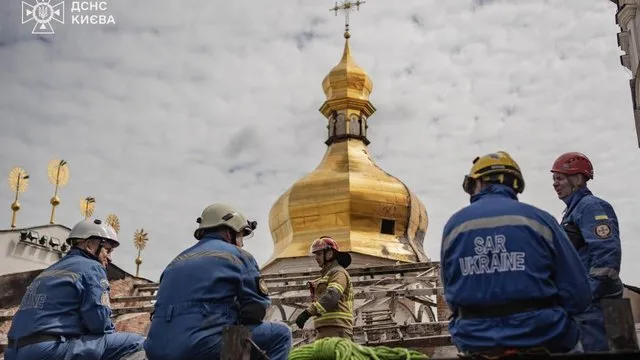
In Ukraine, 2,138 cultural heritage sites and 2,640 cultural institutions have already been affected by Russian aggression. Among the damaged sites are museums, churches, historic buildings, and other structures, and 47 sites have been completely destroyed. At the same time, the actual scale of the losses may be greater, as a significant portion of the territory remains occupied.
Russian aggression continues to inflict damage on Ukraine’s cultural heritage. As of the end of August 2026, the Ministry of Culture had documented damage to or the destruction of 2,138 cultural heritage sites. In addition, 2,640 cultural institutions have been affected. These include libraries, clubs, museums, galleries, art schools, theaters, movie theaters, and other institutions.
Over the past month, the number of recorded damaged monuments increased by 148 sites. Another 15 new cases involve cultural institutions. However, not all of this damage necessarily occurred within the last month. Cases that had not been previously accounted for—and for which information was received late—have also been added to the statistics.
Where Are the Most Damaged Cultural Heritage Sites?
The largest number of damaged cultural heritage sites was recorded in the regions most affected by hostilities. In first place is the Donetsk region, where 369 sites were damaged. Next are:
- Kharkiv Oblast—358 sites;
- Kherson Oblast—304;
- Kyiv — 272;
- Odesa Oblast—212;
- Zaporizhzhia Oblast — 115.
New damage was recorded over the past month in the Donetsk, Zhytomyr, Zaporizhzhia, Odesa, and Kherson regions. There were also repeated strikes on sites that had already been damaged. Such cases were recorded, in particular, in the Zaporizhzhia, Sumy, and Kherson regions.
47 monuments have been completely destroyed
Of the total number of damaged sites, 47 monuments have been completely destroyed. Among them are:
- one monument of national significance;
- 44 sites of local significance;
- two recently discovered cultural heritage sites.
However, these are only the instances of destruction that have been officially documented. The Ministry of Culture emphasizes that the actual number of destroyed and damaged monuments may be significantly higher.
Which Monuments Have Suffered the Most
Architectural monuments account for the largest share of the affected sites. A total of 694 such monuments have been recorded. Another 458 sites fall into both the architecture and urban planning categories. Also affected are:
- 405 historical monuments;
- 290 archaeological sites;
- 98 historical, architectural, and urban planning sites;
- 71 historical and architectural sites;
- 36 monuments of monumental art;
- 36 urban planning and monumental art sites.
Some of the damaged sites fall into multiple categories of cultural heritage. Overall, the Ministry of Culture’s statistics include sites of archaeology, history, architecture, urban planning, monumental art, science and technology, landscape architecture, as well as sites that hold multiple such designations.
Thousands of cultural institutions have been affected
Separately, the Ministry of Culture maintains statistics on cultural infrastructure facilities. Since the start of the full-scale invasion, 2,640 such facilities have been affected. Of these, 569 have been completely destroyed.
This represents approximately 21% of the total number of affected cultural institutions. Destruction and damage have been recorded in 359 territorial communities. This is one-quarter of all communities in Ukraine. Cultural infrastructure suffered the greatest losses in the Donetsk, Kharkiv, Kherson, Sumy, Kyiv, and Zaporizhzhia regions.
Clubs and libraries were the hardest hit
Clubs have sustained the most damage among cultural institutions. A total of 1,310 were affected. Of these, 285 were destroyed, and another 1,025 were damaged. Libraries are in second place. A total of 913 libraries were affected, of which 233 were destroyed and 680 were damaged. Russian attacks also damaged:
- 195 arts education institutions—25 destroyed, 170 damaged;
- 139 museums and galleries—20 destroyed, 119 damaged;
- 56 theaters, movie theaters, and concert halls—4 destroyed, 52 damaged;
- 14 parks and zoos—2 destroyed, 12 damaged.
In addition, nine nature reserves and three circuses were affected. A film studio in Kyiv was also damaged. The largest number of clubs were affected in the Donetsk, Kharkiv, and Sumy regions. Among libraries, the greatest losses were recorded in the Donetsk, Kharkiv, and Kherson regions.
Russia continues to strike facilities that have already been damaged
Repeated attacks remain a separate problem. Over the past month, new strikes were recorded not only on sites that had not previously been targeted. Russian troops again struck cultural sites that had already been damaged.
Repeated strikes were recorded, in particular, in the Kharkiv, Kherson, Odesa, and Sumy regions. This means that some cultural monuments and institutions do not have time to recover from the first strike before coming under fire again. Over the past month, the most new damage to cultural infrastructure has been recorded in the Dnipropetrovsk and Kherson regions.
It is not yet possible to see the full picture
The Ministry of Culture emphasizes that current statistics do not reflect the full extent of the destruction. As of August 2026, nearly the entire Luhansk region and significant parts of the Zaporizhzhia, Donetsk, and Kherson regions remain under Russian occupation. As a result, Ukrainian experts are unable to fully survey all settlements and assess the condition of every site. “The actual number of damaged and destroyed sites may be higher,” the Ministry of Culture noted.
Therefore, the official figures are constantly being updated. New damage is added, as well as cases about which Ukrainian authorities receive information belatedly. As of the end of August 2026, 2,138 damaged cultural heritage sites and 2,640 cultural institutions had been officially recorded. Among them are dozens of completely destroyed monuments and hundreds of destroyed cultural institutions.
At the same time, Ukraine will only be able to determine the final number of losses after gaining access to all territories currently under occupation. This was reported by the Ministry of Culture of Ukraine.


