
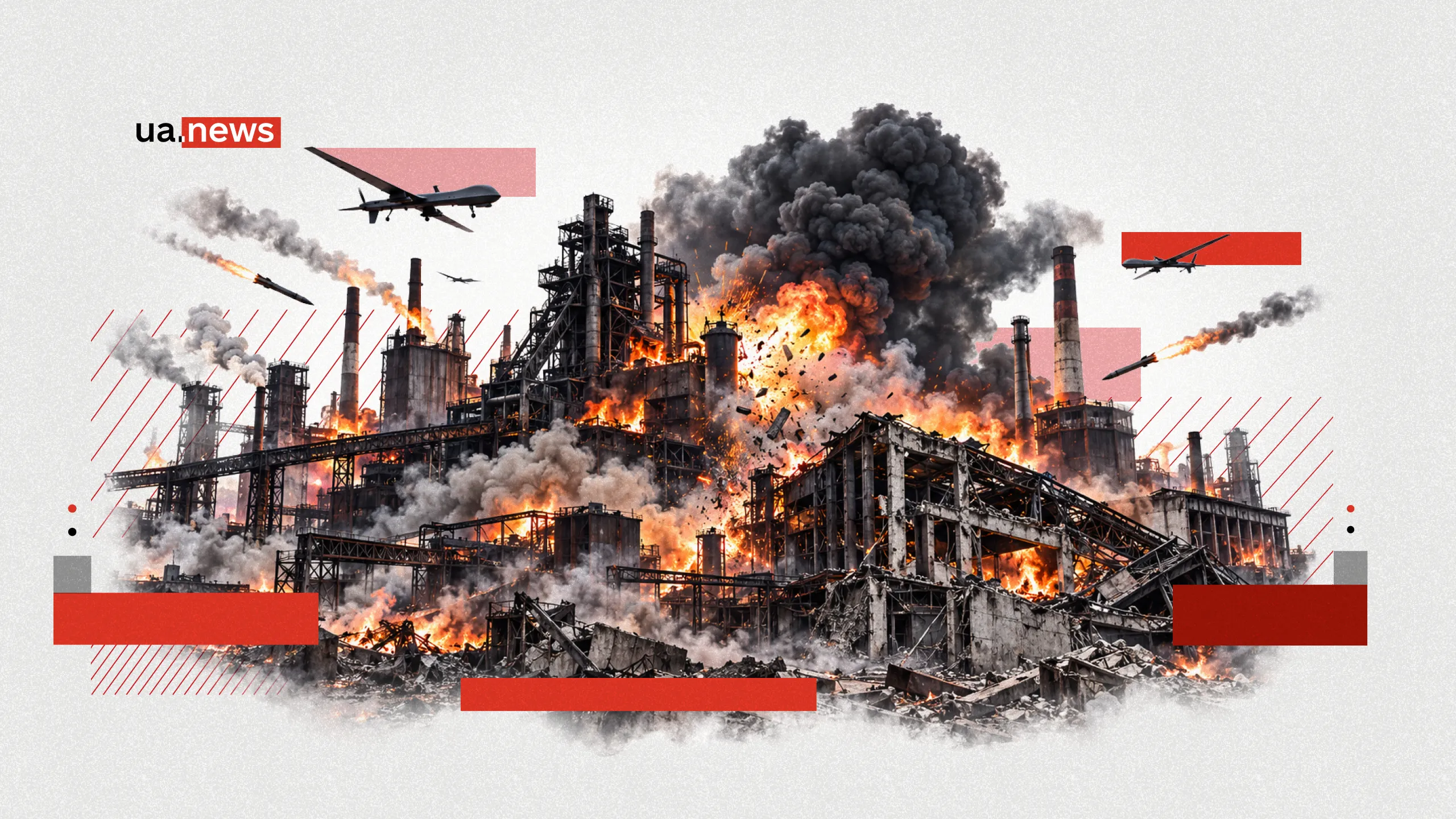
Until recently, metallurgy was more than just a sector of the Ukrainian economy. It was its backbone: the foundation upon which entire industrial regions, foreign exchange earnings, and hundreds of thousands of jobs depended. Kryvyi Rih, Zaporizhzhia, Dnipro, Mariupol, and others—these cities lived and thrived around factories whose products were exported and formed a significant portion of the nation’s wealth.
Before the full-scale invasion, the mining and metallurgical complex accounted for up to 15% of the country’s GDP. Today, only ruins remain of this structure—both literally and figuratively. In September 2026, for the first time in a century, Ukraine went an entire week without producing a single metric ton of steel. This marks the fact that an industry that had been the backbone of the economy for decades had simply ceased to exist physically. The shutdown of the country’s largest steel mill—ArcelorMittal in Kryvyi Rih—marked the point of no return. The plant, which the company decided to mothball until “peace returns,” symbolizes the end of an entire era.
What role did the steel industry play in the Ukrainian economy, and how did it fall victim to this war? UA.News political analyst Mykyta Trachuk examined the issue.
Metallurgy as the Foundation of the Ukrainian Economy
To understand the scale of the loss, it’s worth first understanding what metallurgy meant for Ukraine before the war. It wasn’t just one of many economic sectors, like restaurants or delivery services. It was a system-defining, full-cycle manufacturing complex that shaped the face of Ukrainian industry, filled the state budget, generated foreign exchange earnings, and sustained entire cities. In its heyday, the mining and metallurgical complex accounted for up to 15% of GDP! It shaped entire industrial regions: Dnipro, Zaporizhzhia, Kryvyi Rih, Mariupol, and others. Mines, coke and chemical plants, railway hubs, ports, the energy sector, and machine building all operated around these plants. The metallurgical industry was linked to dozens of related sectors—and thus, its decline automatically led to a contraction of the entire industrial chain.
Prior to the full-scale invasion, Ukraine exported metal and metal products to the European Union, Turkey, the Middle East, Asia, and Africa. Metallurgical exports were one of the main sources of foreign currency, which was critically needed for the budget. They made it possible to pay for imports of energy resources, technology, medicines, automobiles, and other goods. In addition, the metallurgical industry was a massive employer, providing up to 300,000 jobs. For many cities, the plant was not just a place of work but the very reason for their existence: it contributed taxes to local budgets and funded infrastructure, hospitals, schools, and transportation. Therefore, the shutdown of the steel industry is not only an economic but also a social catastrophe.
It is worth emphasizing that the steel industry was also a strategic sector. It supplied the defense-industrial complex, construction, infrastructure projects, and more. Without its own steel, the country becomes dependent on imports even in areas related to national security. That is precisely why the loss of the steel industry is not merely another decline in its share of GDP. It is a loss of economic sovereignty in one of the economy’s key sectors.

Chronicle of the Collapse: From 15% of GDP to Zero
The war dealt blows to the steel industry gradually, yet inexorably. First, Ukraine lost control over part of its industrial regions. Mariupol, with its steel giants, effectively ceased to exist as an industrial center. Zaporizhzhia and Kryvyi Rih found themselves under constant rocket and drone attacks. Then problems arose with raw materials, logistics, and energy. Each of these factors on its own would have been a serious challenge, but together they created a “perfect storm” that ultimately destroyed the industry.
By the end of 2025, the mining and metallurgical sector’s share of Ukraine’s GDP had fallen to 5.5%. That is at least half of what it was before the war. Steel production in 2025 totaled 7.4 million metric tons. For pre-war Ukraine, such a figure would have been catastrophic. Only six steel mills remain in territory controlled by Ukraine—down from nine before the full-scale invasion. A particular blow was the halt in coking coal production in Pokrovsk, which accounted for 66% of the Ukrainian coking coal market in 2024. As a result, Ukraine lost about 64% of its coke-chemical capacity. The metallurgical industry cannot function without coking coal—this is not a temporary problem, but a structural loss.
Exports of mining and metallurgical products in 2025 totaled $6.2 billion—15.2% of Ukraine’s total exports. But even these figures do not convey the full picture. The remaining plants operated at the break-even point due to high energy costs, raw material shortages, and export difficulties. The industry as a whole was contracting. The remaining businesses either went underground, lost profitability, or artificially understated their tax base. The key point here is that the economy itself was constantly shrinking. The metallurgical industry had already been virtually destroyed as a system-forming sector. And this was merely a prelude to the final collapse in 2026.

The
Final Blow: ArcelorMittal and a Week Without Steel
In 2026, the situation, unfortunately, became irreversible. Ukraine’s largest steel mill—ArcelorMittal in Kryvyi Rih—completely halted operations due to constant Russian attacks. The company stated that the plant had become a deliberate target of the enemy. As a result of the latest strikes, employees were killed, others were wounded, and production facilities sustained significant damage. The company’s CEO, Mauro Longobardo, stated the following:
“It is with deep regret that we have concluded that we can no longer safely operate the plant in Kryvyi Rih.”
The company has decided to focus on protecting its infrastructure in order to resume production once peace is restored. But this means that the plant will not be operational until the end of the war—which could take years and years.
The company’s expected write-off of assets amounts to approximately one billion dollars due to the depreciation of real estate, production facilities, and equipment. This is an acknowledgment that the funds invested in the Ukrainian steel industry will not be recovered. More than 15,000 people worked at the shut-down plants. For Kryvyi Rih, Zaporizhzhia, and other single-industry towns, this means the loss of the main source of income for entire families, cuts to the local budget, and social decline.
The situation came to a head in September 2026. For the first time in a hundred years, Ukraine did not produce a single metric ton of steel for an entire week. This event holds not only immense symbolic but also practical significance. A country that for over a century (!) had been one of the centers of metallurgy in Eastern Europe has turned into a territory without a functioning metallurgical industry. This means that blast furnaces, converters, rolling mills, and other facilities have come to a standstill. The mines supplying raw materials have stopped, the rail transport serving the steel mills has stopped, and entire industrial chains have come to a halt. A week without steel is not a pause—it is a death sentence.

The
Cost to the Budget, the Regions, and the State
The metallurgical industry was not just about production: it was—far more importantly—a source of foreign exchange earnings and tax revenue. In 2025, exports from the mining and metallurgical sector totaled $6.2 billion, or 15.2% of Ukraine’s total exports. Now these revenues have disappeared. At the same time, the additional defense budget deficit in 2026 amounts to $27 billion. In other words, the country is losing one of its main sources of budget revenue precisely when defense spending is reaching a critical level.
The shutdown of steel mills creates another problem—increasing dependence on metal imports. Imports of long steel products have already increased by 64%, while sales of Ukrainian products on the domestic market have fallen by 7.6%. Ukraine will be forced to purchase large volumes of steel from Turkey, the EU, China, and other countries.
The crisis extends beyond the steel industry itself. The sector provided jobs for about 270,000 people. The shutdown of steel mills means job losses, reduced revenue for local budgets, and the decline of entire regions. Ukraine is losing more than just an industry—it is losing the foundation of its economic independence. For Kryvyi Rih, Zaporizhzhia, Dnipro, Kamianske, and other industrial centers, this means the need to completely restructure the economy to adapt to the new realities. Whether anyone will do this is a rhetorical question. But in any case, doing so without the metallurgical industry is extremely difficult, since it was precisely this industry that served as the engine driving other sectors forward.
The social consequences deserve special mention. Literally hundreds of thousands of families are left without an income. Local budgets are losing revenue from enterprises. Cities are losing their future prospects. Young people will be forced to leave in search of work. This creates long-term demographic and social pressures that will persist even after the war ends. And the recovery of the steel industry will require not only the repair of blast furnaces but also the restoration of the raw material base, logistics, energy infrastructure, and—most importantly—the confidence of investors, who are already writing off Ukrainian assets.
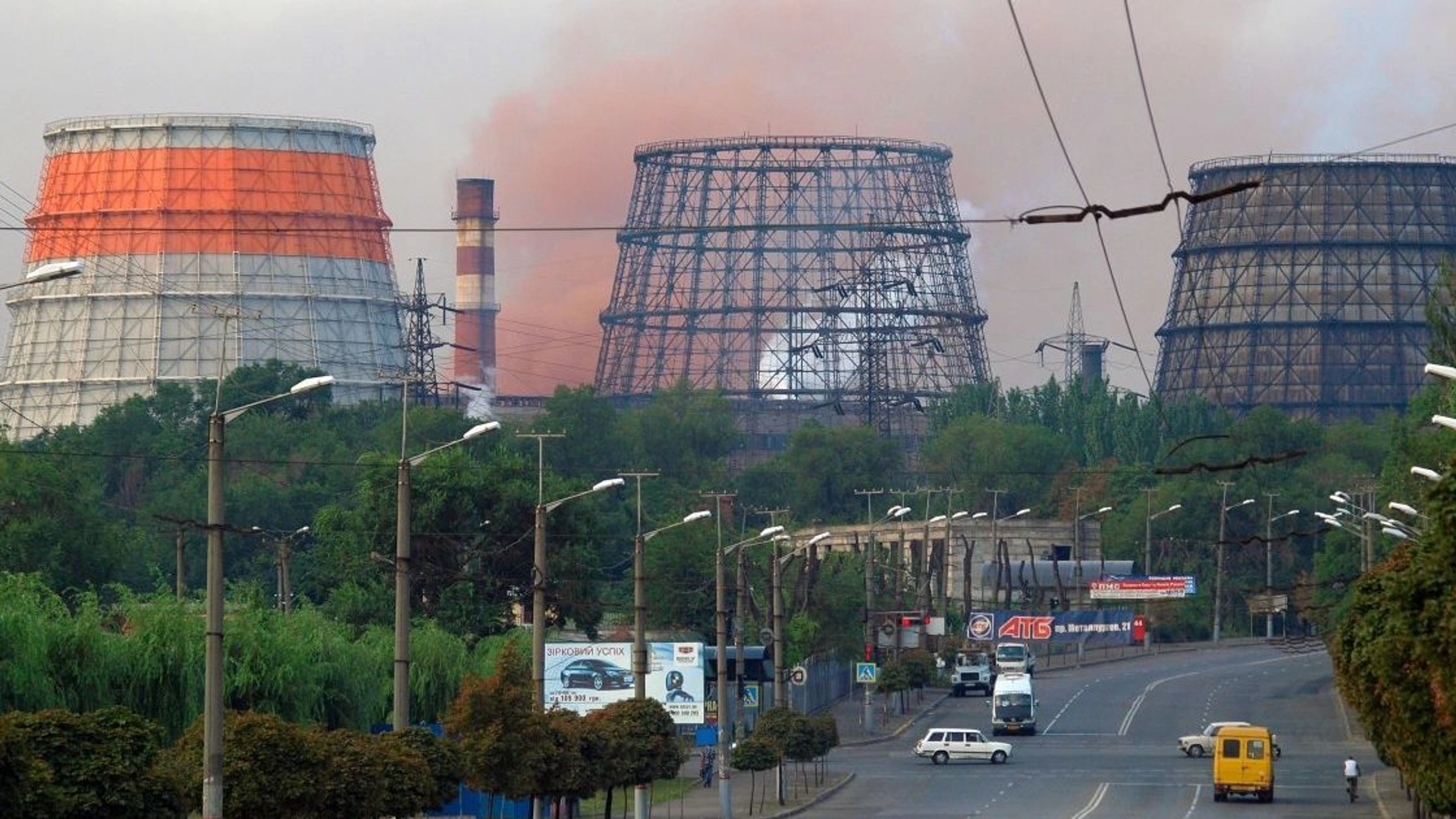
In
summary, it is with sadness that we must conclude: the Ukrainian steel industry has not survived the war. ArcelorMittal’s shutdown in Kryvyi Rih, the destruction of Metinvest’s plants, the destruction of Zaporizhstal, and the loss of coking coal in Pokrovsk—all these are links in a single chain leading to systemic collapse. The steel industry was not merely a sector of the economy; it was a source of foreign currency, taxes, jobs, and Ukraine’s industrial identity. Its loss means the loss of an entire industry that has operated continuously on this land for over 100 years.
Post-war recovery will require more than just repairing equipment—it will be necessary to rebuild the raw material base, logistics, energy infrastructure, and investor confidence. Plants that are currently being mothballed “until peace returns” may never operate again, and this must be understood. Ukraine is losing its metallurgical industry—and with it, one of the few pillars upon which the state could build its postwar recovery. This is a blow not only to the economy but also to the very notion of Ukraine as an industrial nation. And that is precisely why the question is not whether the steel industry will recover—most likely, it never will. The question is whether Ukraine will retain at least some economic foundation upon which to build a new country after the war.




