
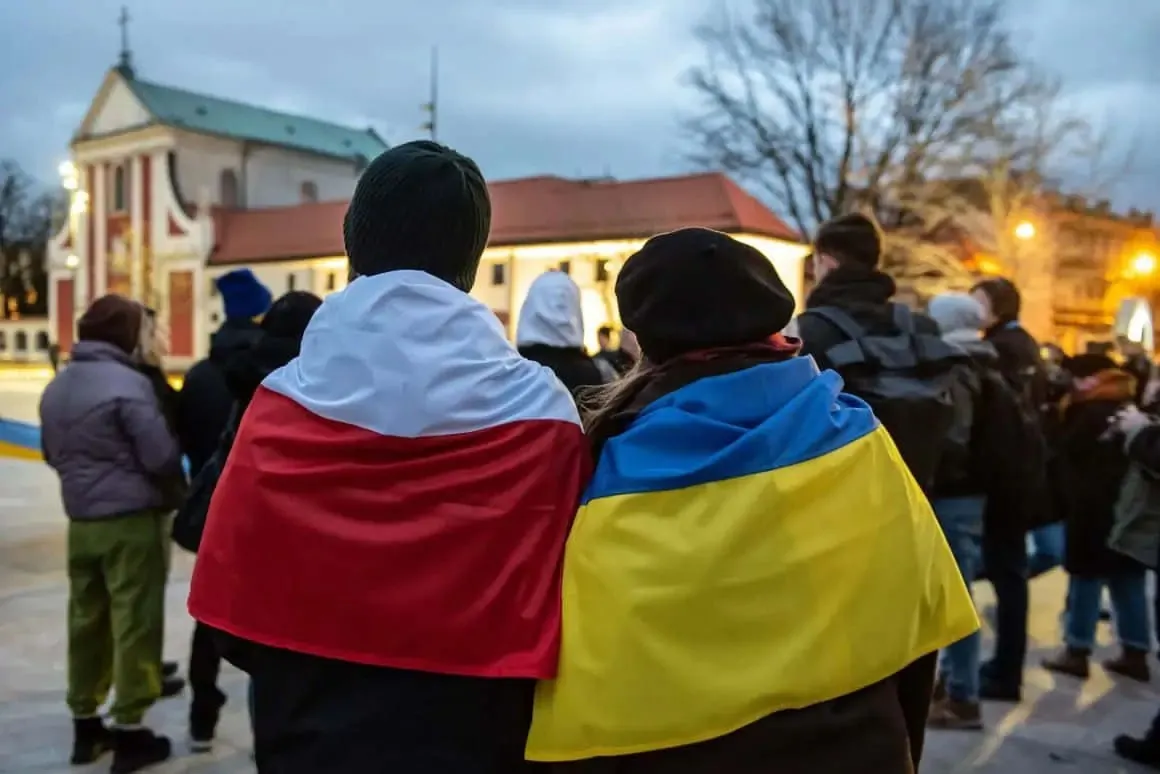
In the spring of 2022, the Ukrainian-Polish border became one of the main symbols of European solidarity with Ukraine. Poles welcomed refugees at train stations, took Ukrainian families into their own homes, collected humanitarian aid, and Warsaw became one of Kyiv’s most active political and military allies.
At the time, it seemed that Russia’s full-scale invasion, if not resolved old historical disputes, had at least pushed them into the background for a long time.
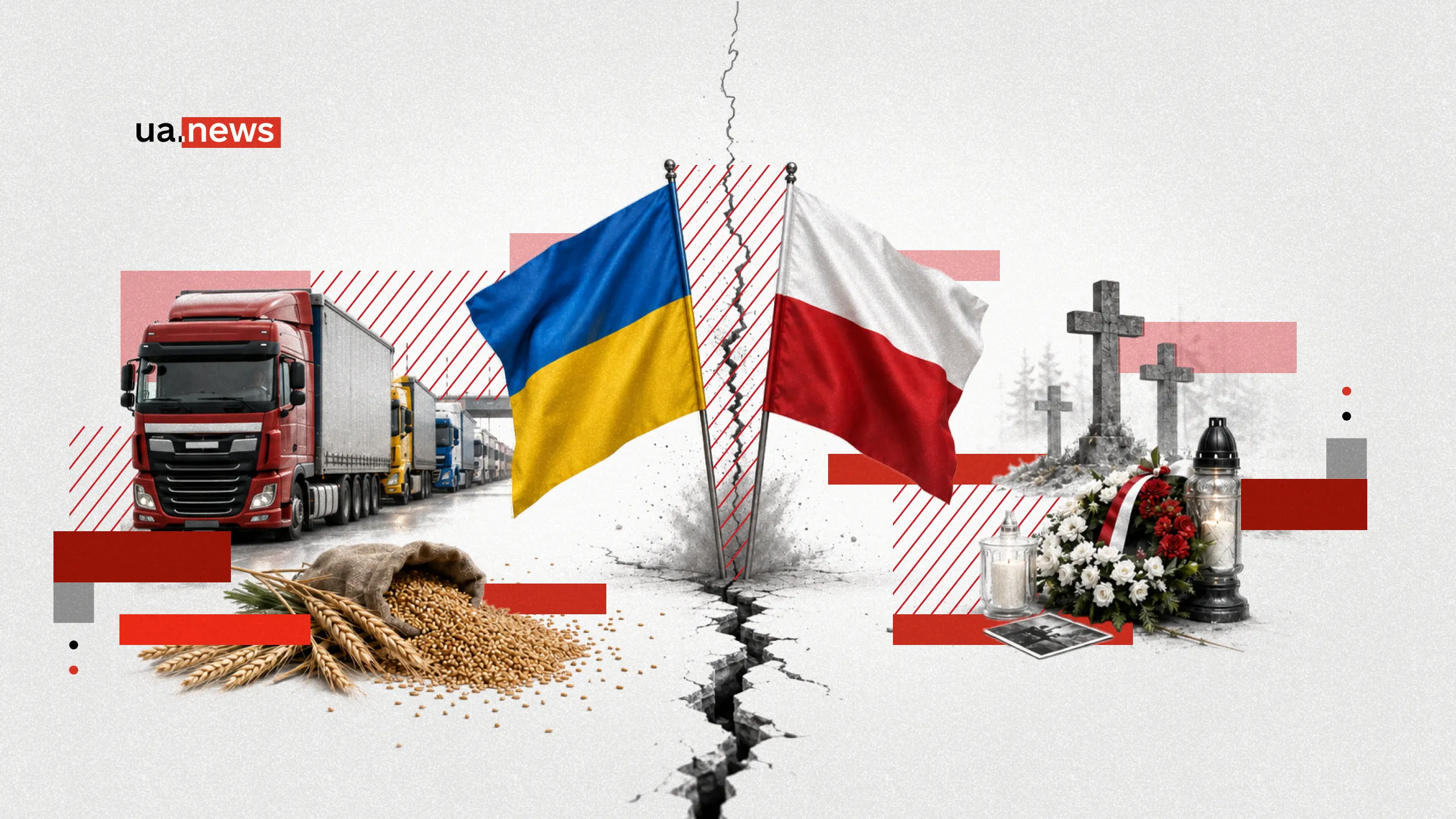
Four years later, the picture looks completely different. Ukrainian grain has become a source of political conflict, Polish farmers have blocked the border, the Volhynia issue has resurfaced in bilateral relations, Polish President Karol Nawrocki stripped Volodymyr Zelenskyy of Poland’s highest state award, opposition politicians have begun talking about deporting some Ukrainian men, and Polish authorities are already being forced to respond to the rising number of attacks on Ukrainians.
The attitude of Polish society itself has also changed. In March 2022, 94% of Poles supported taking in Ukrainian refugees. In July 2026, for the first time since surveys began, opponents outnumbered supporters: 52% versus 42%.
UA.News explains how, over the course of four years, Poland has gone from nearly unconditional support for Ukraine to a significantly cooler partnership; why the grain crisis marked the first real turning point; and whether the current wave of conflicts signals the end of the Polish-Ukrainian alliance.
2022: Poland Became One of Ukraine’s Closest Allies
After February 24, 2022, Poland found itself in a unique position. On the one hand, it became one of the main routes for Ukrainians fleeing the war. On the other, it served as one of the key logistics hubs through which Western aid flowed into Ukraine.
Polish society also demonstrated an exceptionally high level of support.
According to the CBOS Public Opinion Research Center, in March 2022, 94% of Poles supported accepting refugees from Ukraine, while only about 3% opposed it. Support remained exceptionally high throughout the following year.
During that same period, Volodymyr Zelenskyy became one of the most popular foreign politicians in Poland. In July 2022, 86% of Poles surveyed trusted him, while only 4% did not.
This was a moment when the shared threat effectively overshadowed all other issues.
Disputes over Volhynia, the activities of the OUN and UPA, the exhumation of Polish victims, economic competition, and labor migration did not disappear. They simply ceased to be the main issues for a time against the backdrop of Russian missiles, the battles for Kyiv, and millions of people at the border.
This lull did not last long.
Ukrainian grain became the first real turning point
The first major conflict arose not over history, but over money.
After Russia began blocking Ukrainian sea routes, the EU opened land corridors for Ukrainian products. A significant portion of the grain was only supposed to pass through Poland in transit, but some remained on the local market.
For Polish farmers, this meant additional competition and downward pressure on prices.
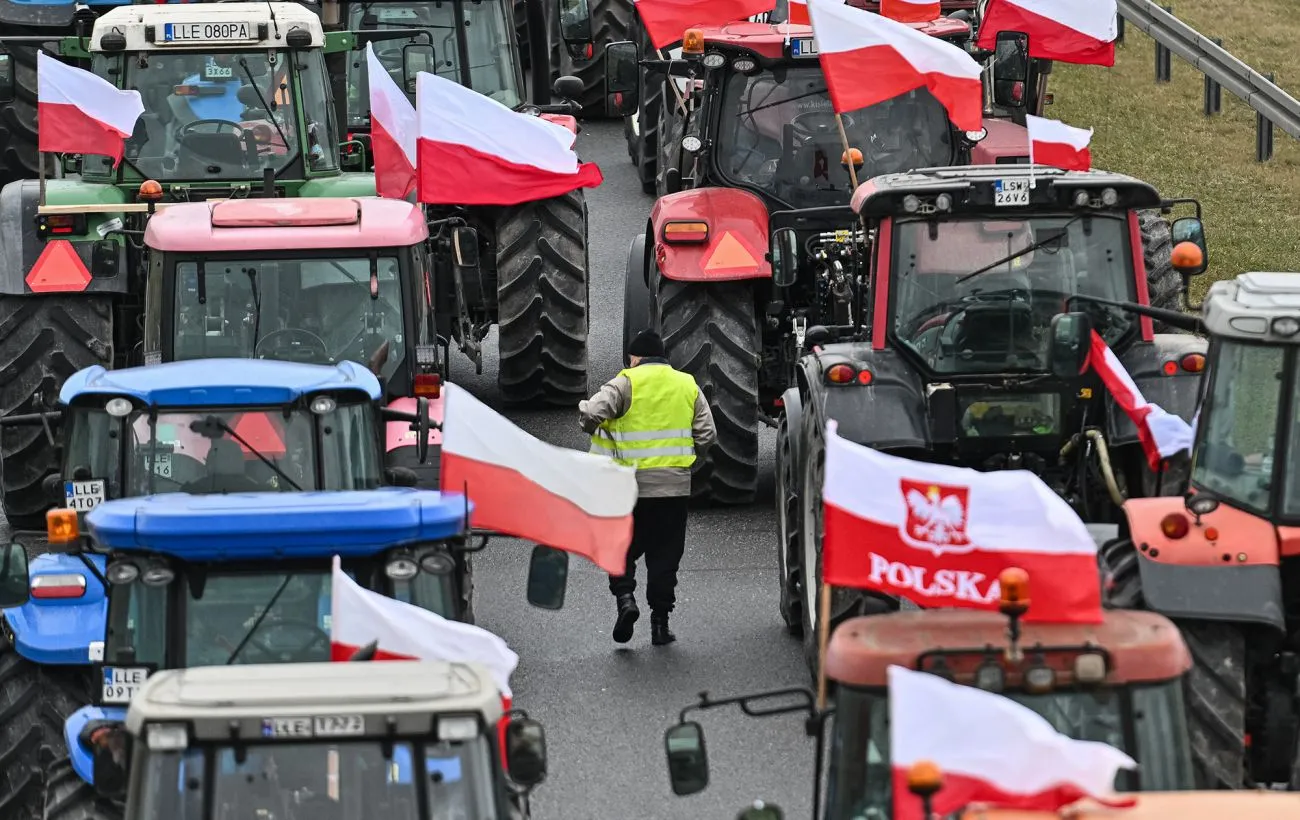
As early as the spring of 2023, Polish farmers began to protest actively. CBOS itself later directly linked the decline in support for Ukrainian refugees to the grain crisis of spring 2023 in its research.
The situation came to a head in the fall.
After the end of the pan-European restrictions, Poland decided on its own to extend the ban on imports of certain Ukrainian agricultural products.
During his address to the UN General Assembly, Volodymyr Zelenskyy stated that some European countries were staging a “political theater” around the grain issue and were effectively helping to set the stage for Moscow. Poland took this as an accusation against itself and summoned the Ukrainian ambassador.
Then-Prime Minister Mateusz Morawiecki responded by calling on Zelenskyy to never again “offend the Poles.” For the first time since the start of the major war, Poland’s domestic interests openly clashed with those of Ukraine.
The fall of 2023 can be considered the first major turning point in relations. Support for Ukraine ceased to be an issue in Polish politics that existed separately from elections, the economy, and the struggle for farmers’ votes.
The border blockade turned the political conflict into a personal one
The next phase began right on the roads.
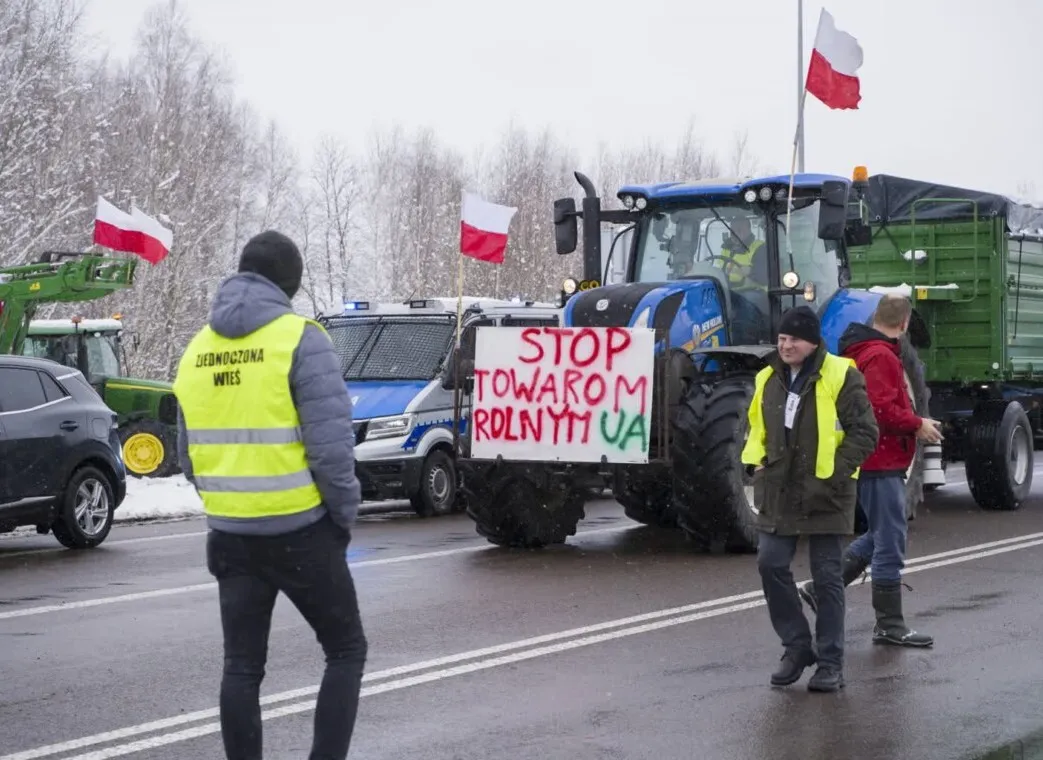
In late 2023, Polish truckers began blocking the border, and in 2024, farmers joined the large-scale protests.
In February, Polish farmers effectively blocked most of the major border crossings. President Zelenskyy called the situation an “erosion of solidarity” and proposed that Polish leaders meet with him directly at the border.
For the Poles, the protests were primarily about competition, trade conditions, and EU agricultural policy. For Ukrainians, the situation looked entirely different.
Ukraine was at war, a significant portion of its cargo passed through Poland, and queues stretching for many kilometers formed at the border.
The incidents that caused the greatest outcry were when protesters began dumping Ukrainian goods.
In February 2024, approximately 160 metric tons of Ukrainian grain were dumped at a Polish railway station. Kyiv demanded that those responsible be punished. It was then that the conflict ceased to be merely a dispute between ministers.
For many Ukrainians, the photos of grain scattered on the ground became a symbol of just how far relations had deteriorated since the spring of 2022.
Volyn Has Returned to the Political Arena
Economic conflicts gradually gave way to a much more complex issue—historical memory.
In Poland, the Volhynia tragedy remains one of the most sensitive issues in relations with Ukraine. The Polish parliament defines the mass killings of the Polish population carried out by Ukrainian nationalists during World War II as genocide.
For Ukraine, the situation is more complex. The UPA is part of the Ukrainian national historical narrative about the struggle for independence, particularly against the USSR.
These two perspectives have coexisted for years. In 2026, they clashed once again. In May, Zelenskyy supported granting a Ukrainian military unit an honorary designation associated with the UPA. In Poland, the decision sparked a sharp reaction.
On June 19, President Karol Nawrocki announced that he was stripping Zelenskyy of the Order of the White Eagle—Poland’s highest state honor.
In response, Zelenskyy returned the award. Other Ukrainian politicians and officials also began returning Polish honors.
This was no longer just a trade dispute; the conflict had become the biggest diplomatic crisis between the two countries since the start of Russia’s full-scale invasion.
Navrotsky vs. Tusk: Even in Poland, There Is No Single Position on Ukraine
At the same time, it would be incorrect to speak of a single “anti-Ukrainian position in Poland.” The political conflict clearly revealed a rift within the Polish government itself.
President Navrotsky takes a harder line on historical issues. In contrast, Donald Tusk’s government is trying to prevent the Volhynia issue from undermining strategic cooperation between the two countries.
Following the incident with the medal, Tusk stated outright that the conflict between Polish and Ukrainian politicians is a “strategic mistake” that will harm both countries economically, geopolitically, and in terms of reputation.
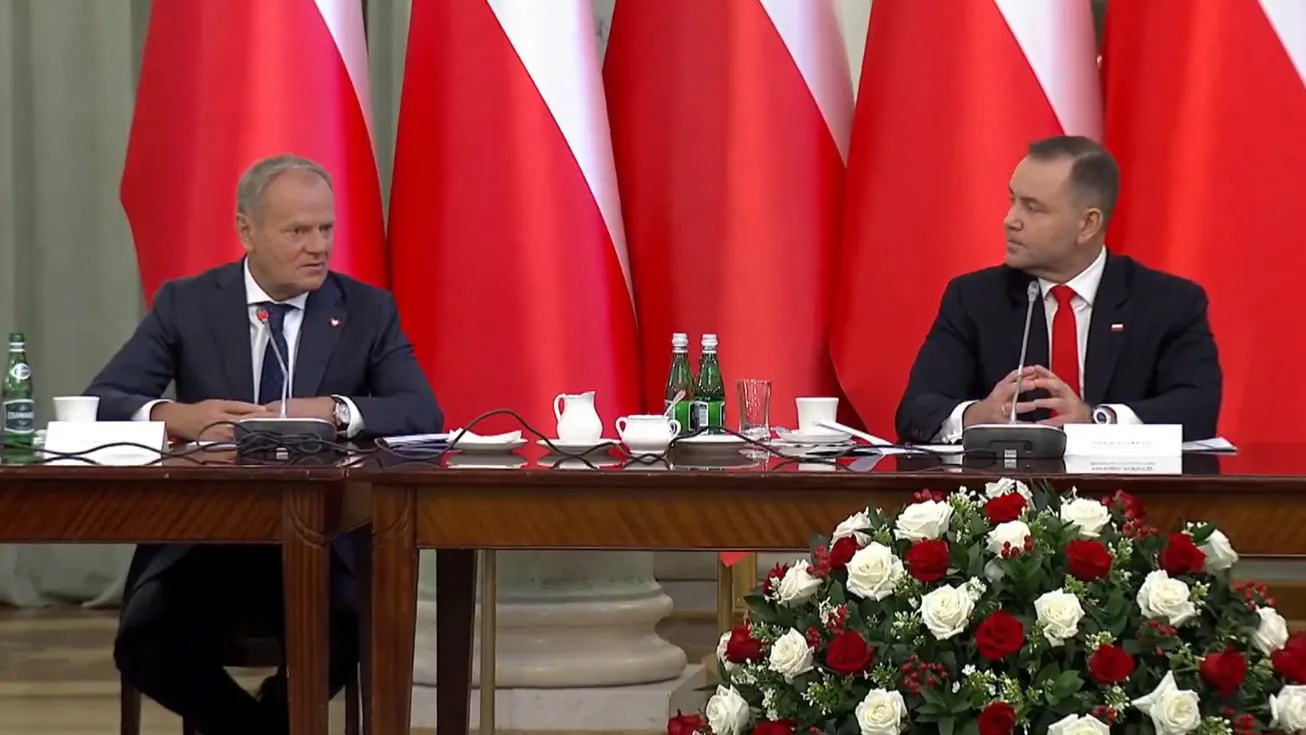
At the same time, Tusk emphasizes that Ukraine must address the difficult chapters of its history. In early July, he stated that without doing so, it would be difficult to move toward the European Union.
Kyiv, following the most acute phase of the conflict, has also begun to demonstrate a willingness to compromise. On July 17, Zelenskyy held a separate meeting on relations with Poland and promised to expand the investigation into past events and open the relevant archives of the Ukrainian security services.
In other words, even at the height of their diplomatic row, both sides continue to seek a mechanism that will prevent history from turning into a permanent political conflict.
From 94% Support to a Majority of Opponents: What Happened to Polish Society
The most telling change took place not in the presidents’ offices, but among ordinary Poles.
In March 2022, 94% of Polish citizens supported taking in Ukrainian refugees.
In July 2026, according to a new CBOS poll, the situation had reversed: 52% opposed continuing to accept Ukrainian refugees, while 42% supported it. This is the first time since such surveys began that opponents have outnumbered supporters.
Another 54% of Poles believe the assistance their country provides to Ukrainian refugees is excessive. Only 40% consider it sufficient.
Moreover, CBOS highlights another important trend: previously, negative attitudes toward Ukrainians were particularly characteristic of certain age or political groups. In 2026, this sentiment became significantly more widespread and extended to various segments of the population.
The general attitude toward Ukrainians has also changed.
In a January 2026 CBOS survey, 29% of Poles expressed sympathy toward Ukrainians, while 43% expressed antipathy. The center notes that this deterioration in attitudes toward Ukrainians has been observed for the third consecutive year.
The trend in Zelenskyy’s personal approval rating is also telling.
In July 2022, 86% of Poles trusted him. By February 2026, that figure had dropped to 49%. The level of distrust rose from 4% to 28% during this period.
At the same time, Zelenskyy remains one of the most positively viewed foreign politicians in Poland. In other words, this does not represent a complete rejection of Ukraine, but rather a very sharp decline in the level of public sympathy that existed at the start of the war.
The deportation of Ukrainian men has already become a political issue
Public opinion directly influences politicians’ rhetoric.
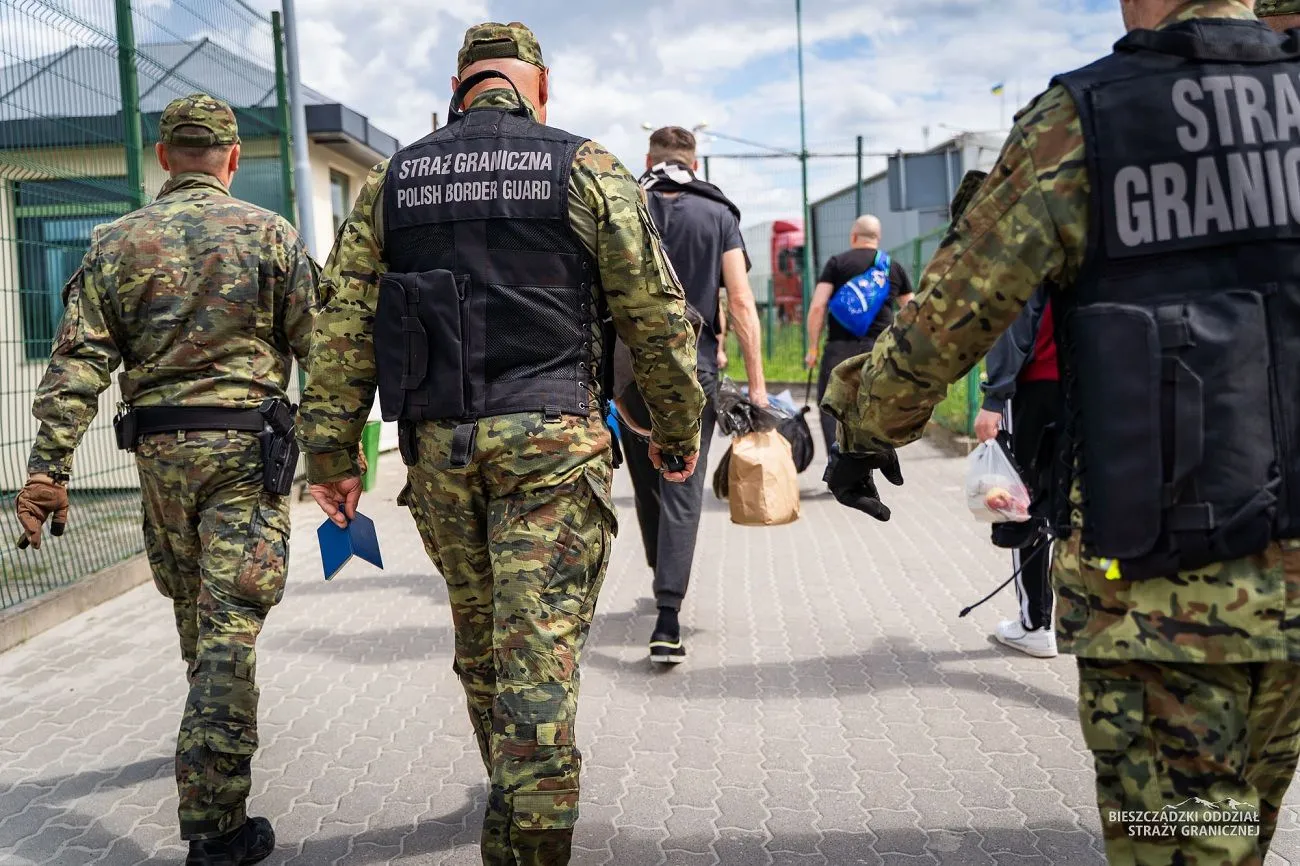
As early as 2024, CBOS found that 67% of Poles supported the idea of sending men of draft age residing in Poland back to Ukraine, while 22% opposed it.
By August 2026, this issue had evolved into a concrete political proposal.
Tobiasz Bochen, a leader of the opposition Law and Justice (PiS) party, stated that following a potential return of PiS to power, one of the first decisions could be the deportation of Ukrainian men of draft age who are not working legally in Poland.
The Polish government called the idea demagogic and absurd. According to the Polish Ministry of the Interior, about 95% of Ukrainian men of the relevant age who are in the country are working legally.
But what is important here is not even the scale of potential deportations. The very fact that such a proposal is becoming part of the normal political discourse of a major Polish party shows just how much the atmosphere has changed compared to 2022.
From Political Rhetoric to Assaults on Ukrainians
An even more alarming trend is the rise in the number of attacks on Ukrainians. In July, a video went viral showing three men attacking a Ukrainian man and his girlfriend in Wrocław. Two suspects were detained.
Following this, Prime Minister Donald Tusk was forced to publicly call for an end to xenophobic violence against Ukrainians.
According to Polish police, in the first half of 2026, 180 reports of possible hate crimes against Ukrainians were filed—approximately 30% more than during the same period the previous year.
This does not mean that all 180 cases have already been recognized by the courts as hate crimes, but the trend has become significant enough to warrant a personal response from the prime minister. At the same time, it is important to see the other side of Polish society.
On August 9, demonstrations against violence and xenophobia toward Ukrainians took place in more than twenty Polish cities. In Warsaw, Kraków, Wrocław, Poznań, and other cities, Poles took to the streets under slogans against hatred toward migrants.
In other words, Poland has not become “anti-Ukrainian.” Rather, the Ukrainian issue has become one of the factors contributing to the increasingly deep polarization of Polish society itself.
Why History Has Once Again Become a Problem for Ukraine and Poland
One of the reasons for the current deterioration in relations is that, after several years of war, issues that had effectively been set aside in 2022 due to the common threat from Russia have once again come to the forefront.
Ulrich Schmid, a professor at the University of St. Gallen, describes the current situation as a kind of “historical trap.” In his view, the Ukrainian and Polish interpretations of the Volhynia tragedy differ so greatly that the scope for a shared understanding remains very narrow.
He also points to the characteristic cyclical nature of relations between the two countries, where periods of demonstrative friendship alternate with sharp mutual accusations.
Ukrainian-American economist Roman Sheremeta takes a more pro-Ukrainian stance. He believes that relations between Poland and Ukraine cannot be reduced solely to the dispute over Volhynia and the UPA.
In his view, both sides must speak honestly about the crimes of the past, but historical memory should not be turned into a tool that undermines the strategic partnership between the two countries today.
And this is perhaps one of the main problems at this stage of the relationship: history is increasingly shifting from the realm of historians to pre-election politics, presidential statements, and the parties’ struggle for voters.
Poland and Ukraine will not return to the spring of 2022
Despite all the conflicts, Poland has not ceased to be a strategically important partner for Ukraine.
The countries remain neighbors; Poland remains critically important for Ukrainian logistics and the security of NATO’s eastern flank, while Ukraine itself remains, for Warsaw, a state that keeps Russia at bay hundreds of kilometers east of the Polish border.
That is precisely why, even after the biggest diplomatic scandal, both sides began seeking a path back to working relations. Zelenskyy has promised to expand access to archives and cooperation on historical issues, while Tusk has openly called for the conflict over the past not to be turned into a strategic rift.
But it is likely impossible to return to the atmosphere of 2022. Back then, relations were defined by a single extraordinary event—the Russian invasion. Poland viewed Ukraine first and foremost as a victim of aggression and a country that needed to be saved.
Over the past four years, all other factors have returned to the picture: competition among farmers, migration, social benefits, elections, disputes over Ukraine’s EU accession, Volhynia, the UPA, and mutual insults among politicians.
Therefore, the turning point did not happen overnight.
The first major crack appeared in the spring and fall of 2023 over grain. The border blockade in 2024 shifted the conflict from the corridors of power to the level of society. And the dispute over historical memory in 2026 showed that even a war with Russia was no longer capable of automatically overshadowing all other conflicts.
Two figures best illustrate the scale of this change. In March 2022, 94% of Poles supported taking in Ukrainian refugees. By July 2026, that figure had dropped to 42%, while 52% were now opposed.
This is not the end of the Polish-Ukrainian partnership. Rather, it is the end of its most romantic period.
The next phase of the relationship will be much more pragmatic: Poland will increasingly demand that Ukraine take its economic and historical interests into account, while Kyiv will demand that Warsaw not turn domestic political competition into anti-Ukrainian sentiment.
And the main question now is not whether Ukrainians and Poles will be able to feel the same unity they did in the spring of 2022. Rather, it is whether the two countries can learn to debate issues such as grain, refugees, and Volhynia in a way that does not undermine a far greater strategic interest—preventing Russia from once again dictating the future of Eastern Europe.


