
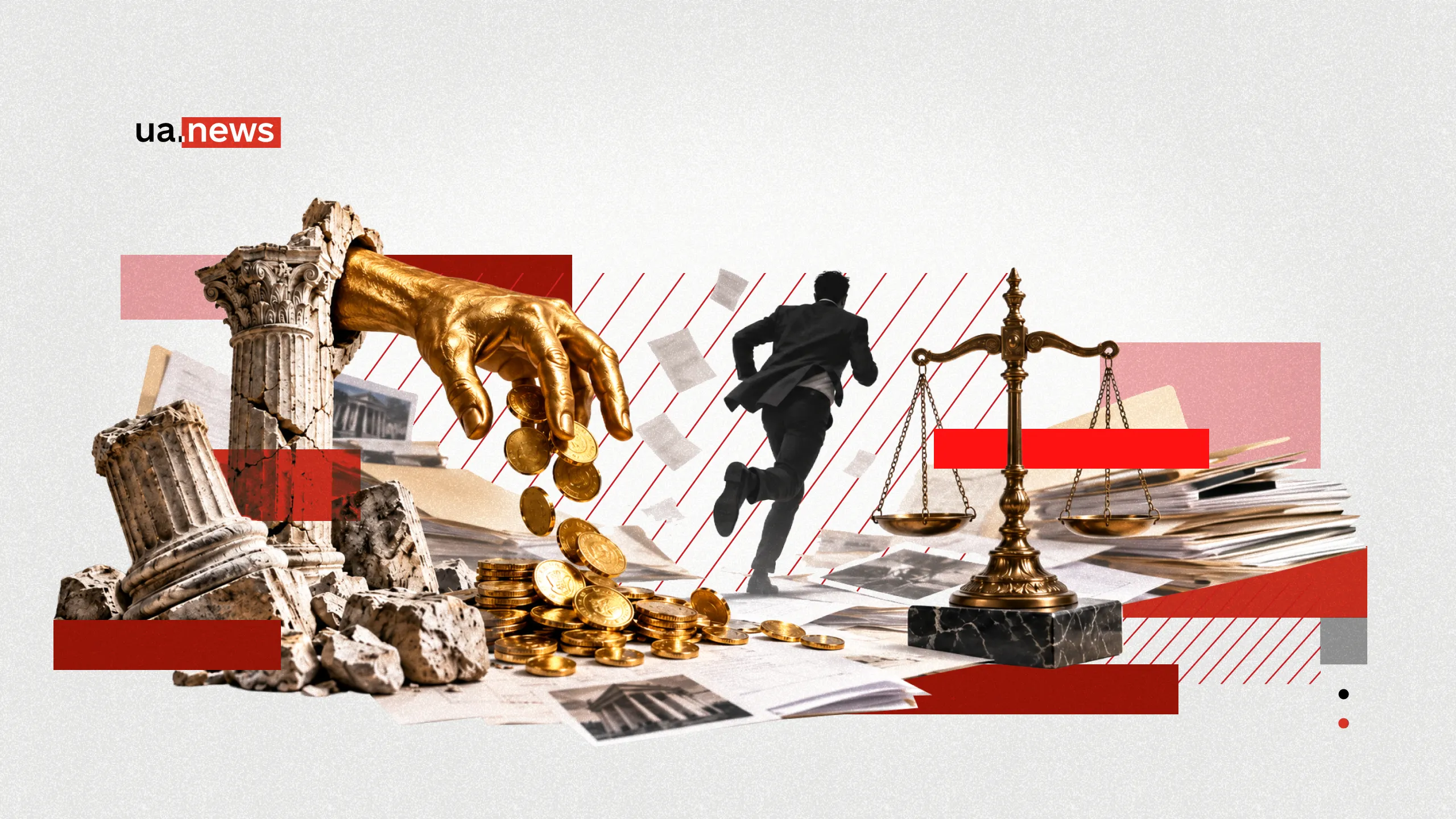
Lately, operations by Ukrainian anti-corruption agencies are increasingly being identified not by the numbers of their criminal cases, but by names that sound more like movies, mythology, or history lessons. “Midas,” “Forrest Gump,” “Themis,” “Disneyland,” and now “Carthage”—each new major case by NABU and the SAP brings yet another code name.
Operation “Carthage” provided yet another reason to revisit this phenomenon. In early September, NABU and the SAP announced the dismantling of a criminal organization that law enforcement officials link to an official from the Office of the Prosecutor General. According to investigators, its members received money for “protecting” fraudulent call centers and subsequently laundered the proceeds.
At the same time, these unusual code names are not merely an attempt to present a high-profile investigation in a more appealing light. SAP Head Oleksandr Klymenko recently explained that code names are primarily needed by the detectives themselves so they do not have to use the real names of individuals or targets in their work communications, thereby reducing the risk of information leaks.
UA.News explains where the names of NABU’s most high-profile operations might have come from, why one case was initially called “Disneyland,” what Forrest Gump, King Midas, and ancient Carthage, and what equally unusual code names law enforcement agencies in other countries use.
“Carthage”: Why NABU’s New Operation Was Named After the City That Rome Decided to Completely Destroy
In early September 2026, NABU and the Specialized Anti-Corruption Prosecutor’s Office (SAPO) carried out one of the most high-profile operations in recent months—this time, the Office of the Prosecutor General was in the spotlight.
According to investigators, in mid-2025, one of the heads of a structural unit within the OGP established a criminal organization that included employees of the prosecutor’s office and their associates. Law enforcement officials allege that the participants systematically received illicit benefits in exchange for not interfering with the operations of fraudulent call centers.
According to the investigation, they attempted to launder the money through real estate, jewelry, luxury goods, and bank accounts held by relatives. NABU reported that they purchased more than 20 million hryvnias worth of property and valuables alone, while another 10 million hryvnias was deposited into accounts under the guise of business income. Some assets were transferred to third parties. In total, law enforcement officials identified five suspects.
What’s far more interesting for our topic, however, is the name “Carthage.”
NABU and the Special Anti-Corruption Prosecutor’s Office (SAPO) have not yet publicly explained why investigators chose this particular code name. Therefore, it is impossible to assert that the name has a specific meaning. However, the historical association here is so strong that it’s hard to miss.
Carthage was one of the most powerful states in the ancient Mediterranean and Rome’s main rival. The confrontation between the two powers lasted for decades and went down in history as the Punic Wars. Hannibal, who led his army across the Alps and nearly brought Rome to the brink of defeat, is closely associated with Carthage.
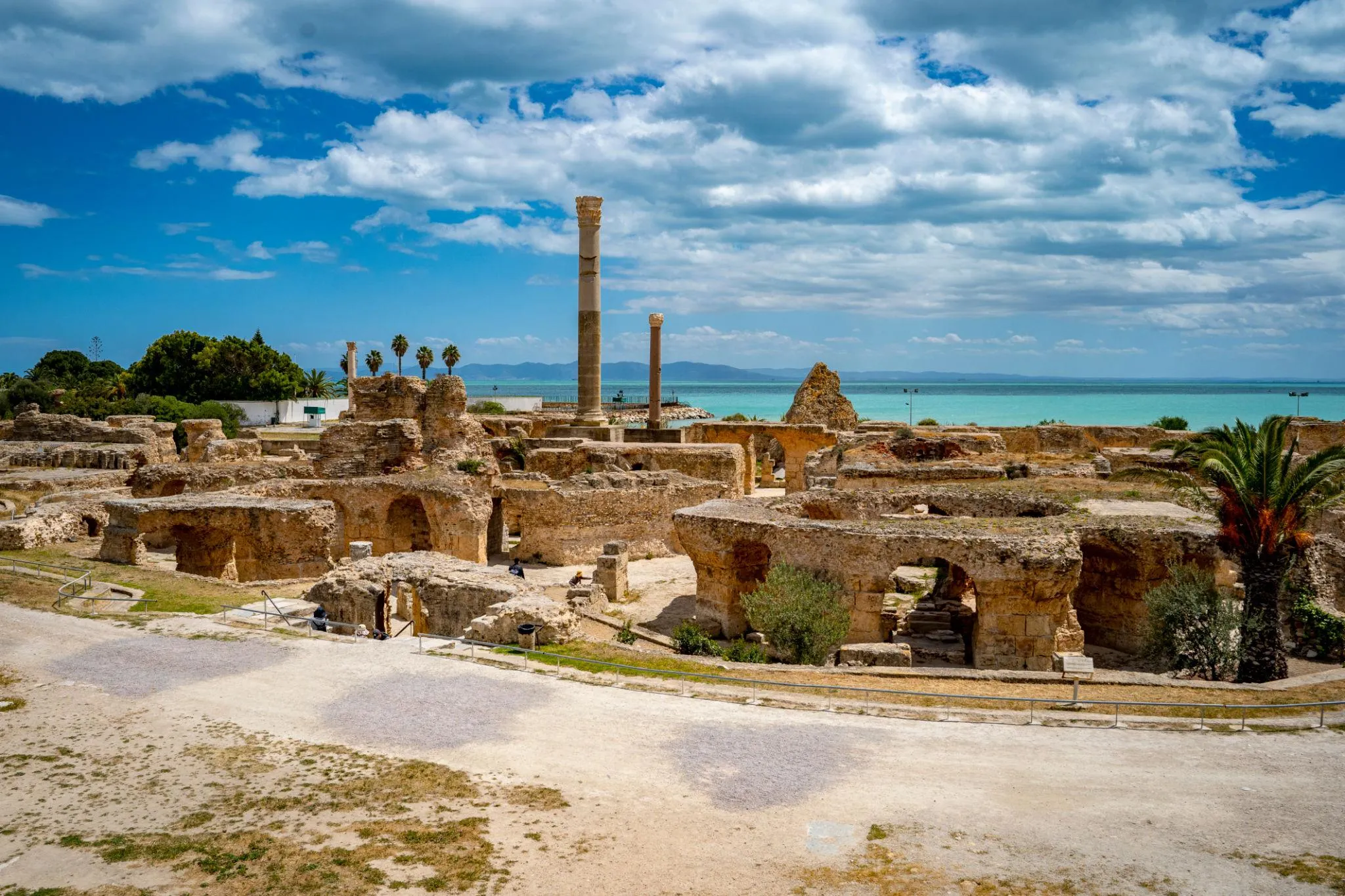
However, Rome ultimately prevailed. After the Third Punic War in 146 BCE, Roman troops captured Carthage, razed the city to the ground, and turned its territory into a Roman province.
This story is also associated with one of the most famous political phrases of antiquity—*Carthago delenda est*, meaning “Carthage must be destroyed.” It is traditionally attributed to the Roman statesman Cato the Elder, who insisted on the complete elimination of Rome’s main rival.
Therefore, “Carthage” as the name of a law enforcement operation naturally reads as a metaphor for a system or structure that they plan not merely to undermine, but to destroy. However, this is just one interpretation of the historical reference. NABU detectives have not yet confirmed that they intended this specific meaning when choosing the name.
Operation “Midas”: The King Who Turned Everything into Gold, and the Case Involving Hundreds of Millions
Prior to “Carthage,” “Midas” was likely the best-known example of NABU’s naming conventions. NABU and the Special Anti-Corruption Prosecutor’s Office (SAPO) carried out the operation under this name in November 2025 after more than 15 months of evidence gathering and thousands of hours of audio recordings.
According to law enforcement officials, a group of individuals established a system to exert influence over strategic enterprises in the energy sector, primarily “Energoatom.” According to the investigation, the state-owned company’s contractors were offered to pay between 10% and 15% of the contract value to avoid having payments blocked or losing their supplier status.
This scheme itself had another internal name—“Shlagbaum”: pay up and you’re through; don’t pay, and you’ll run into problems.
During the first phase of the operation, law enforcement conducted more than 70 searches. According to NABU estimates, approximately $100 million may have passed through the so-called “laundromat”—where off-the-books accounting was conducted and funds were laundered—during the period covered by the investigation.
As of 2026, the investigation continued to expand. NABU reported new allegations, and in one instance, the amount in question was already over $112 million in cash, which, according to investigators, the criminal organization had obtained from activities in the energy sector.
And now—on to the title. Midas is a king from ancient Greek mythology who asked Dionysus for the ability to turn everything he touched into gold. At first, it seemed like the perfect gift. Stones, branches, and objects around the king turned to gold. But very quickly, Midas realized the trap: food and drink also turned to gold. The gift of absolute wealth turned into a threat to his own life.
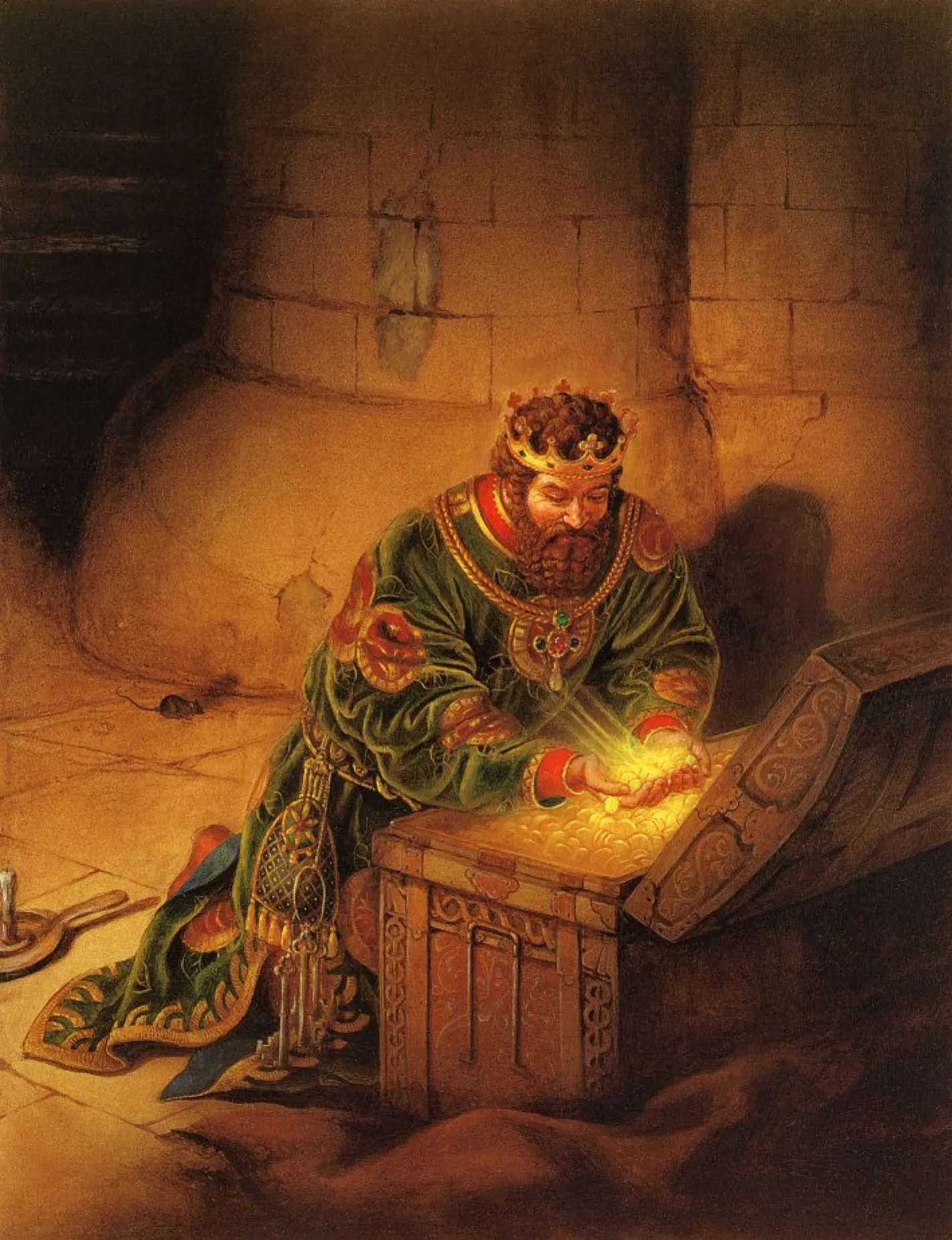
This is the origin of the well-known phrase “the Midas touch”—the ability to turn virtually anything into a source of money or profit.
NABU has not officially explained whether the myth of the golden touch specifically inspired the operation’s name. However, in a case where the central themes were multimillion-dollar cash flows, “money laundering,” kickbacks from government contracts, and luxury assets, such a parallel seems more than obvious.
“Forrest Gump”: A single phrase in a wiretap effectively explained the entire name of the operation
In the case of Operation “Forrest Gump,” the origin of the name is much easier to trace. On August 19, 2026, NABU and the SAP announced the dismantling of a criminal organization whose activities, according to the investigation, were linked to corporate raiding, the seizure of high-value real estate, interference in state information systems, and money laundering.
Law enforcement officials stated that in the fall of 2025, members of the organization seized two companies with assets totaling 248 million hryvnias. Another target was real estate in central Kyiv valued at over 500 million hryvnias.
A separate incident involved 150 million hryvnias in cash, which, according to the investigation, was funneled through a series of corporate accounts into the legal financial system to post bail for one of the defendants in another major case—the “Midas” case.
The name refers to Robert Zemeckis’s 1994 cult classic *Forrest Gump*, starring Tom Hanks. But this time, the connection to the film can be traced without any complicated speculation.
In one of the audio recordings released by NABU, the speakers discuss the origin of the money and how it could be accounted for. The conversation begins with a reference to *Saving Private Ryan*, and then one of the men moves on to *Forrest Gump*.
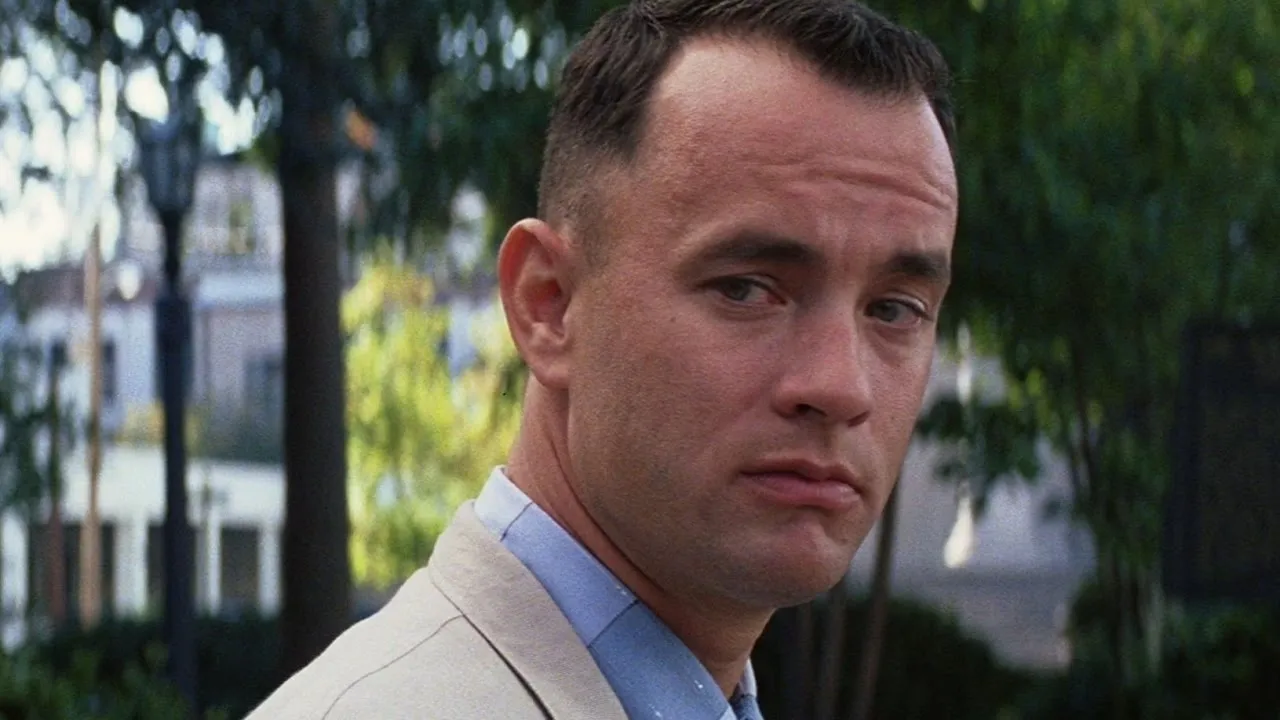
There’s even a double cinematic reference: Tom Hanks plays the lead role in both *Forrest Gump* and *Saving Private Ryan*. However, NABU did not state in a separate official statement that this particular conversation was the reason for the naming. However, unlike “Midas” or “Carthage,” here the connection between the case materials and the title can literally be seen in the released video.
Before “Forrest Gump” came “Disneyland”: how “Mickey Mouse” helped explain the entire naming system
The story became even more interesting in early September, when SAP head Oleksandr Klymenko publicly explained for the first time how such names are created. It turned out that “Forrest Gump” and “Themis” were originally part of a single large project with a completely different name—“Disneyland.”
The reason was simple: the investigators had nicknamed one of the central characters “Mickey Mouse.” As the volume of evidence grew and the investigation began to be divided into separate episodes, new working titles gradually emerged from “Disneyland”—among them “Forrest Gump” and “Themis.”
According to Klymenko, the names are coined directly by the detectives who begin working on the case. It’s not the NABU marketing team, nor is it a special commission that tries to come up with a catchy name for a press release after the case is solved.
The main purpose is to maintain secrecy. Detectives and prosecutors try not to use people’s real first and last names in their work communications. If an outsider hears the words “Mickey Mouse,” “Disneyland,” or “Forrest Gump,” it will be much harder to figure out exactly who the anti-corruption agencies are investigating.
That’s why a code name can come from anything: a suspect’s behavior, a phrase from a wiretap, a profession, a physical appearance, an inside joke among detectives, or a random cultural reference. And once the case is resolved, the internal code finds its way into press releases and becomes a name known throughout the country.
From Themis to Gods and Movie Heroes: Why Catchy Names for Law Enforcement Operations Work Better Than Case Numbers
“Themis” is another example of symbolism that’s as clear as can be. In ancient Greek mythology, Themis is the goddess of justice and order. It was her image that later became one of the main symbols of the judicial system: a blindfolded woman holding scales and a sword.
Therefore, a case involving court rulings, legal mechanisms, registries, and attempts to gain control over property through the legal system practically calls for such naming.
But for law enforcement officials, there is another advantage. “Case No. 52024000000000...” means nothing to the general public. “Midas” or “Carthage” are memorable after just one reading.
Thus, an internal means of secrecy, once an operation is made public, also becomes a convenient way to communicate. Instead of having to explain “the case involving alleged corruption in the energy sector” every time, the media, politicians, and the public simply say “Midas.”
Ukraine is far from unique in this regard. The FBI, the UK’s National Crime Agency, Europol, and law enforcement agencies in other countries have been doing the same thing for decades. And at times, their imagination is no less creative than Ukraine’s.
“Trojan Shield”: The FBI Created Its Own Messaging App for Criminals and Monitored Their Messages for Several Years
One of the most spectacular law enforcement operations of recent decades was the U.S. “Operation Trojan Shield.” The FBI, together with the Australian Federal Police, gained control of the encrypted ANOM platform and effectively turned it into a trap.

Criminal groups around the world were offered special phones and a secure messaging app, which was marketed as a safe communication channel. Crime bosses recommended ANOM to one another, and the platform gradually gained popularity. As a result, more than 12,000 devices were used by over 300 criminal groups in more than 100 countries.
There was only one problem for them: the FBI was monitoring the system. Law enforcement was able to access a massive trove of communications about drugs, weapons, money laundering, and other crimes. This led to hundreds of arrests in various countries.
And the name here seems particularly apt. It’s an obvious play on the legend of the Trojan Horse: people willingly let into their midst a tool that appears to be a gift and a form of protection, but in reality becomes a means of defeating them. The FBI has not provided a separate, detailed explanation of the name, but the metaphor almost perfectly describes the mechanism of the operation itself.
Operation Cookie Monster: How “Cookie” Helped Shut Down One of the Largest Markets for Stolen Passwords
An even more unexpected name was given to an international operation against Genesis Market—one of the largest criminal marketplaces for the sale of digital data. In 2023, law enforcement agencies from the U.S., the EU, Canada, Australia, and the U.K. carried out Operation Cookie Monster.
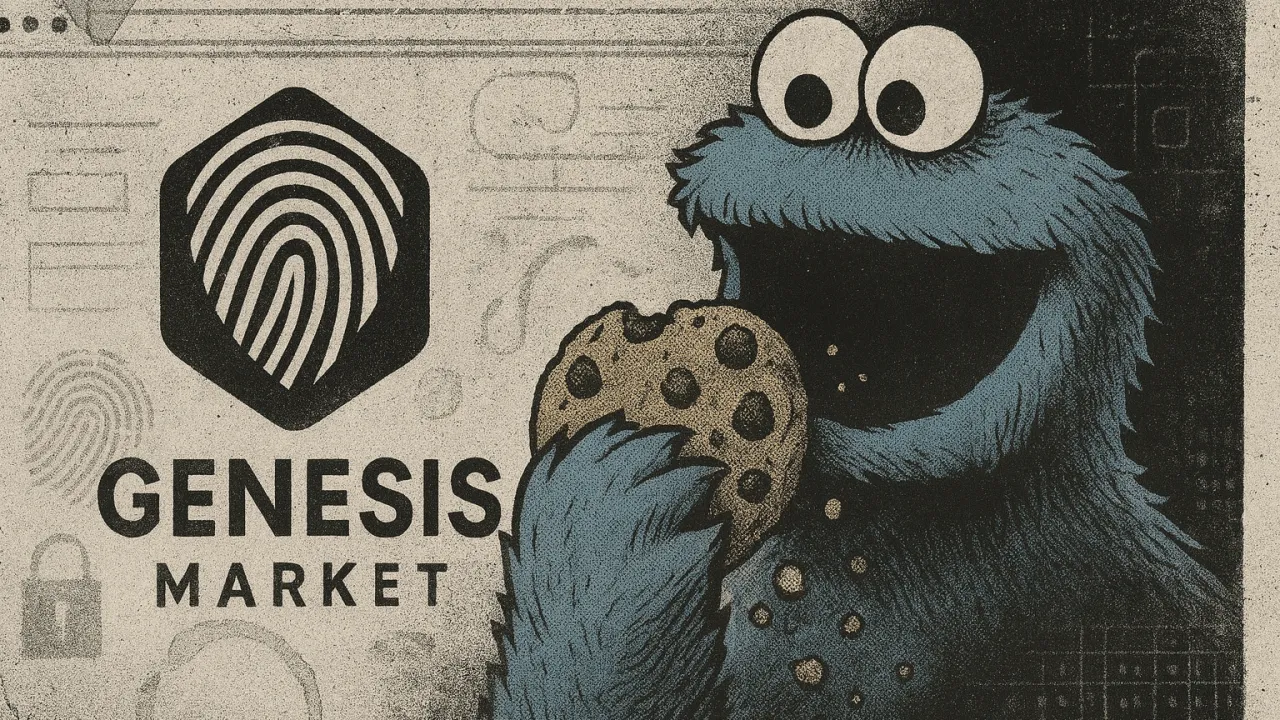
That is, literally, “Operation Cookie Monster,” named after the Sesame Street character who loves cookies. The joke makes sense once you understand the technical side of things. Genesis Market sold not only usernames and passwords but also so-called cookies—files that can allow criminals to recreate a user’s active session and gain access to their accounts.
In other words, law enforcement was essentially hunting down the criminal “cookie” market.
As part of the operation, Genesis Market’s infrastructure was dismantled, and law enforcement conducted over 200 searches and made more than 100 arrests in 13 countries. This is a good example of how a name that seems completely frivolous at first glance can very accurately describe the technical essence of a massive international investigation.
“Endgame”: Europol Decided to Play Its Final Hand Against Cybercrime
In May 2024, Europol, Eurojust, and law enforcement agencies from several countries launched Operation Endgame. The targets were botnets and so-called malware droppers—programs that criminals use to first infect a computer and then install ransomware, data stealers, and other malicious software.
In the early days of the operation, law enforcement agencies targeted the infrastructure of IcedID, SystemBC, Pikabot, Smokeloader, and Bumblebee, made arrests, and took down over a hundred servers. But “Endgame” turned out to be more than a one-time operation. The operation continued.
In November 2025, as part of a new phase, law enforcement agencies took down another 1,025 servers linked to major criminal networks. As of 2026, Endgame remains an international operation involving law enforcement agencies from Europe, the U.S., Canada, and Australia.
Here, the naming has effectively become part of psychological warfare: the name itself tells malware operators that law enforcement isn’t after just one server or a specific individual, but is systematically trying to dismantle the entire ecosystem.
“Varsity Blues”: How the Title of an Old Movie Became a Symbol of the Biggest Scandal in U.S. College Admissions
In 2019, the United States launched a law enforcement operation with a cinematic name. Operation Varsity Blues exposed a massive scheme through which wealthy American families secured admission for their children to prestigious universities.
Parents paid Rick Singer, the scheme’s organizer. He would then either falsify entrance exam scores or create a fictitious athletic resume for the applicant so that the university would admit them as a promising athlete. Among those implicated were well-known entrepreneurs and Hollywood actresses, and the case sparked a nationwide debate about the fairness of the American higher education system.
The name “Varsity Blues” was a reference to the 1999 American film of the same name about high school sports. Later, the operation itself became so well-known that Netflix even released a documentary with the same title.

As a result, the FBI’s internal code name effectively became the commonly used term for the entire American scandal.
“Car Wash”: Latin America’s Largest Corruption Case Began at a Car Wash
Perhaps the best example of how a random working title can go down in history came from Brazil. In 2014, Operação Lava Jato—Operation Car Wash—began there.

In the initial phase, investigators focused on money laundering and a network of companies linked to gas stations and car washes. That’s where the name came from. But what started as a small case began to grow.
The investigation reached the state-owned oil company Petrobras, construction corporations, high-ranking officials, lawmakers, ministers, and presidents. The investigation spawned dozens of separate cases and became one of the largest anti-corruption trials in modern Latin American history.
The name “Car Wash” turned out to be almost prophetic for another reason: the central theme of the case was precisely the “laundering” of huge sums of money. Thus, the name of a small police operation became an international symbol of the fight against political corruption.
From an internal code name to a name known throughout the country
Code names for operations existed long before the NABU was established. For decades, the military, intelligence agencies, and law enforcement have used words that allow them to discuss secret matters without revealing their actual content.
Ukrainian anti-corruption agencies operate on the same principle. Detectives might refer to a suspect as “Mickey Mouse,” the entire initial investigation as “Disneyland,” and one of the subsequent episodes, based on a specific line in an audio recording, into “Forrest Gump.”
Sometimes the symbolism is obvious—as in the case of the Golden Midas. Sometimes it arises directly from the case files—as in “Forrest Gump.” And sometimes, as with “Carthage,” the public sees a powerful historical metaphor, but may never learn the detectives’ true reasoning.
That is precisely what makes such names so effective. For investigators, they remain a way to protect information. For journalists, they serve as a short title for a complex, long-running case. And for the public, they are a word that already carries a whole story behind it.
And, judging by “Midas,” “Forrest Gump,” “Themis,” and “Carthage,” NABU detectives have another unexpected professional skill—pretty good naming.




