
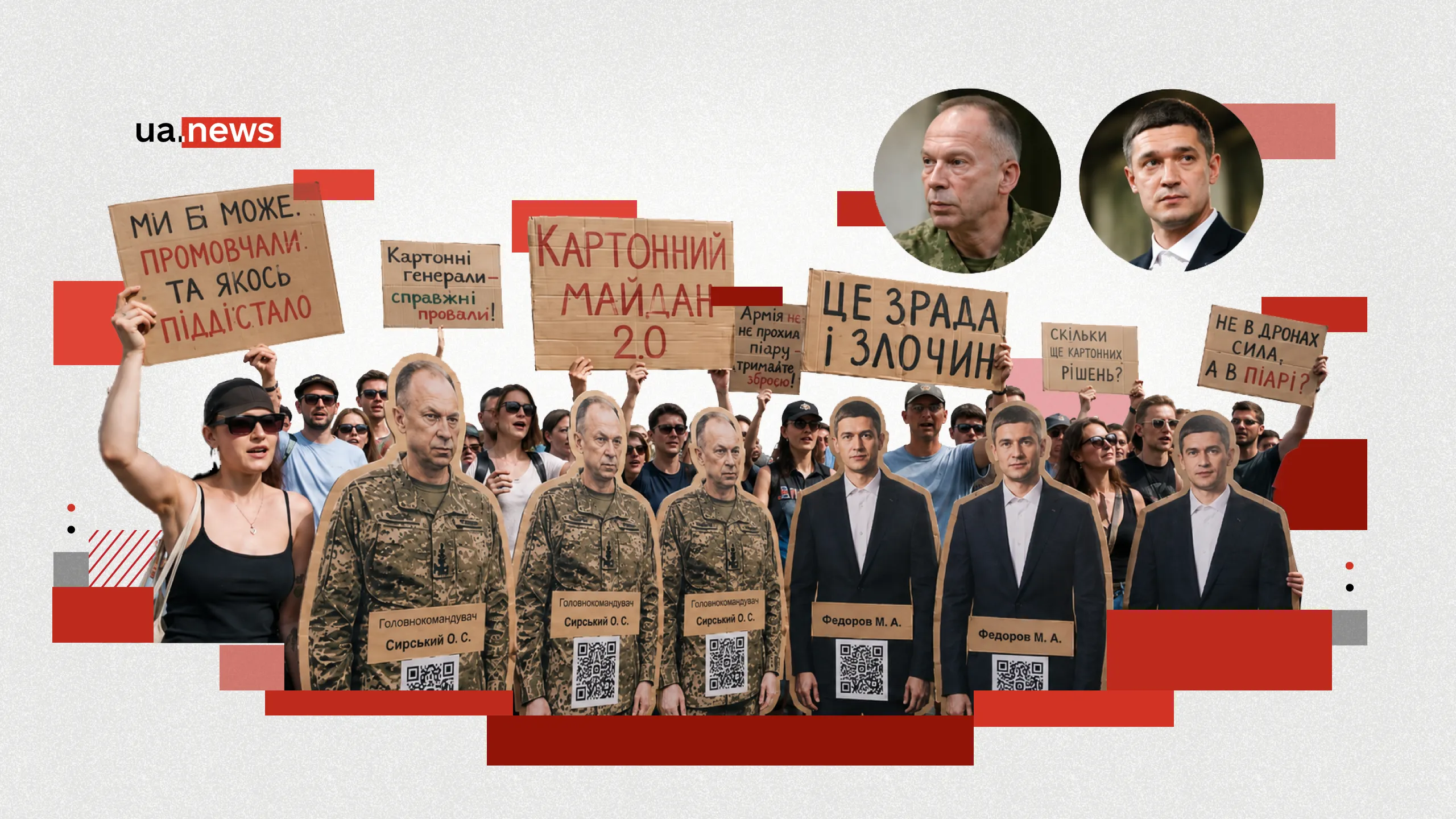
Protests have been ongoing in Ukraine in recent days, and their scale is drawing attention—especially given the state of martial law and, in fact, the ban on mass gatherings. The formal pretext for people taking to the streets was the dismissal of Mykhailo Fedorov from his post as defense minister. Fedorov is widely viewed as an effective manager and a technocratic reformer, and his removal took place with clear violations of the law. This is precisely what sparked a wave of rallies featuring cardboard signs—the “Cardboard Maidan 2.0.”
However, a careful analysis of the slogans, rhetoric, and dynamics of these gatherings reveals a much deeper process. What began as a campaign in support of a specific official is increasingly transforming into a movement with a fundamentally different agenda. The protesters’ focus is not so much on reinstating Fedorov to his post as on the resignation of the Commander-in-Chief of the Armed Forces of Ukraine, Oleksandr Syrskyi, with whom the now-former defense minister had a conflict.
This shift warrants separate consideration, as it appears to be driven not merely by a personnel issue but by an attempt to fundamentally rethink the army’s role in the country’s political system. We explore what this means in more detail in this UA.News article.
Fedorov as a Tool, Not the Ultimate Goal
Mykhailo Fedorov’s role in the context of the current protests is telling. He is certainly not just another random official in the Ukrainian government. Over the years, while serving in various positions, he has managed to cultivate an image as someone well-versed in digitalization, technology, and innovation. His contacts in the West, forged through consistent communication and the promotion of a technology agenda, have earned him a reputation as one of the few government officials who speaks to international partners in a language they understand. It was precisely this political and media capital that allowed him to mobilize a segment of civil society following his dismissal.
However, it would be a mistake to view Fedorov as an independent political leader. He is, first and foremost, an administrator and a technocrat—an integral part of the very system that, according to the logic of the protest, he supposedly opposes. Herein lies a fundamental contradiction: how can one change the system while being an integral part of it? A car cannot drive in different directions if three wheels are turned to the right and one to the left. The design does not allow for such a maneuver without destroying the entire mechanism. Fedorov is not the kind of figure capable of breaking the established configuration of power, since he himself is a product of that configuration.
That is precisely why the protests, which began under the slogans calling for his return, quickly revealed their true nature. Fedorov serves here more as a battering ram. His name, his image, and his media recognition are being used to legitimize much broader demands. This is a classic example of how a personality-driven pretext is transformed into a tool for undermining much more fundamental structures. And the main target of this destabilization appears to be not the civilian Ministry of Defense, but the higher military command.
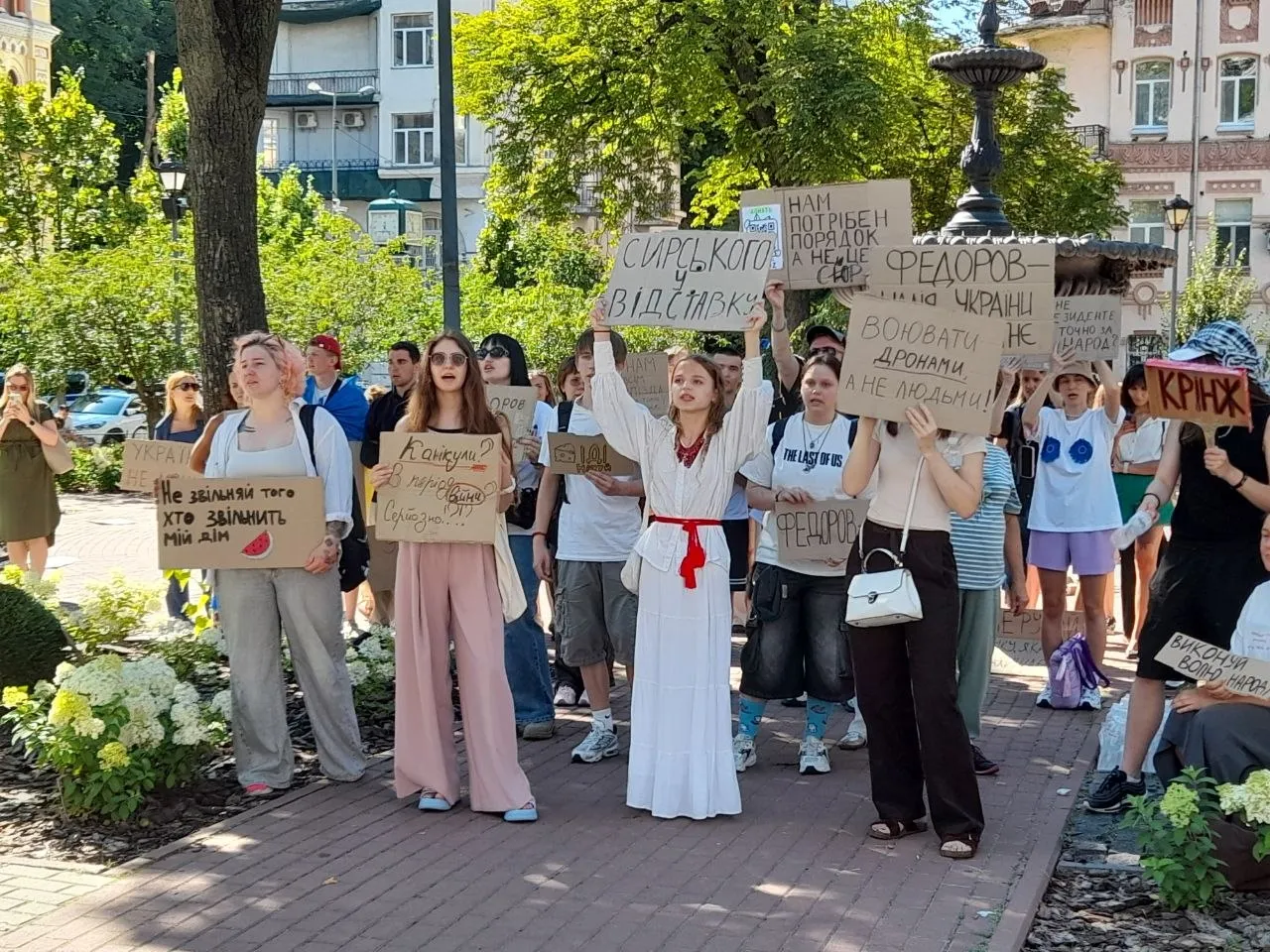
Syrskyi as the Main Target of the Protests
Why, then, has Syrskyi found himself at the epicenter of the protest rhetoric? Answering this question requires an understanding of the role that the current Chief of the General Staff plays within the system of power relations.
Oleksandr Syrskyi is a military leader devoid of public political ambitions. His management style, his communication, and his positioning in the public sphere indicate that he is, first and foremost, an executor of the will of the political center (that is, the president). He carries out the tasks assigned to him without claiming an independent political role, without setting his own agenda, and without attempting to leverage his position for influence beyond the strictly military sphere.
It is precisely this predictability and lack of ambition that the current administration values. In a system where initiative, vision, and independence are increasingly perceived as a threat rather than a competitive virtue, Syrskyi is the ideal candidate for the role of commander-in-chief. He does not create an alternative center of gravity, does not accumulate personal legitimacy, and does not form a circle of officers loyal to him personally—which could serve as a basis for political influence, and so on. He is a functional figure, not an independent player. This is neither good nor bad; it in no way diminishes Syrsky as a person or as a professional—it is simply a fact.
However, this is precisely what makes him a target for those forces that seek to see a completely different figure at the head of the army—a figure who would possess not only military authority but also political agency. A figure who can speak with the state’s political leadership as an equal, rather than as a subordinate. And this brings us to the most crucial question: whose interests such a change serves, and what consequences it might have for the state as a whole.
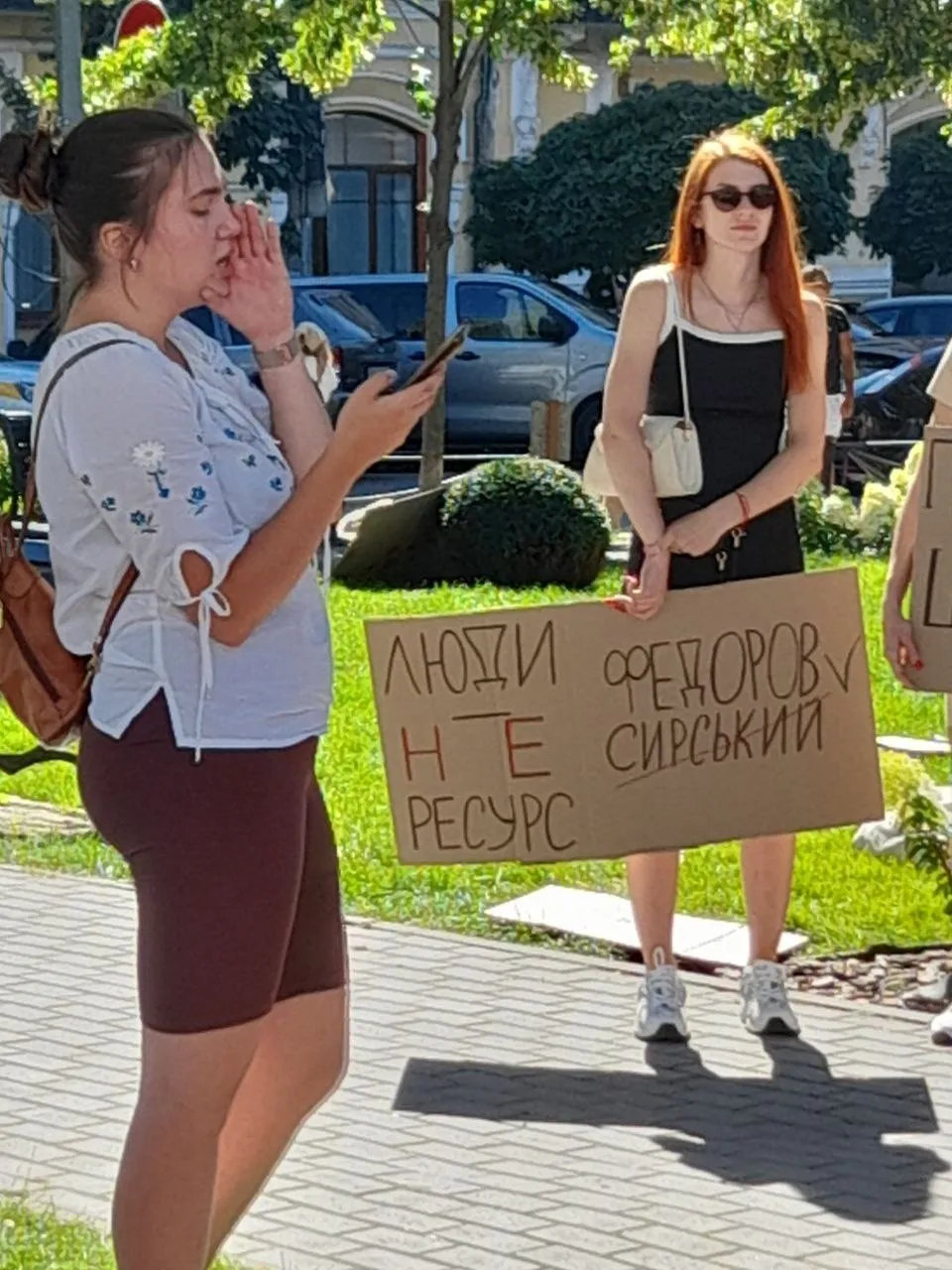
The Political Sovereignty of the Army: Historical Context and Contemporary Risks
The army as a political actor is a phenomenon well known in world history. The example from the modern world that is closest to and most understandable for us is Turkey, where the military has for decades acted as the guarantor of a secular order, staging coups whenever it perceives a threat to Kemalist principles. One might also mention Egypt, where the military is not merely a state institution but an entity deeply integrated into the economy and politics, shaping the country’s agenda independently of civilian governments. From relatively recent history, Greece comes to mind with its “Black Colonels” regime: this is an example of how a group of officers can usurp power, justifying it in the name of national interests.
These historical parallels are not abstract academic exercises. They demonstrate what happens when an armed organization with a rigid hierarchy gains political agency.
In Ukrainian history, the army has never been politically sovereign—probably not even since the days of the Hetmanate and the Cossacks. This statement also holds true for the Soviet period. Stalin himself, who physically eliminated influential Red Army commanders even before the start of World War II, and who, after the victory over Germany, methodically stripped Zhukov, Voroshilov, and other military commanders of their influence and positions, understood perfectly well the danger posed by a popular military leader with troops loyal to him. Political leaders throughout the post-Soviet space have learned this lesson.
Thus, the Russian army is currently just as stripped of any political role. The Kremlin carefully ensures that no military commander gains too much autonomy. The fate of Yevgeny Prigozhin, who led a large group of armed and determined men, gained excessive influence and independence, and attempted to convert this into political pressure — even going so far as to march on Moscow — is an eloquent illustration of how such attempts end. Prigozhin’s mutiny served as yet another confirmation of the rule: the state does not tolerate alternative centers of power, especially when that power is armed.
The Ukrainian authorities demonstrate an excellent understanding of these very principles. Former Commander-in-Chief Valery Zaluzhny, who had gained extraordinary popularity among the public and came to be perceived as an independent political figure, was removed from his post and sent to London as ambassador. His competence as a diplomat is a secondary issue. The main point is that he is no longer a political actor at the helm of a million-strong organization with weapons at its disposal. This decision was entirely rational from the perspective of maintaining control over the army, although it sparked a wave of discontent among those who saw Zaluzhny as an alternative.

What Lies Behind the Demand for Syrsky’s Resignation
Returning to the current protests, it is important to understand clearly: the demand for Syrsky’s resignation is not an end in itself. It is an intermediate step. The ultimate goal of the forces behind these demands is for the Commander-in-Chief of the Armed Forces of Ukraine to become an independent political figure. In other words, it is about the political sovereignty of the army as an institution.
Today, the Ukrainian army as a unified structure is not a political actor. Yes, there are individual figures—media-savvy battalion commanders, popular commanders—who have political ambitions and are trying to realize them. There are also structures that have been built up over the years around charismatic leaders—such as, for example, Andriy Biletsky and his organizational network, which has been forming for decades. But these are precisely individual figures and their political projects, not the army as a cohesive entity. The army remains subordinate to civilian leadership, and this principle is fundamental to the Ukrainian system.
Replacing Syrskyi with a figure who possesses political will, autonomy, and personal legitimacy would radically alter this configuration. Such a commander-in-chief would no longer be merely an executor of the political leadership’s decisions. He would become a player capable of setting his own agenda, drawing on the support of the troops and society. And this would create a fundamentally new situation in Ukrainian politics: one in which the army acquires political agency—with all the ensuing consequences.
Thus, the protests currently underway in Ukraine are a far more complex phenomenon than they might seem at first glance. What began as a reaction to the dismissal of a specific minister is gradually revealing a deeper conflict: one concerning the role and place of the army in the state’s political system. In this context, Fedorov is more of a tool—a tactical pretext to legitimize broader demands—than the actual target of the protests.
The real goal, however, is to replace the commander-in-chief and, through that, to achieve the political sovereignty of the military. Supporters of this scenario want to see at the helm of the Armed Forces not a predictable executor, but an independent political figure capable of setting the agenda and acting as a counterweight to civilian authorities. This is a fundamentally different model from the one that has existed in Ukraine throughout its modern history.
The question of whether Ukraine needs the politicization and sovereignty of the military has no clear-cut answer. Historical experience shows that military rule is always a path to authoritarianism, dictatorship, and even greater restrictions on rights and freedoms than currently exist. The “Black Colonels” regime in Greece, the coups in Egypt and Turkey, and the endless military uprisings in Africa’s poorest countries—all these are examples of what happens when the military is transformed into an independent political actor.
On the other hand, the military having a voice that is heard in the political process does not necessarily mean a usurpation of power. It is a matter of balance—one that is, however, extremely difficult to maintain.
The current situation is a direct consequence of decisions made by the country’s political leadership. Personnel changes that violate established procedures, non-compliance with legal norms, and the lack of proper public communication—all of this provokes a public reaction. Protests, even if they began as a show of support for a specific individual, inevitably evolve toward more fundamental demands. And this evolution—from defending a minister to attacking the commander-in-chief—is entirely natural.
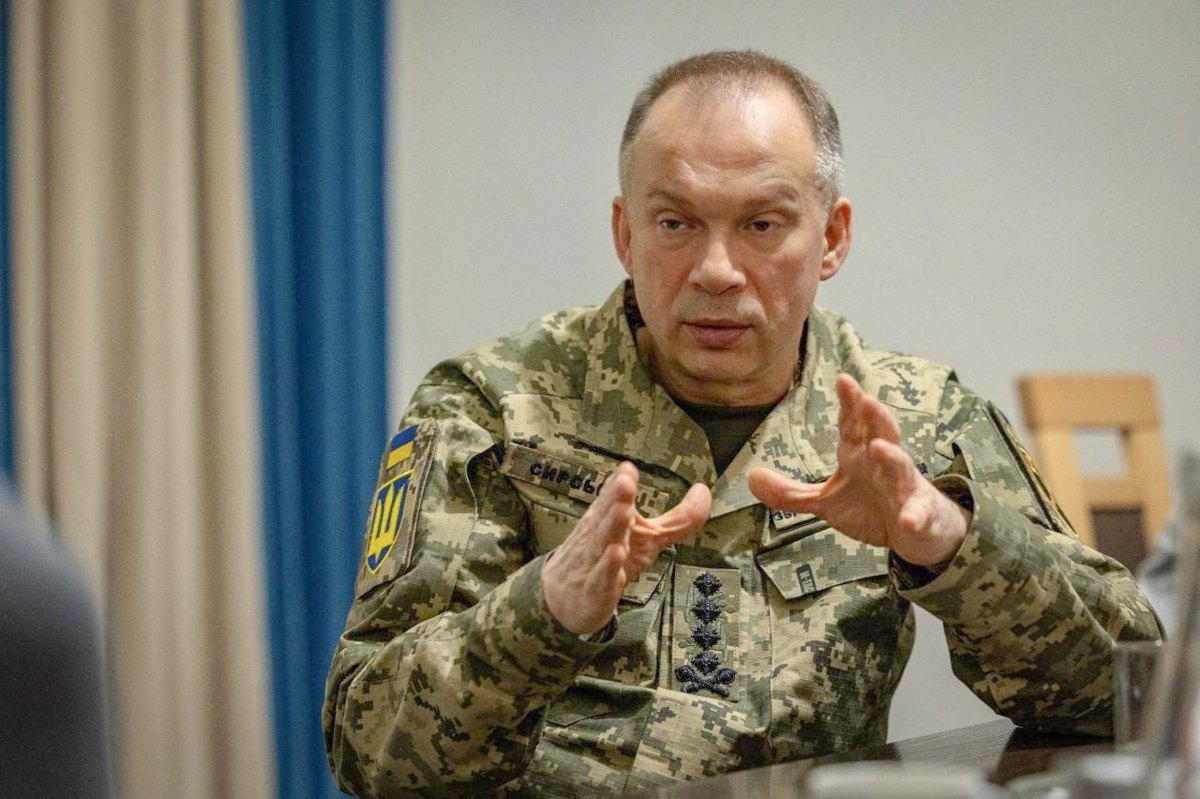
In summary, Ukrainian society is now at a juncture where more than just the fate of individual officials is at stake: the model of relations between civilian authorities and the military command is being determined for years to come. Whether the army will remain an instrument of state policy, subordinate to civilian leadership, or acquire political agency capable of competing with the institutions of power—the answer to this question will have consequences that extend far beyond the present moment.
As for Syrsky, his fate has most likely already been decided. And in the near future, it is quite plausible to expect the commander-in-chief’s resignation. But who will replace him—that is what is truly interesting.


