
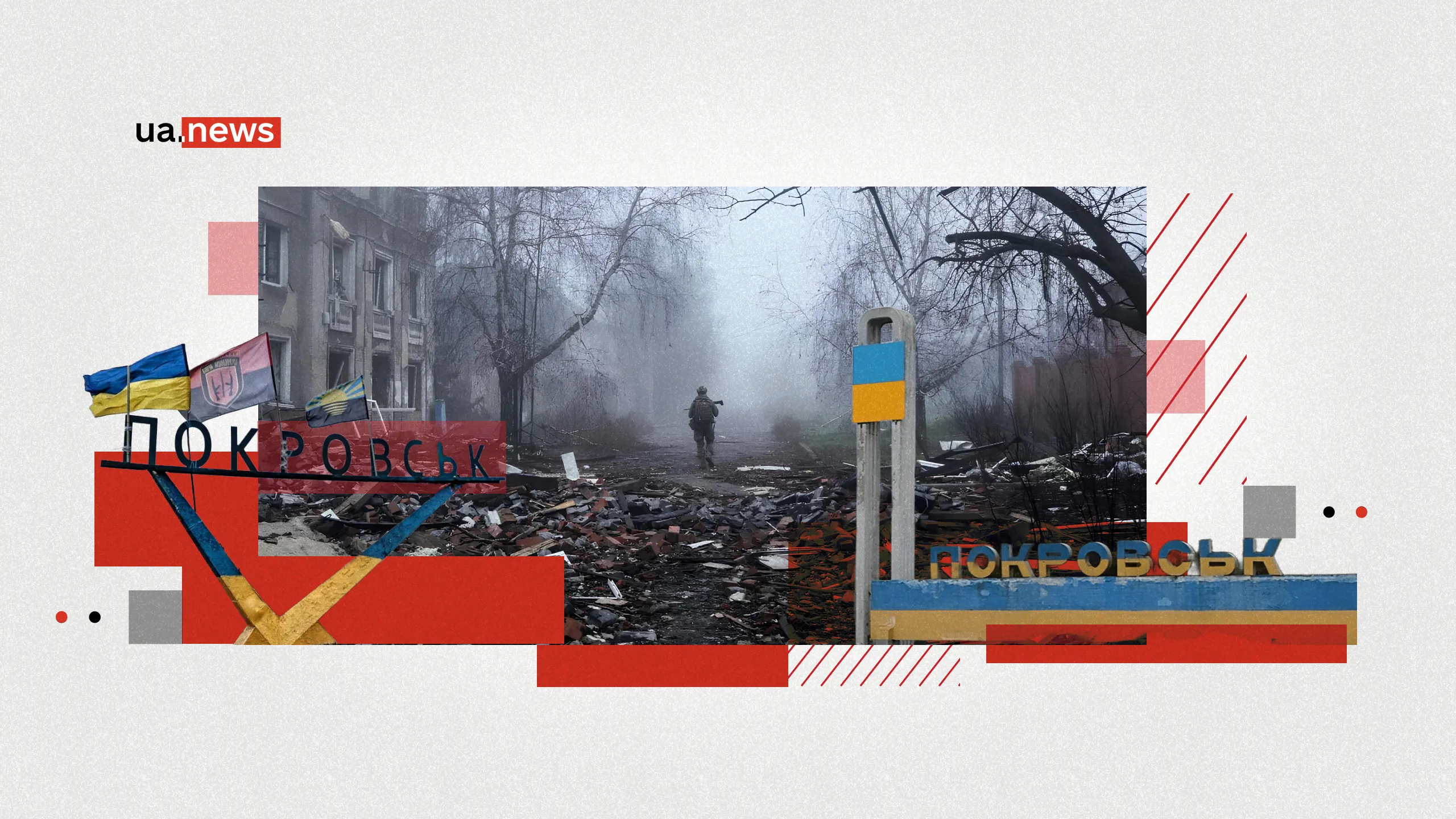
Pokrovsk is one of the last urban agglomerations in Donbas that the Russians are trying to capture. The Kremlin has demanded that the city be taken at any cost by roughly the end of the year. To achieve this, the occupiers have resumed using “human-wave assaults” with renewed intensity. According to Western media, the Russian army has already lost between 12,000 and 14,000 soldiers killed on this part of the front. Nevertheless, it continues to transfer resources here and has recently deployed its operational reserve — the 76th Pskov Air Assault Division.
To reduce the risk of semi-encirclement for Ukrainian forces in this area, Air Assault units “conducted an organised withdrawal” from part of their positions in recent days.
UA.News explains what is known about the operational situation in Pokrovsk, what tactics the enemy is using, what military analysts think about the likelihood of Ukrainian forces being encircled, and what this new stage of the war looks like.
Pokrovsk — a military and political objective for the Kremlin
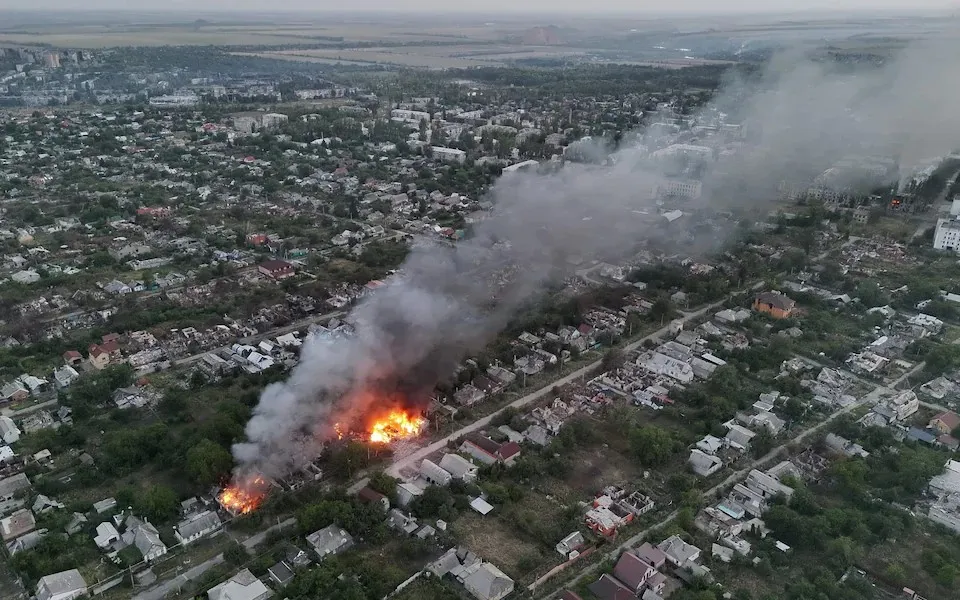
The fighting for Pokrovsk lasted for more than a year and a half. After constant shelling and strikes with Russian glide bombs, the city has been almost completely turned into ruins. In autumn 2025 the occupiers concentrated around 150,000 personnel on this axis and repeatedly spread fake claims about having “captured” the agglomeration.
On 26 October Russia’s top commander Valery Gerasimov reported to Vladimir Putin that Pokrovsk and Myrnohrad were already encircled. And on 1 December the Russian command claimed the “full capture” of Pokrovsk. This was reported publicly to Putin himself, who allegedly visited one of the command posts of Russia’s joint forces.
The next day, 2 December, the Armed Forces of Ukraine responded to the Russians’ fake information.
“In Pokrovsk, search-and-assault actions and the elimination of enemy forces in the urban area are ongoing. Taking advantage of thick fog, the invaders made another attempt at a ‘flag operation’ in one of the city districts, so that propagandists could use it as proof of taking full control of Pokrovsk. After this they fled in haste; clearance of enemy groups continues,” Operational Command East reported.
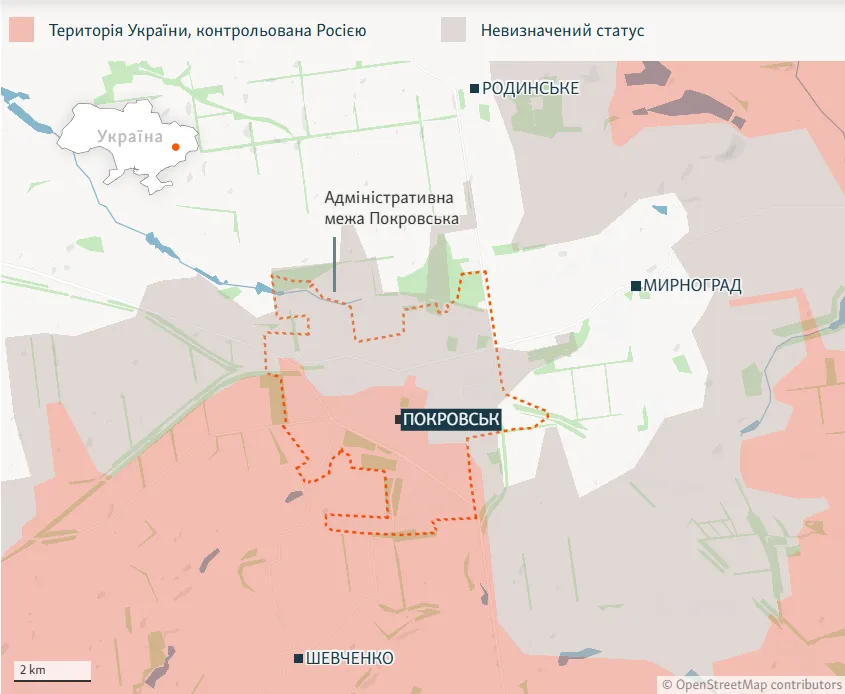
Map: deepstatemap.live as of 1 December 2025
In the official briefing of 4 December, Commander-in-Chief of the Armed Forces of Ukraine Oleksandr Syrskyi did not refute the fact of Pokrovsk being encircled and stated that this was an “extremely difficult stage of the defence”.
Direct quote from the Commander-in-Chief: “The battle continues. Ukrainian units continue to hold the northern part of Pokrovsk. In the Pokrovsk and Myrnohrad area we are taking active measures to block the enemy’s attempts to assemble assault infantry groups and to advance around these settlements.”
Syrskyi also assured that special attention is being paid to setting up additional logistics routes, medical evacuation, and countering enemy drones and artillery.
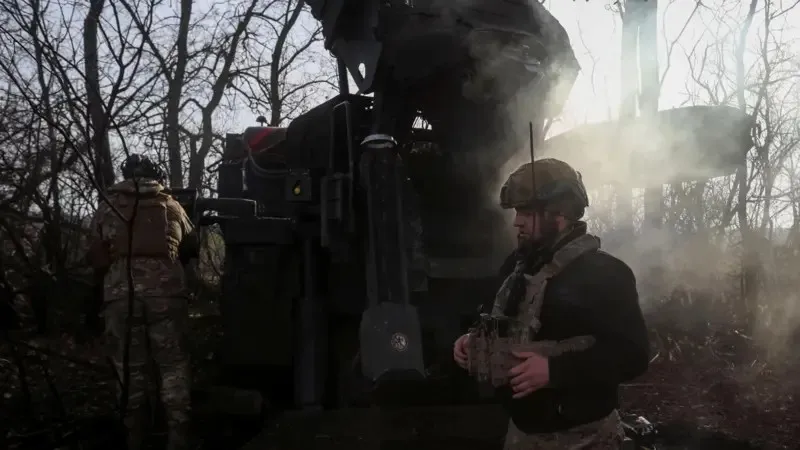
NATO, during these same days, assessed the situation in Pokrovsk as critical. According to the Alliance, the Russians control more than 95% of the city. Ukrainian forces are defending in “separate pockets”, carrying out raids, and wearing the enemy down.
High-ranking NATO officials noted that the former logistics hub of Pokrovsk could become a staging ground for Russian attacks on other cities in Donetsk region, but the Ukrainian Armed Forces are already preparing new defensive lines.
Given the enemy’s overwhelming numbers, Ukrainian Defence Forces may find themselves in a “cauldron”, or at the very least could be blocked in nearby Myrnohrad. This was reported by Western media as of 8 December. They emphasised that Pokrovsk has already become a symbol of a new stage in the war. This is not only about the massive use of drones — Ukrainian forces must now adapt to new methods of urban warfare: Russians operate in the city in small assault groups, sometimes disguised as civilians.
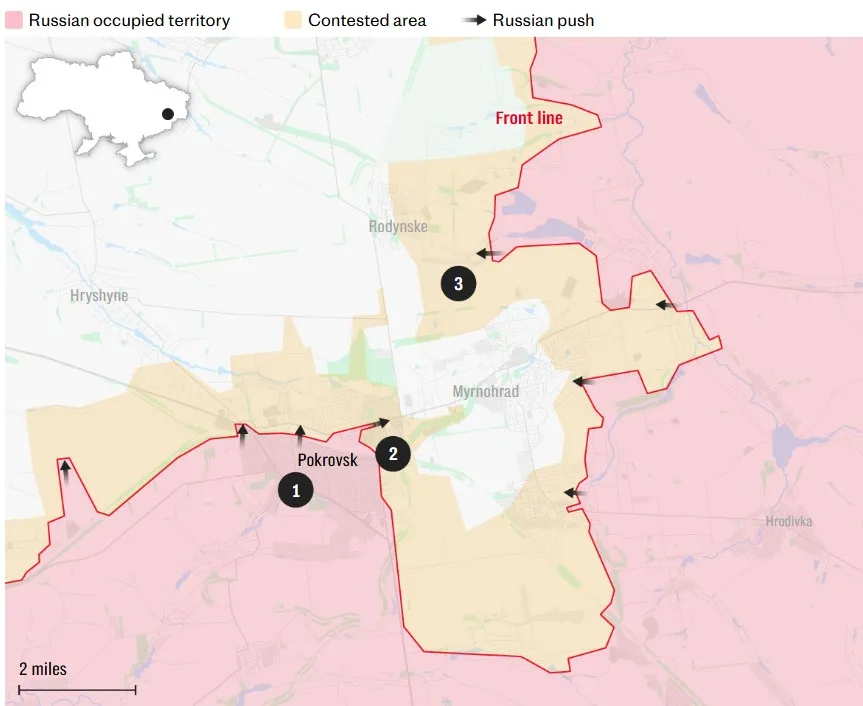
Map: The Telegraph
Pulling forces back from the Pokrovsk axis
To prevent enemy advances, in autumn 2025 Ukrainian units in Pokrovsk were reinforced with assault and air-assault troops. The confrontation took the form of exhausting urban combat, and the city itself was under enemy drone dominance.
On the afternoon of 8 December, Ukrainska Pravda, citing its own sources, reported that Defence Forces had withdrawn from certain positions near Pokrovsk and Myrnohrad several weeks earlier, including around the villages of Sukhyi Yar and Lysivka, thereby reducing the “pocket” of semi-encirclement.
The defence on this section of the Pokrovsk axis had been held by the 25th Air Assault Brigade and the 68th Jaeger Brigade, which had been deployed to Pokrovsk more than a year prior.
“The pullback from positions near Pokrovsk was painful. By the time of withdrawal, a large part of Pokrovsk was already under the enemy, so we had to pass through the city sometimes with small-arms fighting. The decision to retreat partly lay on the shoulders of the infantry commanders themselves, who didn’t want their men to end up encircled by the enemy,” one commander said.
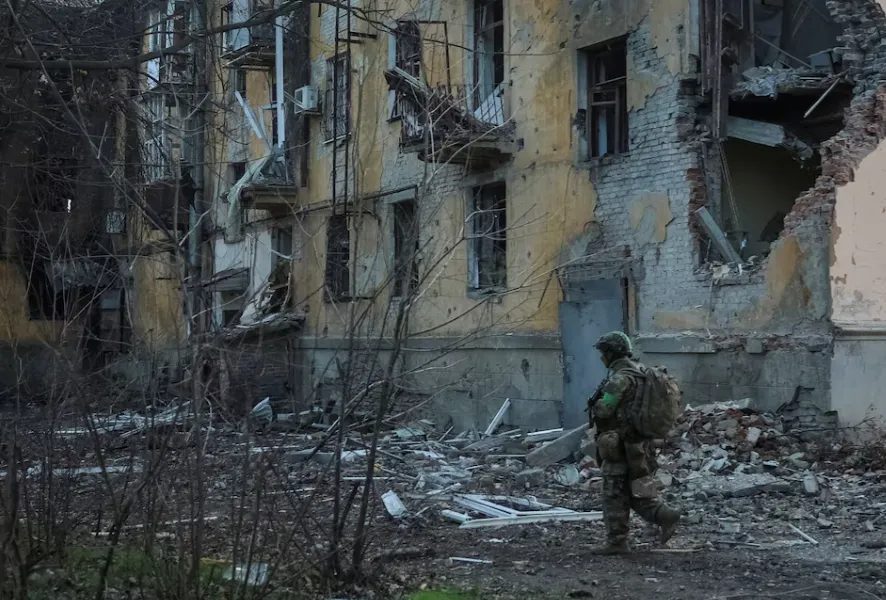
As of 8 December, 8 p.m., the 7th Corps of the Special Purpose Air Assault Forces officially confirmed that, by decision of the command, units of the Defence Forces had carried out “an organised manoeuvre in the area of the settlements of Lysivka and Sukhyi Yar”.
“The personnel were moved to more favourable positions. The manoeuvre was carried out to preserve the lives of servicemen, improve logistics support for the grouping, and straighten the front line. For security reasons, information about the operation was not disclosed for some time in order to avoid the risk of disrupting its execution,” the statement said.
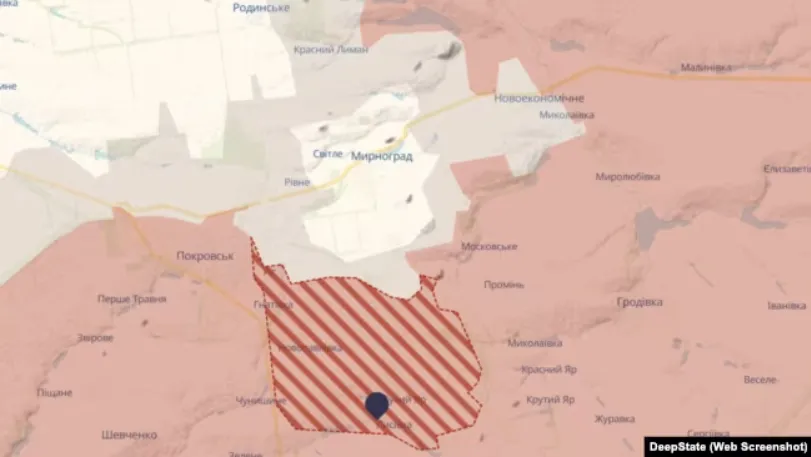
Map: deepstatemap.live as of 8 December 2025
What Ukrainian analysts and servicemen say
The enemy is transferring all its most combat-ready units to the Pokrovsk axis. In particular, from the Zaporizhzhia direction to Pokrovsk Russia has redeployed its most capable units. This includes the 76th Air Assault Division, which is effectively being thrown into “human-wave assaults”. Military analyst Dmytro Sniehyriov highlights this. Yet despite this, he says, the Defence Forces are holding their positions in Pokrovsk, and claims by some Western analysts that the occupation forces have taken full control of the city do not correspond to reality.
Ukrainian units defending Pokrovsk note that control over specific parts of the city is very fluid.
“That is, we assault — and literally 15–20 minutes later the enemy begins its assault. Some sites change hands repeatedly throughout the day. We come, clear it, secure it. Then the enemy comes — conducts assault actions and secures it. Then we regain the position, and then the enemy again tries to retake it. Again, this concerns the more critical points,” an officer of the 82nd Air Assault Brigade with the callsign “Lawyer” told the project Donbas Realii.
There is probably no full understanding of what is happening in Pokrovsk even among those directly defending the city, says veteran of the Russo-Ukrainian war and former Aidar company commander Yevhen Dykyi. He explains this by saying that the war has moved into a new stage.
According to him, it is difficult to define whose territory is whose, because “it is simultaneously ours and not ours”. The war veteran believes there is a risk of individual Defence Force units being encircled, because at this stage of the war such threats are very difficult to detect in time. At the same time, he says, this does not mean some large “cauldron”, because now everything is decided on small sections that pass back and forth from one side to the other.


