
The Holodomor Museum has reported a critical humanitarian situation in Oleshky, where people are forced to eat pigeons
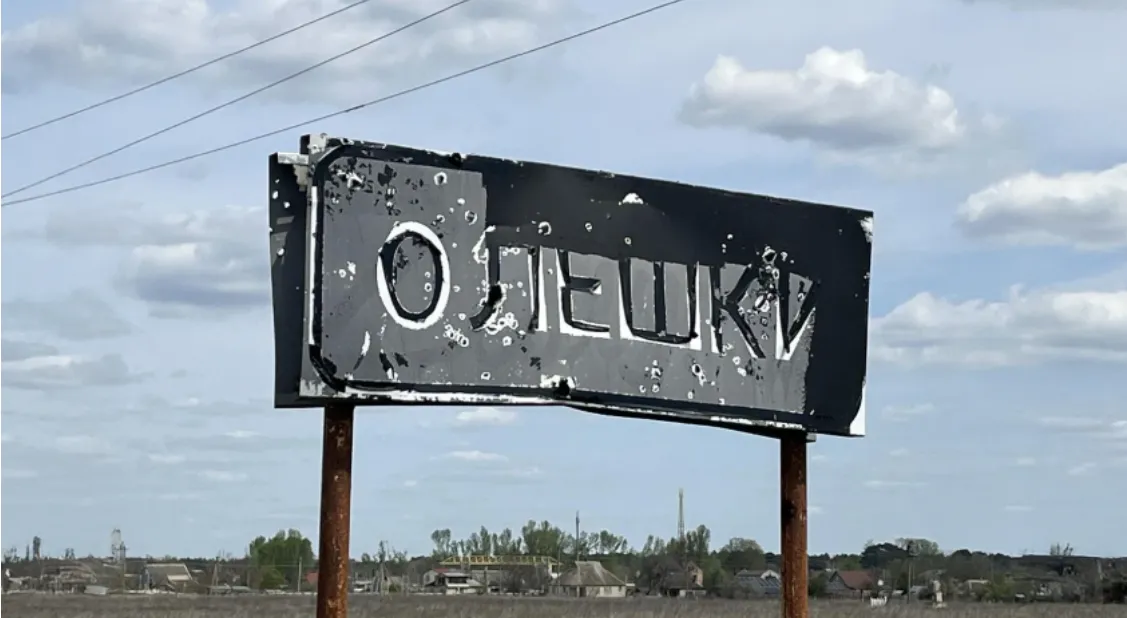
The National Museum of the Holodomor-Genocide has called on the international community to draw attention to the humanitarian situation in the temporarily occupied town of Oleshky and surrounding settlements.
The museum noted that the region suffered after Russian troops blew up the dam at the Kakhovka Hydroelectric Power Plant. The occupying administration has acknowledged the deaths of only 59 people, but the actual number of victims of the flooding in Oleshky alone could be in the hundreds.
According to the Ukrainian Ministry of Foreign Affairs, as of May, the population of the Oleshky community had fallen from 40,000 to about 6,000 people, and in the city of Oleshky itself—from 24,000 to about 2,000.
The city’s critical infrastructure has been destroyed; there is no electricity or gas supply; and civilians trying to obtain food or leave the city are being targeted by FPV drones.
“One of the key problems is hunger in these areas. The situation has deteriorated sharply since the fall of 2025 due to the lack of heating and the virtual cessation of food supplies,” notes the Holodomor Museum.
According to Tetiana Hasanenko, head of the Oleshky City Military Administration, as well as journalists and volunteers, local residents were forced to eat pheasants, pigeons, and food substitutes.
On August 12, 2026, Dmytro Lubinets, the Ukrainian Parliament’s Commissioner for Human Rights, stated that the Ukrainian side had fulfilled all necessary preparatory conditions for the evacuation of civilians, but the Russian side continues to obstruct people’s departure.
“The worst part is that people are already making their way across the mined fields on their own because they see no other way to escape this hell. They risk being blown up by a mine or struck by a drone, but they keep going anyway because staying in Oleshky is even worse for them,” the ombudsman wrote.
The Holodomor-Genocide Museum considers it its professional duty to draw attention to the blockade of civilians, the lack of access to food, water, and medical care, as well as the obstruction of their evacuation.
The institution has appealed to the International Committee of the Red Cross to make additional efforts to rescue the population and has asked partner museums to disseminate information about the situation in Oleshky and the surrounding communities.
Source: museum statement.
Oleshky Is Running Out of Food: The City Is on the Brink of a Humanitarian Crisis.
On the night of September 11, the Ukrainian Defense Forces struck the Saratov Oil Refinery in Russia. Fires were reported on the refinery’s grounds following the attack.
As of the morning of September 10, 2026, the Russian army’s total personnel losses since the start of the full-scale invasion amount to approximately 1,502,390 soldiers. In the past 24 hours alone, according to the General Staff of the Armed Forces of Ukraine, Russia lost another 1,520 servicemen.


