
Occupiers in Crimea have deployed mobile fire teams to guard fuel tankers – video
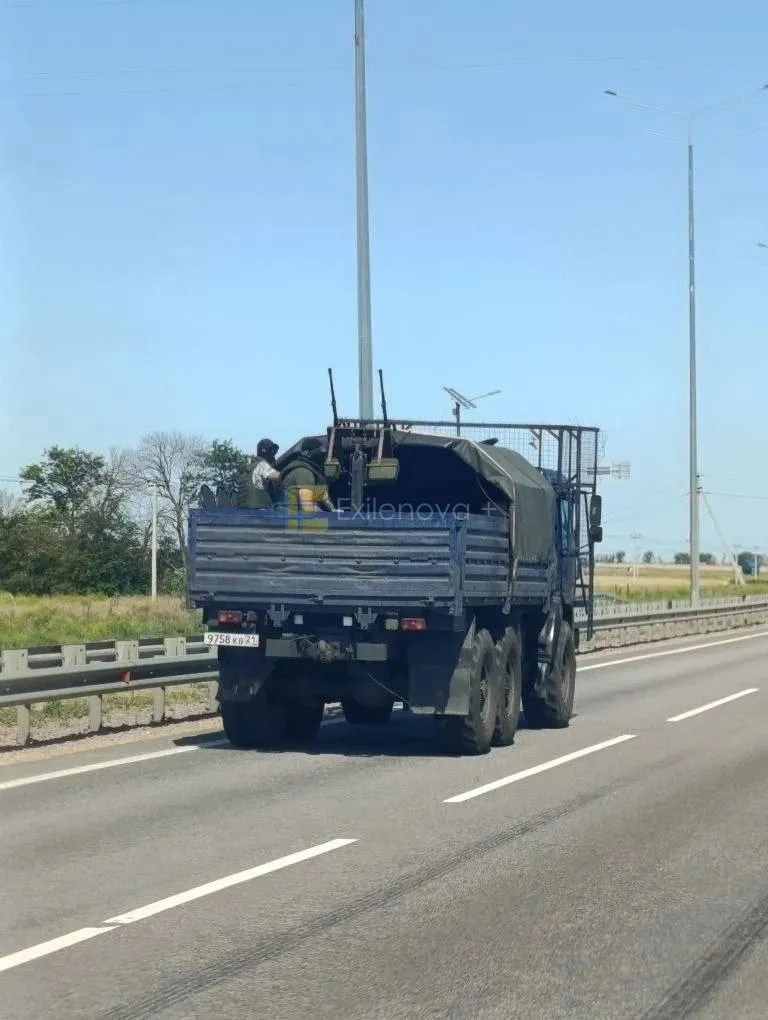
Russian occupation forces in the temporarily occupied Crimea are being forced to change their tactics to protect their logistics routes and military supplies. To secure the transport of fuel and lubricants from attacks by Ukrainian drones and partisan sabotage, convoys of fuel tankers and individual fuel trucks are now escorted by mobile enemy air defense fire groups.
In addition to directly escorting military cargo, the invaders have deployed a large number of mobile rapid-response units along key highways and strategic logistics routes throughout the peninsula. These units are designed to provide rapid protection for road infrastructure and counter air attacks.
The security measures implemented by the occupiers, as well as strict rationing of fuel distribution to the civilian population, have led to the kilometer-long lines that had previously formed at local gas stations due to shortages and a logistical collapse have begun to gradually shrink. Currently, the peninsula’s fuel sector is entirely subordinated to the needs of the Russian military contingent, while civilian supplies are provided on a residual basis and under strict control.
Source: Exilenova+.
Following a sharp rise in fuel prices in the temporarily occupied Crimea, the Moscow-controlled authorities announced the introduction of fixed prices for gasoline and diesel.
In temporarily occupied Crimea, fuel problems could escalate into a much more serious crisis. Due to logistical difficulties on the peninsula, prices have already begun to rise, lines are forming, and residents are increasingly stocking up on essential goods.
The shortage of automotive fuel, which was previously observed in the temporarily occupied Crimea, has begun to spread to the southern regions of the Russian Federation. Residents of the Krasnodar Krai and the Rostov Oblast are reporting shortages of gasoline and diesel fuel.


