
Putin has ordered that Russians be guaranteed uninterrupted access to permitted websites
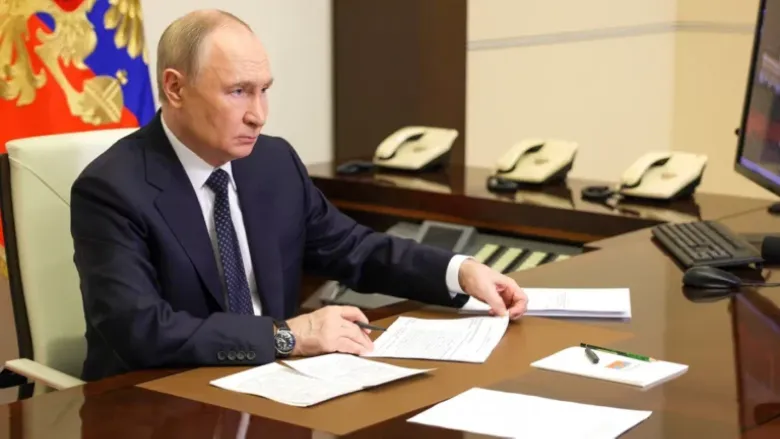
On April 23, 2026, Russian dictator Putin instructed officials at a government meeting to develop a mechanism for implementing a “whitelist” of resources during periods when mobile internet access is restricted.
This was reported by The Moscow Times.
Putin compared such access to the ability to make emergency calls with a zero balance, noting that the technological capabilities for this exist. At the same time, he attributed periodic outages in major cities to the operational work of the special services, emphasizing that security will always remain a priority. Law enforcement agencies and special services will be given instructions to coordinate their actions with civilian structures.
Currently, “whitelists” of resources are already in effect in Russia, including government websites, propaganda media, and the state-run spy messenger “Max.” The authorities plan to expand this list to include banking apps and socially significant platforms. Despite the inconvenience to the public, Putin emphasized that it is impossible to widely publicize the shutdowns in advance so as not to hinder operational work.
According to experts, this approach indicates preparations for a larger-scale implementation of a “filtered” internet model in the country. A full transition to a list-based access system is expected to take place in the coming years. Digital Minister Maksut Shadayev confirmed the ministry’s readiness to carry out these tasks.
Russia is proposingto ban all Google services.
On December 4, Roskomnadzor announced the blocking of FaceTime, explaining that the messaging app is allegedly used for “organizing and carrying out terrorist acts, recruiting perpetrators, fraud, and other crimes.”
Roskomnadzor also announced a “phased” blocking of WhatsApp. Restrictions on calls via WhatsApp and Telegram under the guise of “combating” terrorism and fraud were first reported back in August.
