
Russia claims more than 5,000 km² of occupied territory as its own — analyst
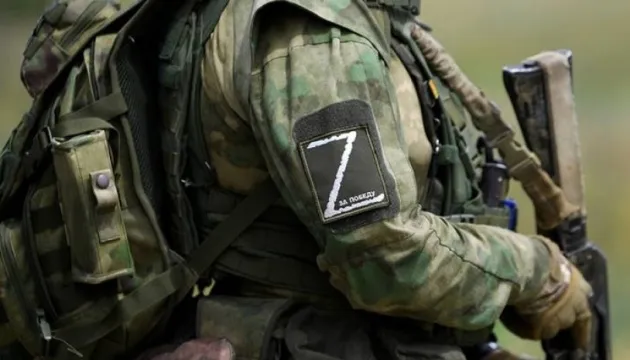
French OSINT analyst Clément Molin compared official Russian maps with the situation on the ground. According to his findings, since the beginning of 2026, Russian forces have made almost no progress in Ukraine, and the territory claimed by Russia differs from the actual territory by more than 5,000 km².
Molen compared maps from DeepState and the state news agency “RIA Novosti” using a tool developed by user M0nstas. According to his calculations, in January, the difference between the RIA map and DeepState data ranged from 1,000 to 1,900 km²—depending on whether the comparison was made with DeepState’s “gray” or “red” zones. By September, it had grown to 3,500–4,800 km². The analyst concluded that this year, Russia has been advancing just as it did last year, “but only on the maps.”
The Lyman Sector. Russian maps still show Svyatogorsk as under Russian control, although the actual front line, according to Molen, runs about 30 km to the east. He notes that DeepState has not yet updated its map for this area. In addition, Moscow claims to control Lyman.
The Vovchansk direction. Russian maps show a large area as encircled, and the front line is depicted about 20 km ahead of the actual one. Molen emphasizes that there are no recent geolocation data to confirm this, and the encirclement does not exist.
The Kupiansk sector. The city is still shown as being under Russian control—a year after Putin announced its capture, which, according to the analyst, did not actually happen. The maps also do not reflect recent Ukrainian counterattacks near Dvorichna, and overall, according to Molen, Russia is overstating its control along the entire front line.
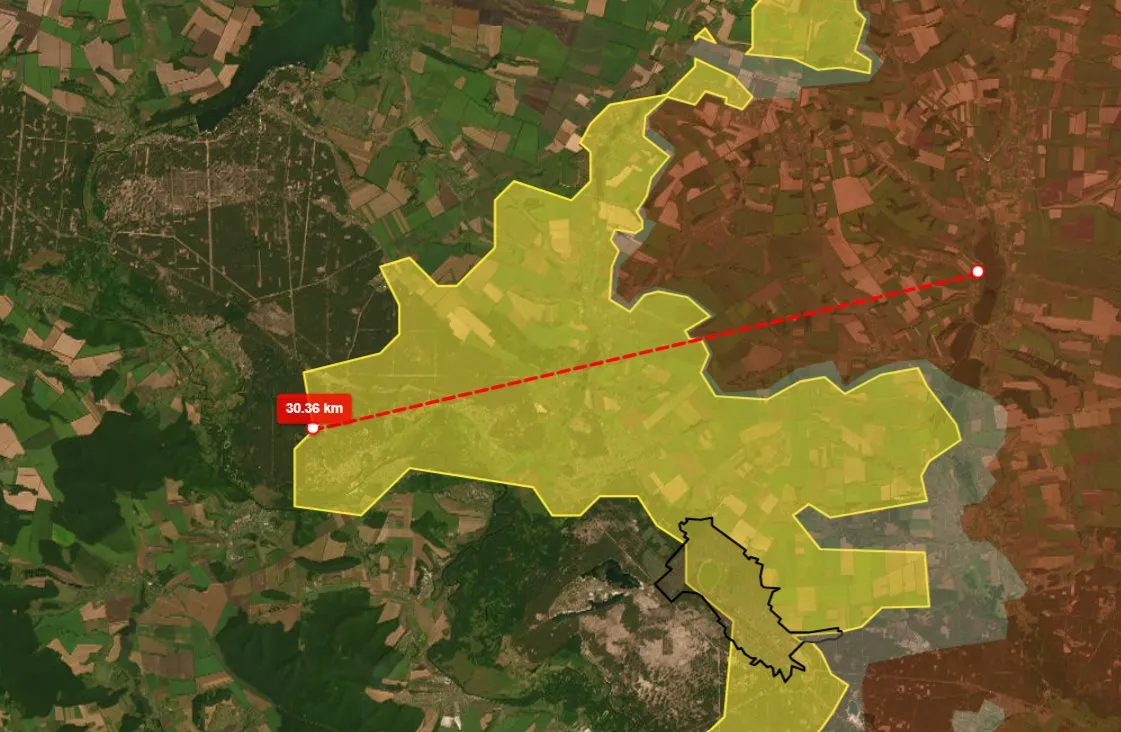
Donbas. The maps show that Russian forces control Kostiantynivka and Dobropillia and are positioned west of Kramatorsk—approximately 18 km ahead of Ukrainian Armed Forces positions. According to Molen, videos appear daily showing Ukrainian troops in the northern part of Kostiantynivka, and the claim that Dobropillia is surrounded is untrue.
The Zaporizhzhia sector. Here, the Russian line is 16 km ahead of the Ukrainian line almost everywhere. The maps do not account for Ukrainian counterattacks, and part of Orikhiv is marked as surrounded and controlled by the Russians.
Data from other sources confirm that the actual situation is more complex. On September 7, Andriy Biletsky, commander of the Third Army Corps, recorded a video from the center of Svyatogorsk and stated that the 60th Mechanized Brigade fully controls the city. Eight days later, the corps reported on counteroffensive operations. According to its data, as part of Operation “Vivaldi,” the Ukrainian Armed Forces cleared approximately 75 km² of Russian infiltration and de-occupied another 10 km²—this was mentioned
As for Orikhiv, according to military analyst Kostiantyn Mashovets, small Russian infantry groups did indeed infiltrate the city. However, Ukrainian units likely blocked and isolated them, and attempts to build on this success over the past two weeks have not yielded tangible results.
At the same time, the Russians have not ceased their offensive. According to data from the General Staff as of September 20, they carried out the most attacks in the Kostiantynivka (25) and Pokrovsk (21) sectors, particularly toward Dobropillia.
Molen does not cite a definitive reason and leaves this question open. He offers three possible explanations: propaganda for a domestic audience; a desire to show the world that the Russian army is supposedly advancing relentlessly; or a genuine belief that the designated territories are indeed under their control.
Source: Clément Molin
As a reminder, the Ukrainian Defense Forces damaged five workshops at a military plant in Russia.
On the night of September 26, the Ukrainian Defense Forces struck a number of key facilities on Russian territory that support the Russian military machine. Among them were the Azov Optical-Mechanical Plant in the Rostov region and the “Ilsky” oil refinery in the Krasnodar region.
As a reminder, the Perm oil refinery in Russia ceased operations following an attack by Ukrainian drones on September 25. According to Reuters, a fire broke out at the facility, and pipelines, storage tanks, and processing units were damaged. It is not yet known when the refinery will be able to resume operations.




