
Ukraine and Russia Are Entering the Most Dangerous Phase of the War: Details
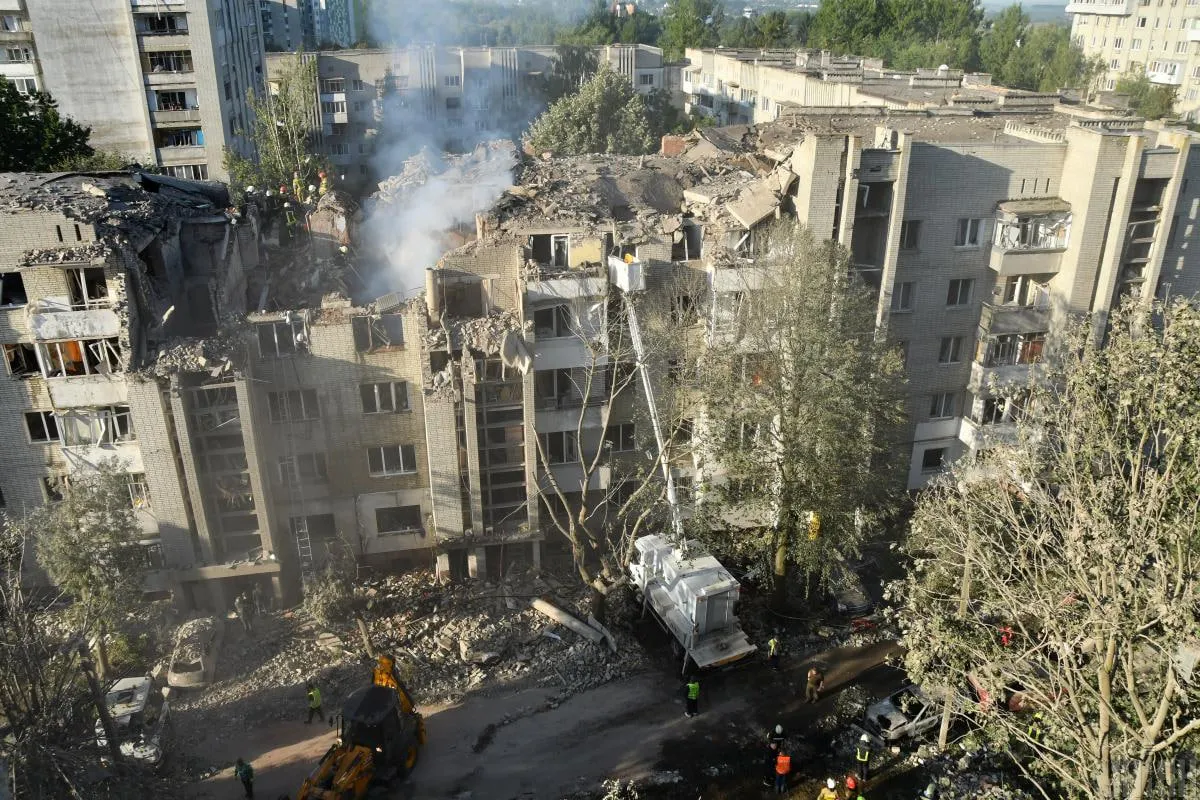
The Russian-Ukrainian war is entering a phase of maximum escalation, the consequences of which may be felt not only by Kyiv and Moscow, but also by third countries.
According to journalists’ estimates, the intensification of the air war is already leading to significant economic losses. Even countries trying to remain neutral may face the consequences of further escalation.
As the author notes, the escalation intensified particularly in July, when both sides significantly increased their mutual strikes on ports and civilian vessels. The publication specifically lists the most significant strikes, during which the Russians hit several foreign-flagged vessels near Odesa, killing foreign sailors.
In total, according to Ukrainian data, Russia carried out more than 30 attacks on merchant ships in July alone. As a result, maritime trade through Ukraine’s Black Sea ports has almost completely ground to a halt.
“No ships are passing through Ukrainian waters in the Black Sea anymore—and this is right in the middle of the harvest season,” the article states.
At the same time, ZEIT reports, Ukraine has also significantly stepped up its own campaign of strikes against ships calling at Russian-controlled ports in the Black and Azov Seas. The goal of the Ukrainian campaign, as security expert Christian Melling notes, is to disrupt supplies to occupied Crimea.
According to Melling, these attacks are part of Ukraine’s strategy to defend itself against Moscow far beyond the battlefield. Oil refineries and supply routes have repeatedly been targeted by Ukrainian attacks to ensure that the consequences of the war are felt within Russia itself. Above all, however, Ukraine has set itself the goal of cutting off Crimea’s supply lines.
“This would be important from a military standpoint, as it would weaken attacks from the south. But, above all, it would be a political success given the peninsula’s immense significance,” the expert says.
The publication notes that following the initial successes of Ukrainian attacks, Russia responded with massive strikes on Ukrainian ports. Since then, not only port facilities but also merchant ships themselves have come under fire with increasing frequency. Moscow claims that these ships are allegedly being used to supply the Ukrainian military; however, as the author emphasizes, Russia has provided no evidence to support these claims.
Economist Andriy Syzov, who specializes in Black Sea maritime trade, considers the current situation to be the greatest crisis since the start of the full-scale war.
“The Black Sea is just as important for grain as the Persian Gulf is for oil,” the expert emphasizes.
According to him, if the de facto blockade persists, global grain prices will continue to rise, and the countries most affected will be those dependent on food imports, primarily in the Global South.
The fact that the attacks now also affect the interests of more distant third countries was demonstrated by Ukrainian strikes on the port of Novorossiysk. That is where the Caspian Pipeline, which transports oil from Kazakhstan, ends. Technically, this pipeline has no connection to Russian oil and is operated by an international consortium that includes, among others, major U.S. oil companies. Following the attack on four oil tankers, exports from Novorossiysk were temporarily suspended in the middle of last week.
Andriy Syzov believes it is likely that the operation of this pipeline was also a topic of discussion during Ukrainian President Zelenskyy’s visit to Washington earlier this week.
“Only diplomatic pressure can stop the current escalation,” the economist believes. He argues that Ukraine has a greater interest in halting the escalation of the naval conflict, since the disruption of agricultural exports via the Black Sea poses a greater problem for Ukraine than the disruption of the Black Sea oil export route does for Russia.
The publication notes that Turkey, which controls the Black Sea straits and maintains contacts with both Kyiv and Moscow, recently called for an end to the escalation and declared its readiness to facilitate new negotiations.
“However, it remains to be seen whether Ankara will be able to convince both sides to at least limit their strikes,” the publication concludes.
This is reported by the German publication ZEIT.
July was the toughest month for the Russian military in 2026.
In July alone, the Russian army lost nearly 43,000 troops. That is approximately 3,500 more than in June, which had previously been the worst month for Russian troops in 2026 in terms of this metric. This was reported by the Telegram channel of the General Staff of the Armed Forces of Ukraine.
Russian authorities continue to promote the state-run messaging app Max. Starting in August, users will be able to use its basic features for free without using up their mobile data allowance. The service has signed an agreement to this effect with the four largest mobile operators in Russia.


