
Ukrainian strikes have put more than half of Russia's largest oil refineries out of commission
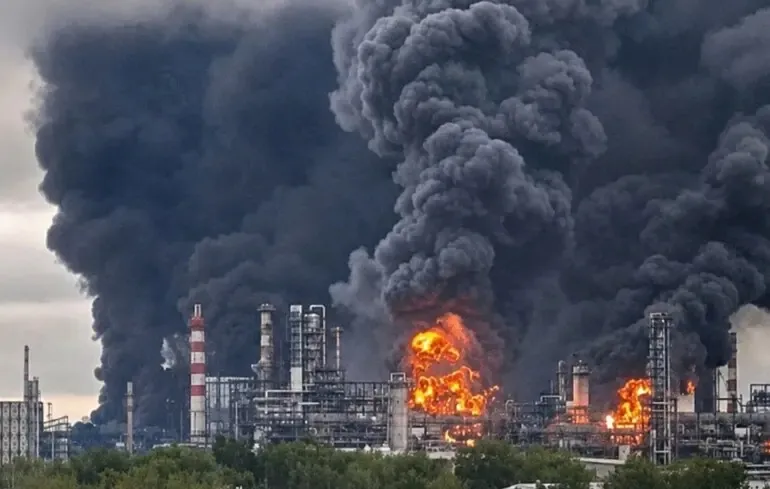
Since the beginning of 2026, Ukrainian drones and long-range missiles have damaged at least 28 of approximately 48 Russian oil refineries, according to estimates by French OSINT analyst Clément Molen. In total, he recorded 81 strikes on oil refineries, with 17 of Russia’s 20 largest refineries coming under attack.
In the first eight months of the year, 17 of Russia’s 20 largest oil refineries were hit, the analyst calculated. In some cases, the damage was significant—particularly at facilities in Orsk, Perm, and Ryazan, where operations had to be halted or significantly curtailed. These are the most powerful hubs of Russia’s oil refining industry, on which fuel supplies depend for both the civilian market and the occupying forces.
One example is the morning strike on the refinery in Kstovo, Nizhny Novgorod Oblast, on August 26: a massive fire broke out at the “Lukoil-Nizhegorodnefteorgsintez” facility, which refines about 17 million metric tons of crude oil per year, following the strike. That same day, the General Staff of the Armed Forces of Ukraine confirmed that the Afipsk Oil Refinery in the Krasnodar Krai had been struck.
A significant number of large plants have been attacked more than once or twice.
According to Molen’s estimates, the number of repeat strikes on individual facilities this year is as follows:
- six—on the Yaroslavl Oil Refinery;
- five each on the Ilsky, Saratov, Syzran, and Tuapse refineries;
- four each—on the Kstovo refinery, TAIF-NK in Nizhnekamsk, Bashneft in Ufa, and the Volgograd refinery.
Such repeated strikes disrupt the restoration of damaged key components—repairs to large processing units typically take weeks, and sometimes even months. So by the time a facility has rebuilt a destroyed unit, it is already too late to make up for the lost refining volumes before the next strike.
In addition to the refineries themselves, Ukrainian forces are systematically targeting the infrastructure for storing and transporting petroleum products. According to an analyst, the following have been recorded this year:
- 11 strikes on transit hubs—specifically in Perm, Yaroslavl, and Vladimir;
- 26 strikes on large oil depots, not counting facilities in the occupied territories of Ukraine;
- 11 strikes on export terminals—in Novorossiysk, Ust-Luga, and Primorsk.
Such attacks simultaneously disrupt production, refining, and logistics: production in Russia has become uneven, slowed down, and in some cases has come to a complete halt. This has already caused fuel shortages in a number of regions across the aggressor country. The record-breaking intensity of strikes against the oil refining industry is also confirmed by data published by Glavkom: eighteen attacks on oil refineries were recorded in August alone, matching July’s record, and Russian authorities are considering extending the ban on diesel fuel exports.
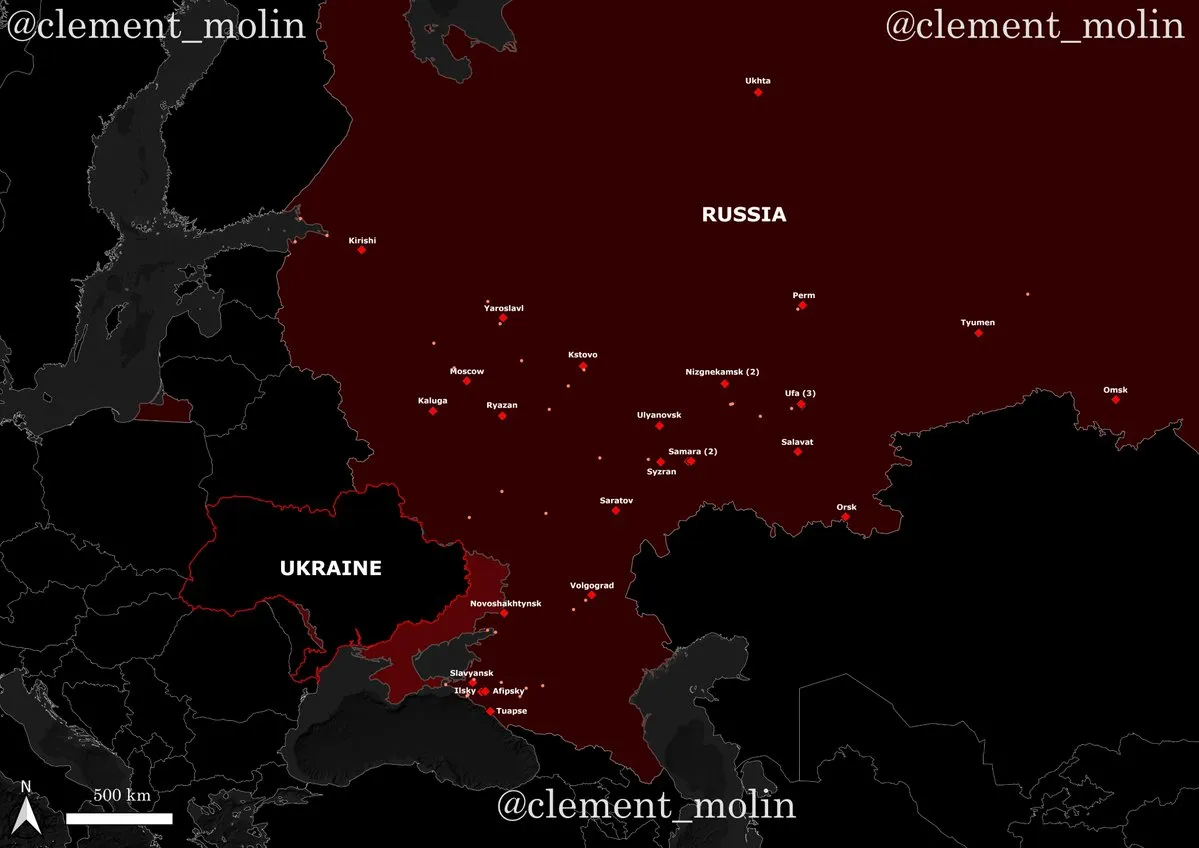
In total, since the beginning of 2026, the analyst has counted nearly 130 strikes on key Russian facilities for the extraction, refining, storage, transportation, and export of oil and petroleum products. This represents a significant loss of revenue for the aggressor country’s budget, which is only partially offset by rising oil prices and the conflict surrounding Iran.
According to Molen, plants are usually repaired fairly quickly; however, the continuity and precision of the strikes are placing an increasingly heavy burden on critical infrastructure. Although strikes on storage tanks tend to receive the most media attention— strikes on storage tanks tend to receive the most media attention—due to the thick smoke and dramatic footage of fires—it is the strikes on the key technological nodes of the refineries themselves that are crucial for weakening Russia’s oil refining industry.
Russia launched a massive drone attack on the Sumy region, killing a woman.
As a reminder, Russia launched a massive drone raid on the Odesa and Mykolaiv regions.
Earlier, Russia launched a ballistic missile strike on a facility in Kryvyi Rih.
As a reminder, Russia attacked Kyiv with ballistic missiles.
Prior to that, Russia had attacked warehouses and energy infrastructure in the Odesa region.


