
The Russian government is preparing a ban on exports of diesel fuel and kerosene following the shutdown of 25% of refinery capacity
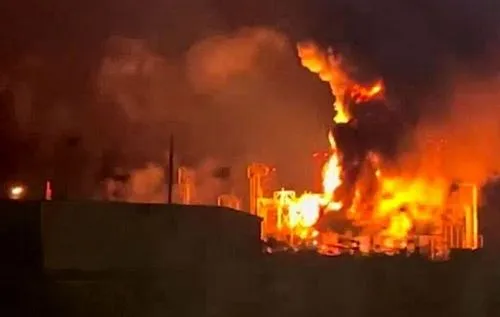
The Russian government is preparing to expand restrictions on the export of petroleum products from the country following a series of successful drone strikes on oil refineries. As a result of the attacks, nearly all refineries in central Russia have been shut down, and oil companies have collectively lost about 25% of their total fuel production capacity.
This is reported by The Moscow Times.
Following a complete ban on the export of automotive gasoline, which has been in effect in Russia since late March, the Cabinet of Ministers is currently considering the possibility of imposing strict restrictions on foreign sales of diesel fuel and jet fuel. The critical situation in the domestic fuel market was the main topic of a meeting chaired by Deputy Prime Minister Alexander Novak, to which the heads of the country’s leading oil companies were urgently summoned.
Following the meeting, Russian oil companies were strongly urged to “restrain exports” of petroleum products as much as possible. One of the publication’s sources noted that an official decision on a complete ban on jet fuel and diesel exports is already in the final stages of preparation, although the exact timing of its implementation has not yet been finalized.
According to Reuters estimates, by the second half of May, due to regular drone strikes in Russia, refineries with a combined capacity of 238,000 tons per day—equivalent to a quarter of Russia’s total oil refining capacity—had been knocked out of service. In particular, fuel production in the country’s central regions has been virtually paralyzed following strikes on major refineries in Kirishi, Moscow, Nizhny Novgorod, Ryazan, and Yaroslavl. These facilities collectively supplied over 30% of the country’s total gasoline and about 25% of its diesel fuel.
According to Bloomberg, due to extensive infrastructure damage, the current utilization rate of Russian oil refineries has fallen to a historic low since 2009 and stands at only 4.69 million barrels per day.
Oil refining has come to a halt in central Russia following drone attacks.
Russia is waging a disinformationcampaign against Armenia ahead of the elections.
Russia is cutting social benefits to increase payments to contract soldiers.
The Russian economy is shrinking despite higher oil prices
Russia changed its polling methodology, and Putin’s approval rating immediately rose
Putin has begun speaking of “ending the war” due to serious problems on the home front and at the front lines


