

War Beyond Ukraine's Borders: Russian Drones and Missiles Are Changing the EU's Security Landscape
29 May 2026 20:30Russia’s massive drone and missile attacks are gradually shifting the geography of the war, extending the reach of military threats beyond Ukraine’s borders. Russia is attempting to maximize the use of airstrikes not only to destroy Ukrainian targets but also to provoke Kyiv’s European allies. This intensifies the escalation of military confrontation in the heart of Europe, while simultaneously testing NATO’s air defense.
Incidents involving drones are becoming a daily occurrence for Ukraine’s neighboring states, including members of the European Union and NATO. Despite the fact that dozens of drone debris are being found and F-16 fighter jets are scrambled after nearly every massive strike, NATO countries are exercising the utmost caution and are in no hurry to shoot down targets in their own airspace.
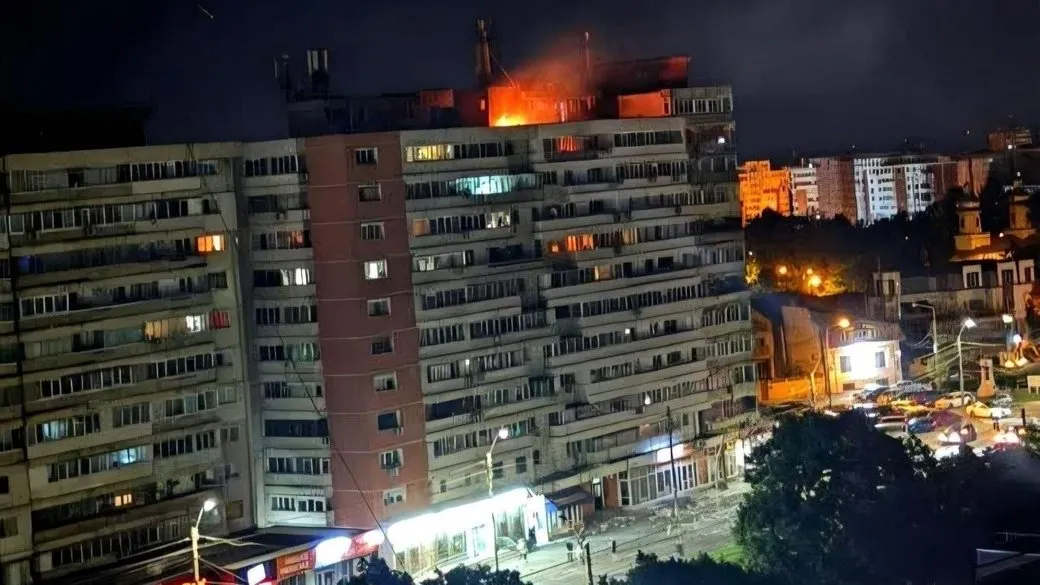
Romania is a telling example. Since the start of Russia’s full-scale war against Ukraine, drone debris has been found 47 times on Romanian territory. And on the night of May 28–29, a Russian “Geran” drone crashed into a high-rise building.
UA.News has compiled a list of the most high-profile incidents involving military drones within the EU and how the military commands of these countries responded to the threats.
Incidents in Poland
November 2022: A missile in Przewodów
On the evening of November 15, 2022, Polish media reported that an explosion occurred in the village of Przewodów, 5 kilometers from the Ukrainian border, as a result of a rocket strike. Two people were killed. That day, the Russians attacked Ukraine’s energy infrastructure, firing 100 rockets.
Initially, the Polish Ministry of Foreign Affairs confirmed that a Russian-made missile had fallen on Polish territory. However, then-Polish President Andrzej Duda noted that there was no evidence as to whose missile it was. He also announced an increased Polish military presence on the eastern border.
President Volodymyr Zelenskyy also stated that until the investigation into the tragedy is complete, it is impossible to say with 100% certainty whose missile fell.
Following additional investigative work in Przewodów, experts from Poland, the U.S., and NATO concluded that it was likely a Ukrainian S-300 air defense missile that veered off course while intercepting a Russian strike.

December 2023: 3-minute maneuvers
On December 29, 2023, during a massive bombardment of Ukraine, a Russian cruise missile violated Polish airspace. The object crossed the border around 7:00 a.m., flew over Polish territory for approximately 3 minutes, penetrated 40 km into Polish territory, and then returned to Ukraine.
The Polish Armed Forces Operational Command reported that the object’s flight path over Polish territory was tracked by radar systems. “Due to the maneuvers it performed and its departure from Polish airspace, I, as the Operational Commander, did not make any decisions regarding this object,” explained General Maciej Klich.
March 2024: The Kh-101 crossed the border
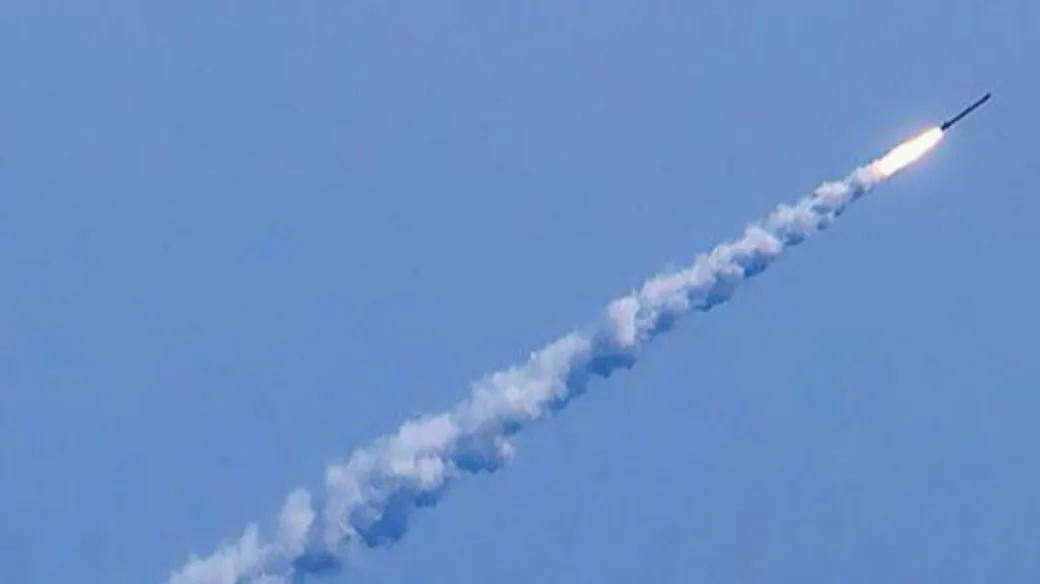
On March 24, 2024, during a massive Russian attack on Ukraine, a Russian Kh-101 cruise missile violated Polish airspace, crossing the border near the village of Oserduw in the Lublin Voivodeship. The missile remained in Polish airspace for 39 seconds before returning to Ukrainian territory.
The object’s flight path was tracked by radar systems in Poland and NATO countries. F-16 fighter jets were scrambled to intercept it, but the decision was made not to shoot down the missile since it had already left the country’s airspace.
The incident was confirmed by the Chief of the General Staff of the Polish Armed Forces, Wiesław Kukula. When asked by journalists whether it was an accident or a planned provocation, he suggested the possibility of both scenarios and explained why the missile was not shot down.
“Destruction on our part could have unintended consequences… The same could happen if Ukraine tries to shoot down such a missile, as it could fall on Polish territory and cause certain consequences,” the Chief of the General Staff stated.
Polish command suggested that the Russians are deliberately maneuvering during missile strikes and flying in a circle over the territories of neighboring countries to strike targets in Ukraine from the west.

September 2025: The Largest Invasion
On the night of September 10, 2025, the largest-scale incursion of Russian drones into Polish airspace occurred. At least 19 attack drones flew nearly 300 km deep into the country. Experts later identified the remains of one of the drones near the Polish village of Chosnówka. It was determined that it was a Russian-made “Gerbera.” The military stated that the drones’ maneuvers posed a “real threat” to the population. Four airports—in Warsaw, Rzeszów, and Lublin—were temporarily shut down.
Air defense forces, Polish, and NATO fighter jets were placed on high alert at that time. In addition to ground-based systems, Poland deployed Saab and AWACS long-range radar detection aircraft, two F-35 and two F-16 fighter jets, as well as Mi-24, M-17, and Black Hawk helicopters.
Authorities reported shooting down three drones. Later, they reported finding the wreckage of seven drones and part of a projectile. Since the start of the full-scale war in Ukraine, this was the first instance in which a NATO country directly used weapons against Russian targets in the airspace of an allied nation.
Polish Prime Minister Donald Tusk stated at the time that this situation “brings us closer to open conflict than at any time since World War II.” NATO then recognized the incident in Poland as a “deliberate incursion,” but not an attack on a member state.

May 2026: Russian reconnaissance drone
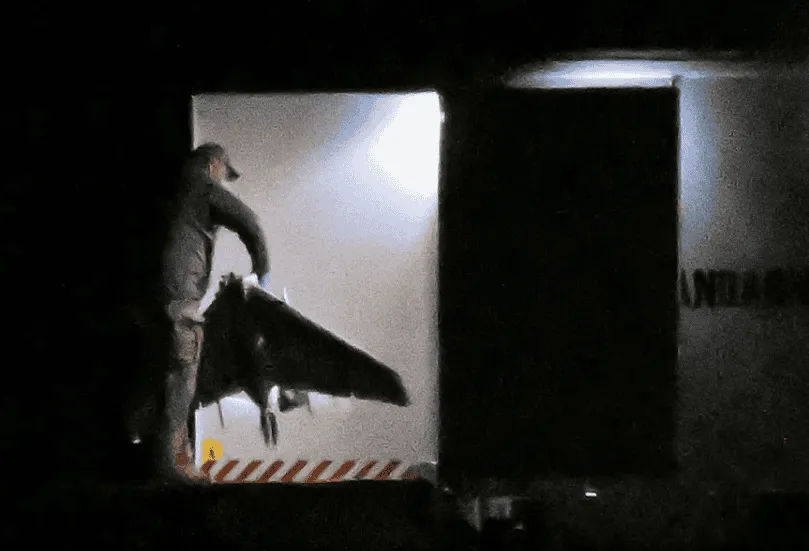
On May 9, 2026, in the Warmian-Masurian Voivodeship, 20 kilometers from the border with Russia’s Kaliningrad Oblast, local police found a drone bearing inscriptions in Russian. It was a military reconnaissance drone equipped with surveillance cameras. Bomb disposal experts, firefighters, and military police arrived at the site. The discovery once again highlighted the need to strengthen the European Union’s air defense.
Incidents in Romania
September 2023: Drones flying over the Odesa region
In September 2023, during Russian attacks on port infrastructure in the Odesa region, specifically the ports of Izmail and Reni, Russian Shahed-type drones crossed the border several times. The drones fell and detonated on Romanian territory.
Initially, the country’s Ministry of Defense “categorically denied” the incursion of Russian drones and any military threats associated with them. But later, they confirmed that they had found drone debris, likely of Russian origin.
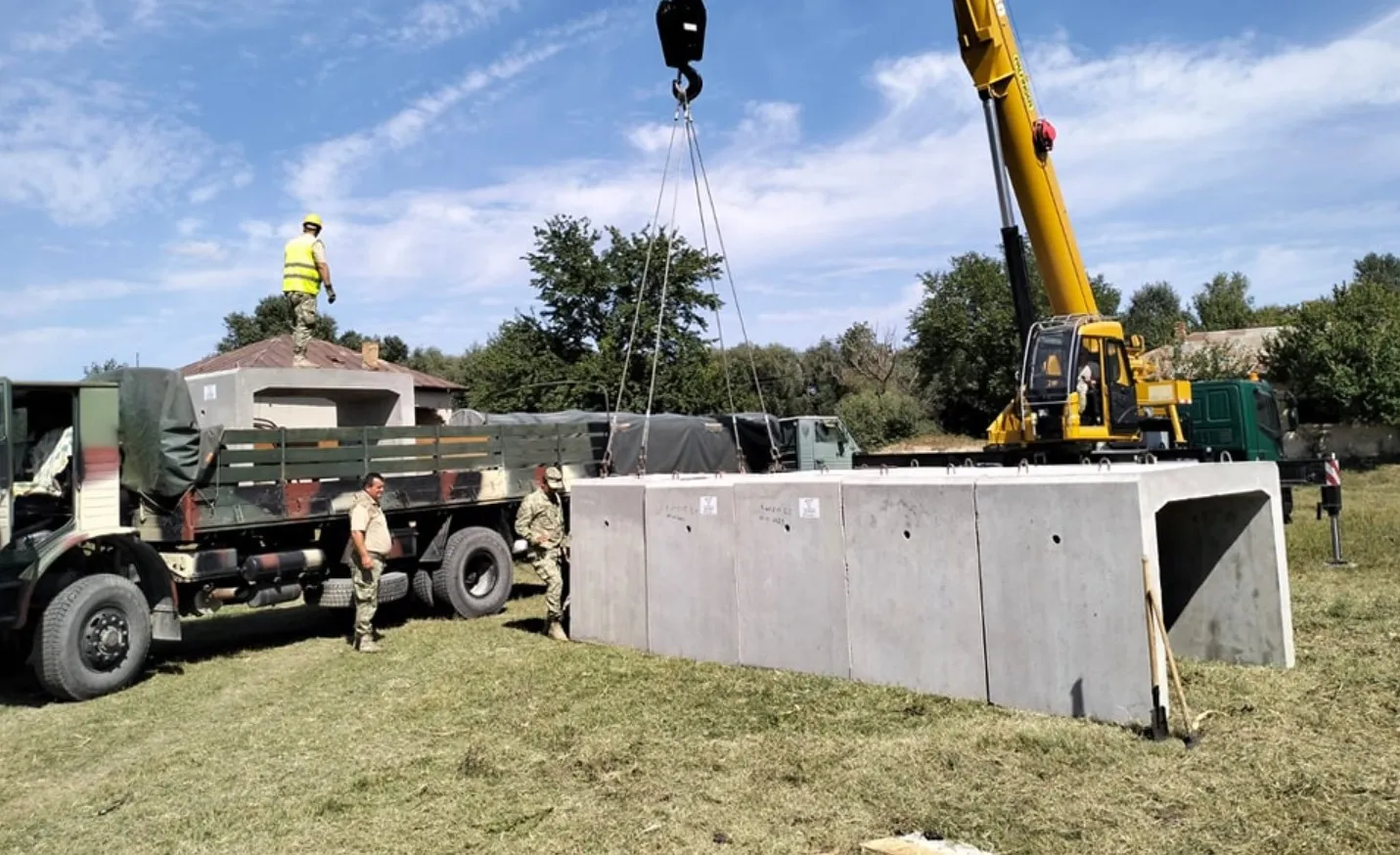
Following numerous incidents beginning on September 7, Romania’s National Committee for Emergency Situations decided to warn the public about the risk of falling debris, particularly in areas bordering the Ukrainian cities of Reni and Izmail. Emergency response teams in the cities of Tulcea and Galați urged local residents to take shelter. The air raid alert was announced via the RO-Alert app. Subsequently, shelters began to be built in dangerous areas near the Ukrainian border.

December 2023: F-16 fighter jets scrambled
On December 13–14, 2023, a downed Russian drone crashed on Romanian territory. The Romanian Ministry of National Defense noted that task forces from the Ministry of Defense and the Ministry of Internal Affairs were dispatched to the scene of the incident and found that the drone had left a 1.5-meter-deep crater near the village of Grindu, located 8 kilometers from the Ukrainian port of Reni.
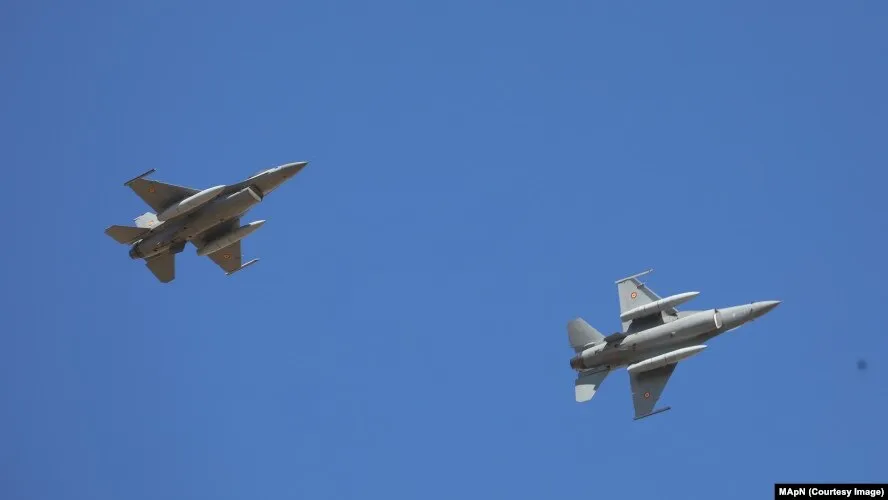
In all cases of drone incursions, Romania scrambled F-16 fighter jets, and NATO forces stepped up monitoring of the region. There were no official reports of drones being shot down; it was reported that the drones crashed on their own. At the same time, NATO command stated that Russia did not plan to intentionally attack Romania with drones and promised to monitor the situation.
2024–2025: Air Raid Alerts in Border Areas
In 2024–2025, Russian drones fell on Romanian territory nearly every month—during almost every massive attack on port infrastructure in southern Ukraine.
In July 2024, experts from the Ministry of Defense, Romanian intelligence, and the Ministry of Internal Affairs identified debris from a “Geran 1/2” drone of Russian origin. The crash sites were in areas near Plauru, in Tulcea County.
In response to the incidents, Romanian authorities informed their NATO allies of the airspace violations and condemned Russia’s aggression. Air raid sirens sounded constantly in Romania’s border regions.
May 2026: A high-rise building was hit
On the night of May 29, as the occupiers attacked the Odesa region, a Russian “Geran-2” drone crashed into a 10-story building in the Romanian border city of Galați. The impact sparked a fire; two residents were injured, and 70 people were evacuated. Experts later reported that the drone’s explosive charge had already detonated and posed no further threat.
The Romanian Foreign Ministry called it a “serious escalation” on Moscow’s part. Meanwhile, the Romanian Ministry of Defense had to explain why the military failed to protect the civilian population. They cited a lack of time and the constraints under which the army is forced to operate as the reasons.
Incidents in the Baltic States
Since the beginning of 2026, the Baltic states and Finland have been recording an increasing number of incidents involving drones that veer off course or crash on their territory. According to military experts, these are mostly Ukrainian UAVs flying to attack Russian infrastructure but veering off course due to Russian electronic warfare (EW) systems.
On May 7, three drones simultaneously violated Latvian airspace. One drone crashed to the ground, while another crashed into an empty oil storage facility near the city of Rēzekne. The third UAV entered Latvian airspace and flew on. There were no casualties or injuries, but a scandal erupted over the defense ministry’s inadequate response. Ultimately, due to security issues, the Latvian government was forced to resign.

The most high-profile such incident occurred on May 19, 2026, when a Ukrainian drone entered Estonian airspace and was subsequently shot down by a NATO fighter jet. Ukrainian officials officially apologized, explaining that the drones were intended for Russian military and oil infrastructure in the Leningrad region but had been knocked off course.
On May 20, a red air raid alert was declared in several eastern regions of Lithuania and in Vilnius due to a suspected incursion by a military drone. The population and the country’s leadership were urged to head to shelters. The National Security Commission held an emergency meeting, after which Lithuanian Prime Minister Inga Ruginiene stated that from now on, local authorities must ensure that shelters operate around the clock.


