Western experts are increasingly saying that the Kremlin is facing growing difficulties in the war against Ukraine. Although British, American, and German analysts assess the situation differently, they agree that strikes on Crimea and Russian infrastructure are significantly complicating Moscow’s position.
The Kremlin is beginning to realize the complexity of its situation in the war against Ukraine—this is the conclusion reached by British military expert Hamish de Bretton-Gordon in an article for The Telegraph. He points to several signs.
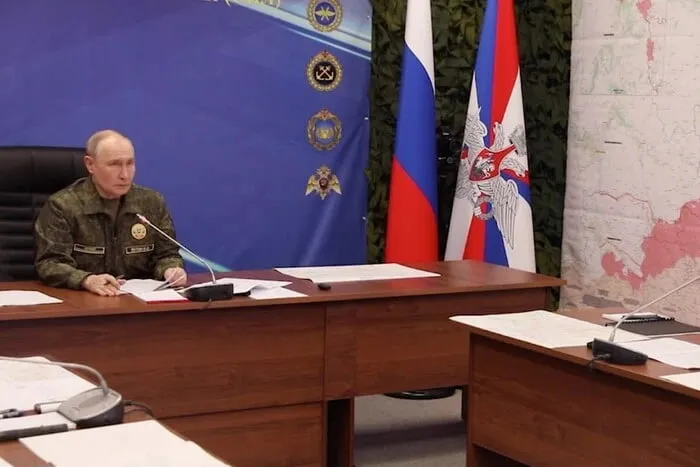
One of them, the expert notes, is that Russian leader Vladimir Putin publicly referred to the war as a “war,” abandoning his usual phrasing of a “special military operation.”
Another telling sign, in his view, was the de facto acknowledgment that Ukrainian long-range drones and missiles are causing serious problems for Russia.
However, de Bretton-Gordon considers the situation in occupied Crimea to be the most important indication of these changes. Due to power outages and fuel shortages, the Russian-appointed occupation authorities on the peninsula have been forced to declare a state of emergency.
“This is a significant development, as it is a public acknowledgment that the Russian military can no longer guarantee the security of Crimea—a territory that Putin has long portrayed as inviolable,” the expert writes.
The Battle for Crimea: What Ukraine Is Counting On
Foreign Policy also writes about just how much of a sore spot Crimea has become for Russia. As the publication notes, this is not a series of isolated strikes, but a targeted campaign to destroy the entire supply system for Russian troops in southern Ukraine.
George Barros, an analyst at the U.S. Institute for the Study of War, believes that Ukraine is currently creating the most favorable conditions for future offensive operations.
“Ukraine is shaping the battlefield,” he says in a comment to Foreign Policy.
According to Barros, Ukrainian forces are gradually making Russian defenses more vulnerable, and a large-scale offensive is possible only after the enemy has been thoroughly worn down.
At the same time, the Ukrainian campaign has not only military but also political implications.
Serhiy Kuzan, head of the Ukrainian Center for Security and Cooperation, says that Russia is forced to strengthen its presence in Crimea.
“We know that there are large FSB contingents in Crimea, presumably to contain discontent among the population,” he notes.
In addition, Russia is deploying additional troops and air defense systems to the peninsula to protect supply routes.
According to Foreign Policy, the constant pressure on Crimea not only complicates the resupply of Russian troops in the south but also undermines one of the Kremlin’s main arguments—that the annexation of the peninsula supposedly guaranteed its security.
40 Days of Pressure
The Economist offers a broader perspective on the situation. The publication views the 40 days of intensified pressure on Russia announced by Volodymyr Zelenskyy not only as a military campaign but also as a political and psychological signal.
Journalists note that in Slavic tradition, the fortieth day symbolizes the end of a person’s earthly journey. That is why the Ukrainian president’s statement can also be interpreted as a form of psychological pressure on the Kremlin.
However, behind the symbolism lies a very practical military strategy.
Ukraine continues to strike oil refineries, roads, bridges, and supply routes to Crimea.
Yevhen Karas, commander of the 413th Unmanned Systems Regiment, believes that the destruction of a significant number of Russian air defense systems was the turning point.
“The moment we realized we had a chance came when we saw how many air defense systems we were managing to destroy,” he says.
At the same time, The Economist cautions against excessive optimism.
Ukrainian military officials acknowledge that they have not yet managed to completely isolate Crimea. Dmytro Pletenchuk, a spokesperson for the Ukrainian Navy, notes: “Consider this a defense plan, not a victory plan.”
A source within Ukrainian intelligence cited by the publication also acknowledges that Russian troops still have fuel reserves, and that the current difficulties have not yet become a decisive factor on the front lines. The magazine also takes a cautious view of the situation in Donbas.
Despite Ukraine’s successes deep behind enemy lines, Russia continues to hold an advantage in manpower and ammunition, and its small assault groups continue to advance.
One of the commanders of a Ukrainian special forces unit states bluntly: “I see no signs of the enemy’s collapse.”
Pistorius: The current moment must not be wasted
German Defense Minister Boris Pistorius offered this assessment of the current stage of the war in an interview with Der Spiegel. According to him, the war in Ukraine may be entering a decisive phase, and Kyiv’s allies must seize this moment.
Pistorius emphasized that Ukraine needs resources to ramp up its own arms production and continue defending against Russian aggression. He stressed that the allies share a collective responsibility to ensure that support for Ukraine is not weakened.
The minister also noted that at the upcoming NATO summit, there are plans to establish a €40 billion support fund for Ukraine, of which Germany is to contribute 12 billion.
At the same time, Pistorius stated that today the Bundeswehr (German Armed Forces) is significantly better prepared for a possible war than it was in 2022.
He acknowledged that the army still has gaps and not all of the ordered weapons have been received yet, but emphasized that the German Armed Forces have changed significantly over the past three years.
BBC Ukraine has compiled the views of military analysts and Western officials on how the current campaign might affect the further course of the war.
Putin ordered an investigation to identify the main culprits of the war among Ukraine’s allies.
Ukrainian President Volodymyr Zelenskyy held a telephone conversation with German Chancellor Friedrich Merz, during which the two discussed strengthening Ukraine’s air defense, the situation on the front lines, and continued support for Ukraine.