
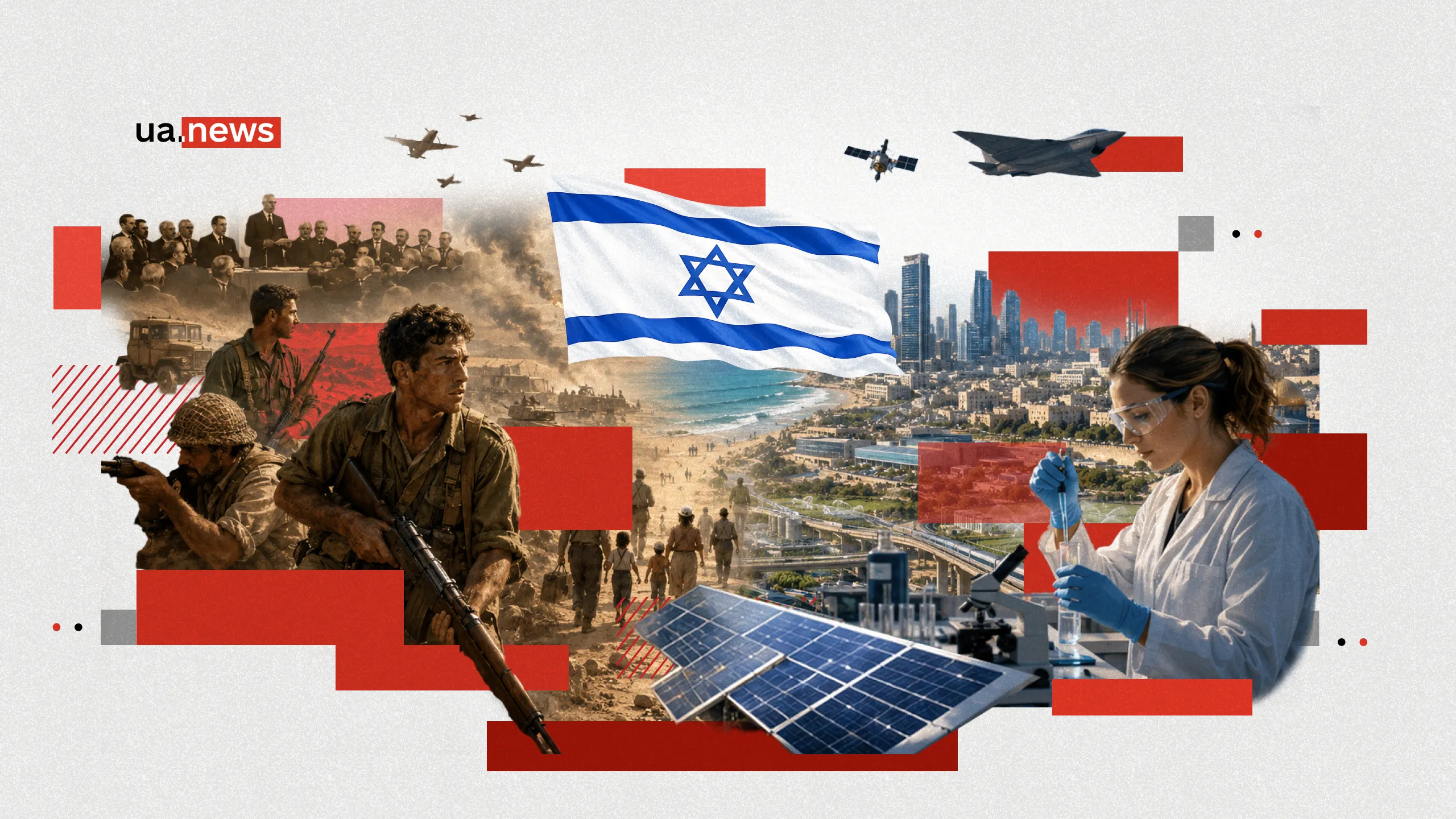
Yesterday, May 14, the State of Israel celebrated its 78th Independence Day. This served as yet another reminder and an occasion to discuss the remarkable and controversial fate of a country that came into being despite all the skeptics’ predictions, weathered the crucible of continuous wars—yet despite everything (or perhaps because of it) managed to transform itself into one of the world’s most dynamic economies.
The history of Israel is a history of a constant struggle for physical survival, which is strangely intertwined with intellectual and technological development. How did a country with no natural resources other than human capital win nearly all its wars, achieve a GDP of over $610 billion, and join the ranks of global leaders across every conceivable development index? UA.News political analyst Mykyta Trachuk explores the question.
1948: Declaration of Independence Surrounded by Enemies
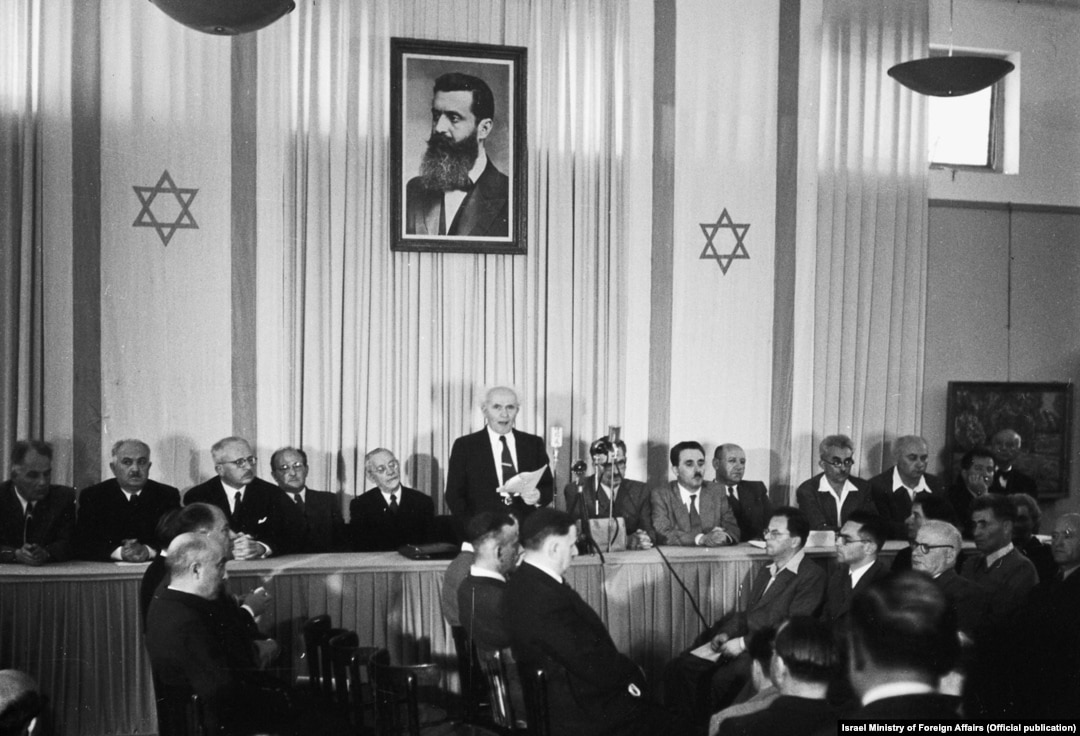
Formally, the starting point for modern Israel was sunset on May 14, 1948. In Tel Aviv, David Ben-Gurion, the first prime minister of the newly established country, read the Declaration of Independence. It was an act of political will, despair, and hope all at once: in a few hours, the British Mandate in Palestine was set to officially end, and the new state found itself face-to-face with the armies of no fewer than five (!) Arab countries. By dawn on May 15, the armies of Egypt, Syria, Transjordan, Lebanon, and Iraq had begun their invasion. What Israeli historiography calls the War of Independence became known to the Arab world as the “Nakba” (Catastrophe)—a tragedy whose consequences we still see today.
The first months of the new state’s existence were chaotic. The Israel Defense Forces—the IDF—were formed literally “on the march,” uniting underground Zionist combat organizations. There was a shortage of even basic small arms, let alone heavy weaponry. The first ceasefire, imposed by the UN, allowed for regrouping and the acquisition of weapons from Czechoslovakia. This proved to be a decisive factor.
By March 1949, the war had ended with a series of ceasefire agreements. Israel not only survived but also expanded its territory beyond the UN plan, although Jerusalem remained divided between Israel and Jordan. The price of independence was extremely high: the country lost about 1% of its population, but gained what it had lacked for centuries—true state sovereignty.
The next decade and a half was marked by constant border skirmishes, conflicts, and nation-building. The country took in hundreds of thousands of returnees: first, those who had survived World War II in Europe, and later—entire Jewish communities expelled from Arab countries. The economy was militarized and highly centralized, with a ration card system in place, among other measures. Life in Israel at that time was, to put it mildly, very bleak. But even then, the foundation for a future technological leap was being laid.
1967–1973: From the “Six-Day War” to “Judgment Day”
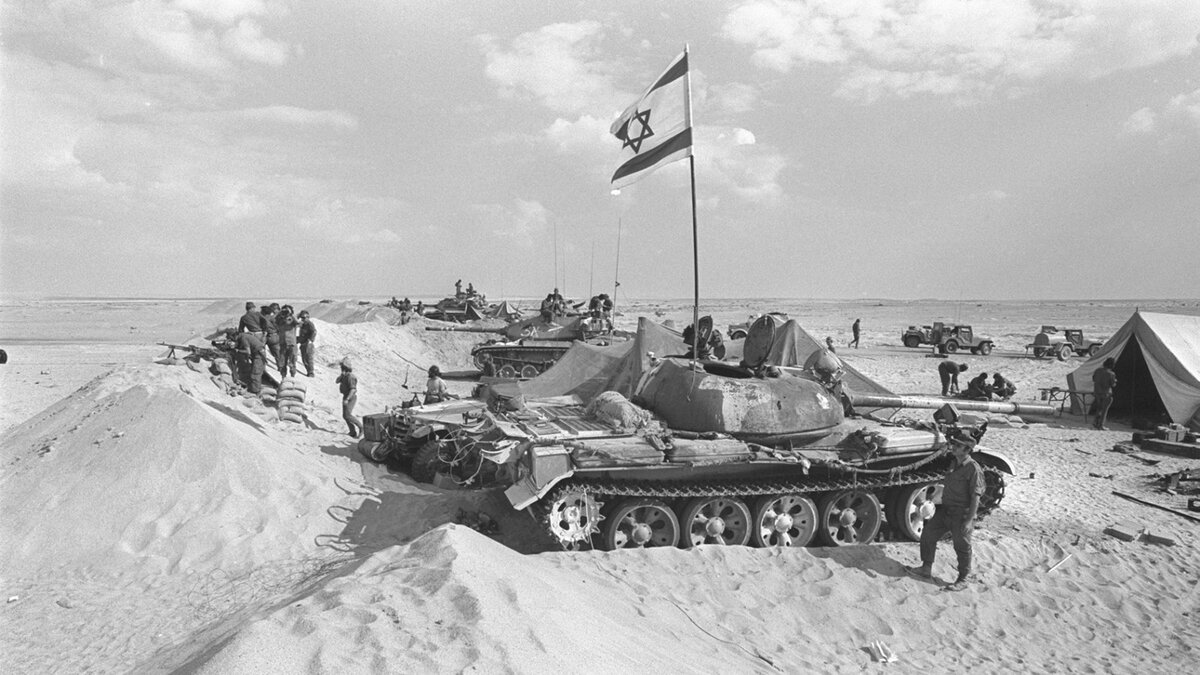
The following period radically changed the geopolitical map of the region and the very psychology of Israeli society. In May 1967, Egypt blocked the Strait of Tiran, deployed troops to the Sinai, and an Arab coalition prepared to launch a new attack. In response, Israel launched a lightning-fast preemptive air strike, destroying the Egyptian Air Force right on the airfields. In six days, the IDF occupied the Sinai Peninsula, the West Bank of the Jordan River (including East Jerusalem), the Golan Heights, and the Gaza Strip. It was a triumph—one that, however, gave rise to dangerous euphoria and an illusion of omnipotence. It is precisely these territories—some of which the UN still considers occupied—that have become a source of constant tension and a dilemma that haunts Israel to this day.
The Arab world did not accept defeat. On October 6, 1973, on the holy day of Yom Kippur, when most Israelis were fasting and in synagogues, Egypt and Syria launched a powerful coordinated strike. The Yom Kippur War became the most severe military test since 1948.
The first days were a disaster for Israel: the Bar-Lev Line in the Sinai was breached, and in the Golan Heights, Syrian tanks nearly reached operational territory, and so on. It was a failure of intelligence and political leadership. Only at the cost of incredible efforts, enormous losses, and massive arms shipments from the U.S. was it possible to turn the tide of the fighting—to stop the Syrians in the Golan and encircle the Third Egyptian Army in the Sinai.
Although the war ended in a military victory, in Israel it was perceived as a national trauma. It cost the lives of thousands of soldiers and caused a deep political crisis that led to the resignation of Golda Meir’s government. However, this trauma also provided an unexpected impetus: it was in the mid-1970s that the formation of Israel’s own military-industrial complex began, aimed at reducing critical dependence on foreign supplies. This decision would later play a key role in Israel’s economic miracle.
1980s–1990s: An economic miracle amid the ruins of inflation
Regular wars were draining Israel’s economy. While the country had demonstrated fantastic GDP growth rates in the 1950s and 1960s (up to 10% per year!), stagnation set in after the 1973 war. In the first half of the 1980s, Israel experienced hyperinflation, which reached 400% annually. Only a strict stabilization plan in 1985, which included a sharp devaluation and a wage freeze, saved the situation. It was a moment of truth when Israel could have slipped into the status of a “banana republic,” but instead chose the path of difficult yet pragmatic—and, as practice has shown, successful—reforms.

Two key factors played a role in this success. The first was the mass migration of the early 1990s: nearly a million Jews from the former USSR, among whom was a huge proportion of engineers, doctors, scientists, creative professionals, and others. They brought with them a solid education and powerful intellectual potential that aligned with market needs. The second factor was the Yozma government program for venture capital investment, which in the early 1990s offered tax incentives to foreign funds and co-financing for startups.
It was during this period that “high-tech” itself emerged: Israelis began developing the first firewalls, VoIP systems, and later semiconductor components. What once seemed impossible for a small country was becoming a reality before our eyes. Israel began to transform from an agrarian-industrial state into a nation with a new type of economy: startups and investments in high-tech manufacturing.

Israel in the 21st Century: The Era of High Technology and Unresolved Conflicts
The new century brought a new type of threat. The Second Intifada (Arab uprising) (2000–2005) shattered illusions of peaceful development and coexistence with Palestine, with which normal relations had still not been established by that time. Subsequently, a series of bloody terrorist attacks on buses, in cafes, on the streets, and at nightclubs paralyzed the country. In 2006, the Second Lebanon War against Hezbollah began, demonstrating that even the region’s strongest army can become bogged down in an asymmetric conflict. This was followed by operations in Gaza, rocket attacks on the south of the country, the creation of the “Iron Dome” system, and the fortification of borders, and later—a new war, which has been ongoing with interruptions since 2023 to the present.
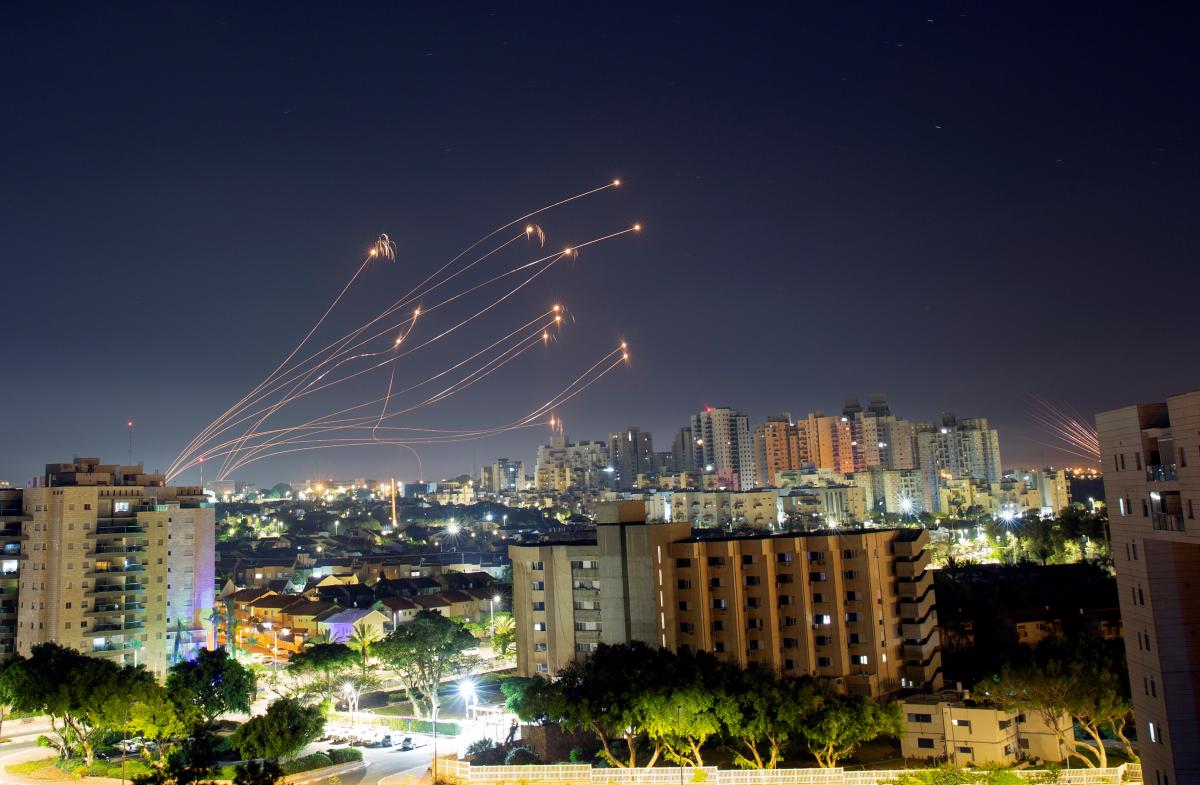
Israel became an increasingly militarized state. The paradox is that even during the most intense years, security and the economy did not merely coexist—they fueled each other. Military needs generated demand for technologies that quickly found civilian applications as well. Thus, cybersecurity systems, drones, and precision agriculture became Israeli exports. As of today, Israel invests nearly 4.5% of its GDP in research and development, one of the highest rates in the world. The number of startups is in the thousands, and dozens of Israeli companies have already achieved “unicorn” status.
The figures as of 2025 are impressive. The country’s nominal GDP reached $610 billion, which is an exceptionally high figure for a nation with a population of less than 10 million. Per capita GDP surpassed the $60,000 mark for the first time in history, outpacing countries such as Germany and the United Kingdom in this regard. The minimum monthly wage in 2025 was 5,880 shekels, equivalent to approximately $1,600. However, the high cost of living “eats up” a significant portion of the population’s income. In the UN Human Development Index, Israel ranks among the top tier, with indicators on par with France, Italy, and Spain.
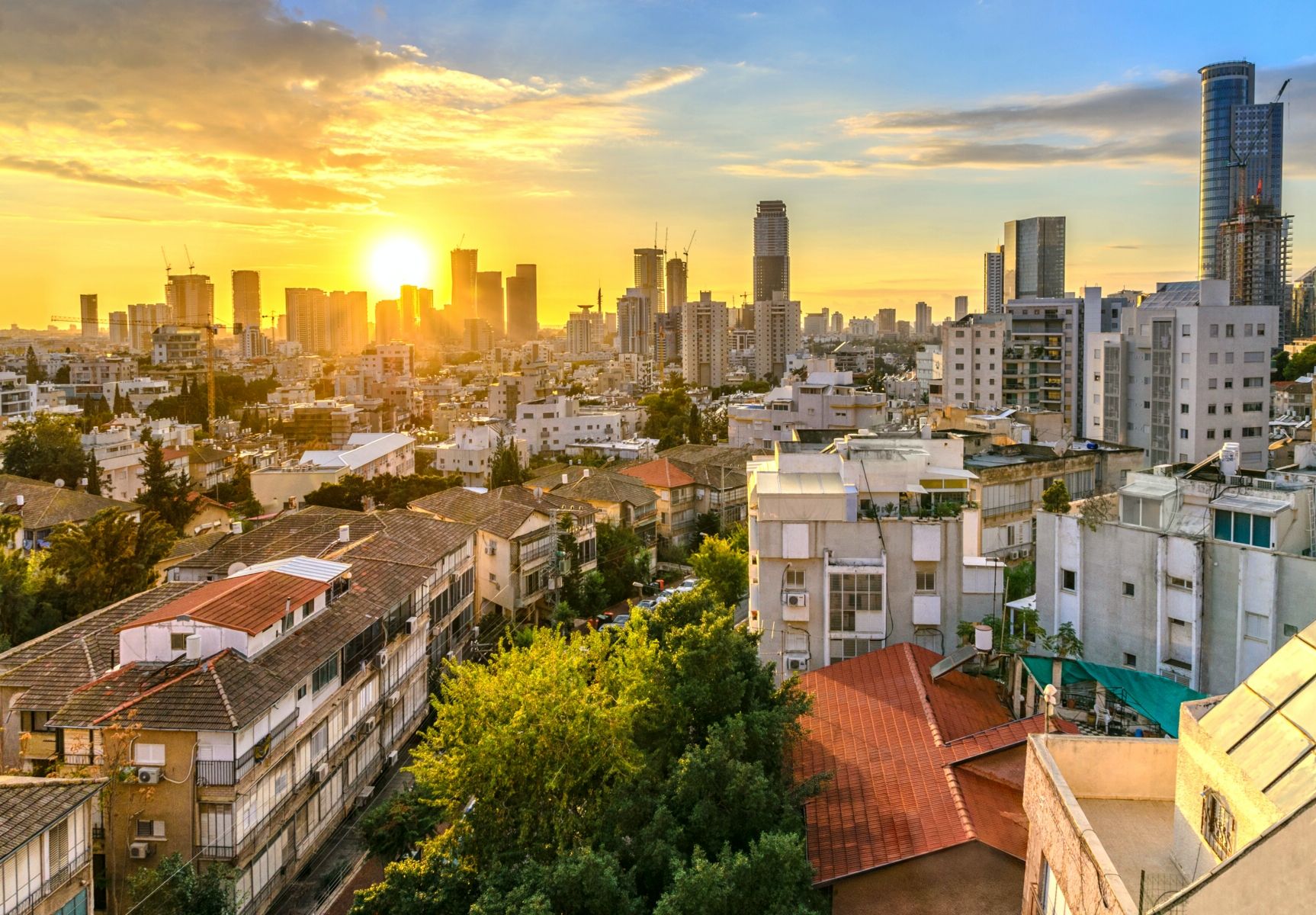
However, it would be untrue to claim that the country is entirely successful across the board. Israel faces a vast array of acute problems, which, as of 2026, are only intensifying.
First, the “never-ending” war with its neighbors. The conflict with Hamas in the Gaza Strip, which flared up with renewed intensity in 2023 and continues (with interruptions) to this day, elicits a very mixed reaction from the public. In early 2026, fighting resumed on the northern front with the Lebanese “Hezbollah,” leading to a mass evacuation of the civilian population. Later, in February 2026, Israel and the U.S. launched a joint military operation against Iran, bringing even greater instability to the region. Not to mention that such wars cost tens of billions of dollars, increase the national debt, and lead to a decline in GDP growth.
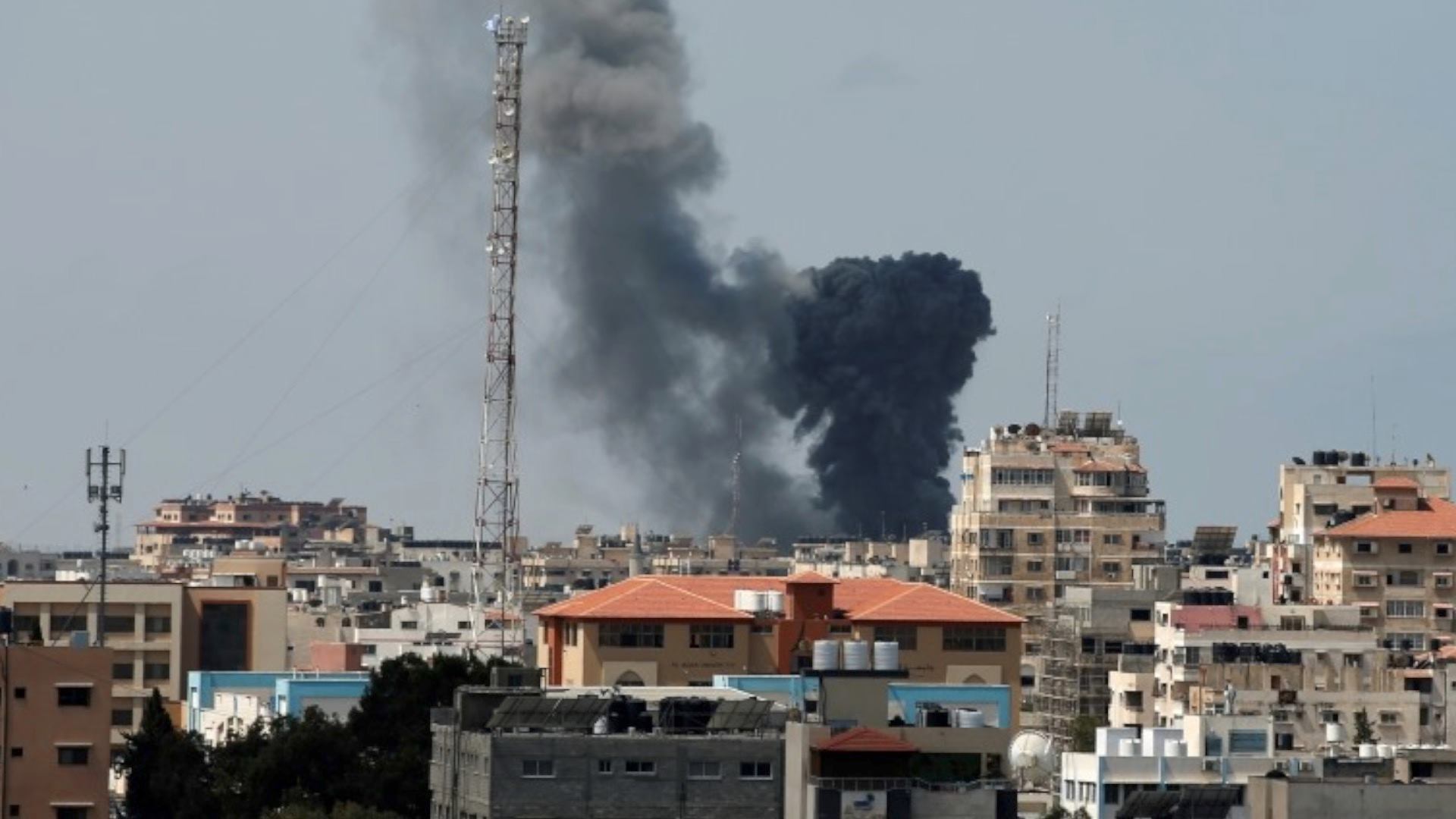
Second, there are massive internal socio-economic divisions. Society is polarized along ethnic (Jews versus the Arab minority), religious (secular versus ultra-Orthodox), and political (supporters and opponents of the government, etc.) lines. Judicial reform, an attempt at which sparked the largest protests in the country’s history, remains an unresolved source of political tension. Furthermore, the general rise in the cost of living and the lack of affordable housing are chronic irritants for the middle class.
Third, in a country where high-tech generates billions of dollars, a significant portion of the population is almost entirely excluded from this economy—specifically, the Arab population and ultra-Orthodox Jews. This poses a long-term threat to the sustainability of the state model itself.
Fourth, demographics. Israel is a unique example of generally very favorable demographics, especially for the Western world. The country’s fertility rate is up to 3 children per woman, meaning that the population is not only not shrinking but is actually growing significantly. The problem, however, is that the highest birth rates are found precisely among Arab and ultra-Orthodox families, while rates among ordinary secular citizens are significantly lower. Arabs can be (not always, but often!) completely disloyal to the state. As, incidentally, can ultra-Orthodox Jews, who, at the very least, do not want to serve in the IDF due to their religious beliefs. So, over the years, it will clearly become increasingly difficult for Israel to replenish its army, which is one of the foundations of the state.

To sum up, Israel marked its 78th Independence Day not so much with fanfare and fireworks as with its usual mix of anxiety and business as usual. This is a country that physically cannot afford demobilization or prolonged depression. After all, as Golda Meir once said: pessimism is the one luxury Jews cannot afford.
Israel’s political history is a pendulum swinging between existential threats and spectacular surges. Israel’s success is not a miracle in a religious sense, but the result of a thoroughly pragmatic commitment to education, military-style management (that rare instance where it has benefited the state), the “brain drain,” and unprecedented support from the diaspora and, until recently, the entire Western world.
At the same time, Israel is a country that, in 78 years, has still not been able to define its own borders, finally make peace with all its neighbors, and—most importantly—finally resolve the “Palestinian question,” which continues to poison Israeli political life and utterly destroy the country’s international image. It is precisely in this duality—between innovative Tel Aviv and its burning borders—that the phenomenon of modern Israel lies.


