
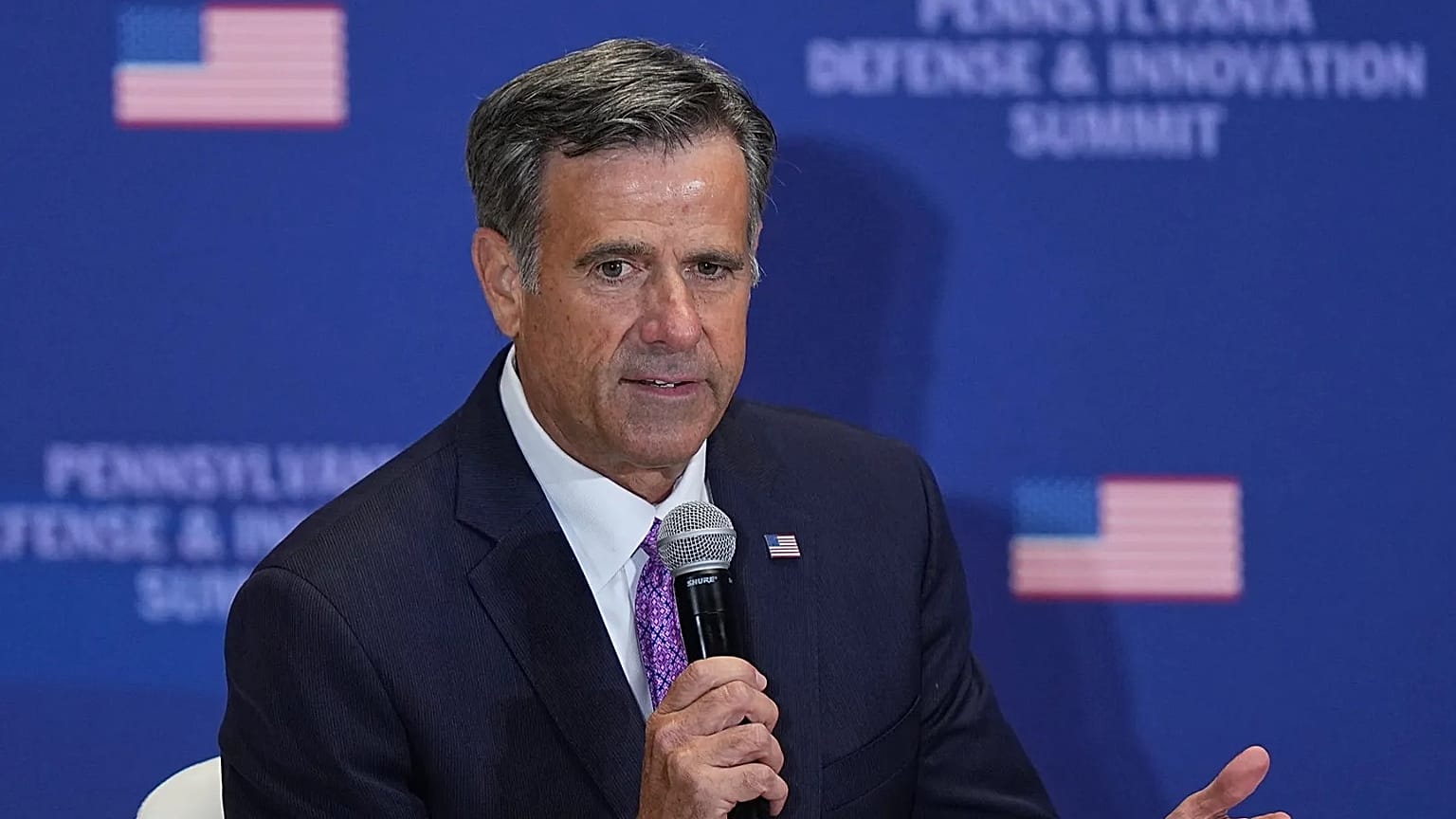
When the media recently reported on CIA Director John Retcliffe’s unplanned and unannounced visit to Moscow, the initial reaction of many analysts was one of surprise. After all, just a few months ago, Ratcliffe himself was cited as one of the main architects of Washington’s hard line toward Russia. However, the reason for this trip is becoming increasingly clear. Most likely, the head of U.S. intelligence did not come to negotiate the fate of Ukraine or Iran, but to issue a warning. His mission is to convey a simple message to the Kremlin leadership: Washington appears to have detected signs that Russia is preparing to “test NATO’s resolve.” And the Baltic states could well become the most likely testing ground for this geopolitical test.
According to U.S. intelligence, Russia is considering scenarios that, on the one hand, can hardly be called a full-scale war, but on the other hand, could very well escalate into an armed conflict between Moscow and the Alliance. These could include cyberattacks that paralyze the critical infrastructure of the Baltic states, covert sabotage operations carried out under a false flag, and even a limited ground invasion aimed at the rapid seizure of a small patch of territory. It sounds almost absurd given all the classical notions of rationality. But it is precisely this absurdity that has been the norm of Vladimir Putin’s foreign policy in recent years. And it is precisely this absurdity that John Ratcliffe appears to have been trying to stop.
Could Russia attack the Baltic states, and how exactly might this hypothetical conflict unfold? UA.News investigated the issue.
The Logic of Escalation: Does the Kremlin See No Absurdity in a War with NATO?
In a conventional, rational framework, a war with NATO would be suicidal for Russia. The Alliance’s military might collectively outmatches Russia’s by an order of magnitude, and both sides’ nuclear arsenals guarantee mutual destruction. However, Moscow has long been operating within a different framework—the logic of controlled escalation, where any risk is justified if it allows for the achievement of a political outcome. The Kremlin has repeatedly demonstrated that it is capable of crossing “red lines” that the West considered inviolable: the annexation of Crimea, the invasion of Ukraine, abductions, murders, and acts of sabotage on the territory of NATO countries, the use of chemical weapons abroad (the Skripal case in 2018), a massive drone incursion into Alliance airspace, and so on. Each time, the world seemed to say, “This is too much,” but each time, Russia took it a step further.
In this context, an attack on the Baltic states does not appear to be madness, but rather a fully expected strategy. Moscow is watching as the West is gradually being drained by the war in Ukraine, as Trump in the U.S. casts doubt on the reliability of American security guarantees, and as European armies face shortages of ammunition and personnel. For the Kremlin, this is a signal that now is perhaps the best moment to “test” Article 5 of the Washington Treaty. There will never be a better international opportunity. If NATO is unable to respond adequately to a limited act of aggression against one of its member states, the alliance will effectively cease to exist as an effective military bloc—it simply won’t make sense anymore. This is precisely the strategic goal of Putin, who constantly raves about a “hostile NATO.”
That is precisely why CIA Director Retcliffe may have tried to explain to the Russians that Washington sees through this game and is ready to respond. But the problem is that this is not the first time the Kremlin has heard such warnings, which are never followed up with action. In 2021, Retcliffe’s predecessor, William Burns, also traveled to Moscow to demand that Russia not attack Ukraine. He was received politely but, unfortunately, completely ignored. As we know, a few months later, Russia launched a full-scale invasion. So today, the key is for words to be backed by action.
Narva, the Suwalki Corridor, and Other Scenarios: Where a Conflict Could Erupt
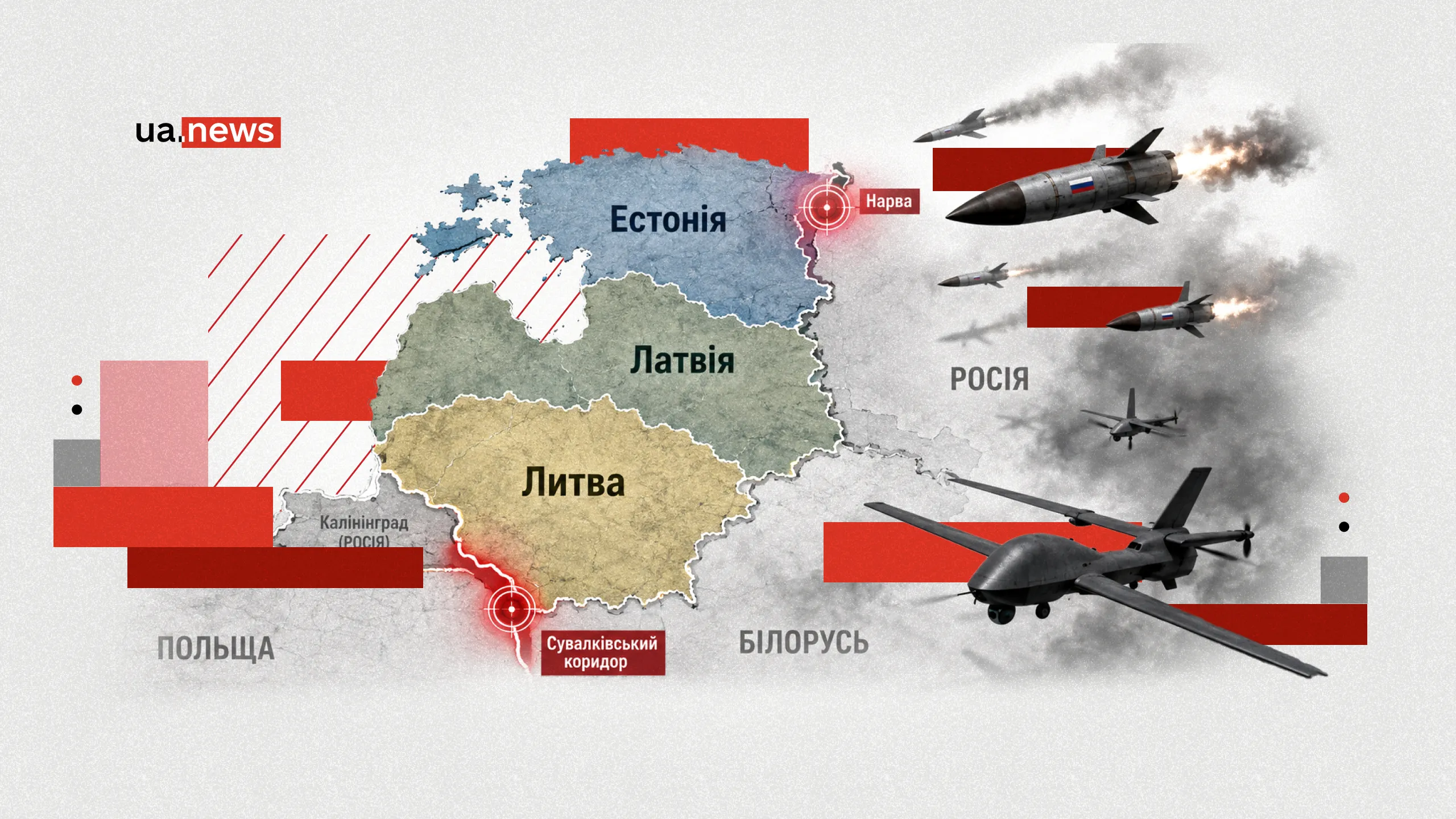
When discussing the likely directions of a potential Russian strike against NATO, two geographical locations immediately come to mind: the city of Narva on the border between Estonia and Russia, and the Suwalki Corridor—a strip of territory between Poland and Lithuania that connects Russia and Belarus to the Kaliningrad Oblast.
Narva is attractive to the Kremlin because it has a very high percentage of Russian residents, which creates fertile ground for a “defense of compatriots” scenario. 87 percent of Narva’s residents are ethnic Russians; it is literally a “piece” of Russia in Estonia, right on the border with the Russian Federation. A rapid seizure of the city, located just a few kilometers from the Russian border, could be carried out by special forces with the support of artillery and even air power, without a full-scale invasion. Next would come the proclamation of some kind of “people’s republic” or direct annexation, along with a demand that NATO not intervene.
The Suwałki Corridor is a far more strategically vulnerable area from a military standpoint. It is a narrow strip about 100 kilometers wide; capturing it would allow Russia to connect Belarus with Kaliningrad and effectively cut off the Baltic states from the rest of the Alliance by land. Such an operation would require significantly more resources than an attack on Narva, but it would also make much more military sense. Russia could attempt to cut off NATO’s land-based communications and force Lithuania, Latvia, and Estonia to face a de facto blockade. And although such a scenario seems downright reckless, it is worth noting that this is precisely the tactic Russia has been trying to implement in Ukraine of late.
But the greatest danger lies in the fact that the Kremlin may not limit itself to obvious targets. The Russian command understands that the West expects a strike specifically on Narva or the Suwalki Corridor—it’s too predictable. Therefore, an asymmetric move is entirely possible: a sudden cyberattack on the energy infrastructure of the entire Baltic region, combined with provocations at sea or in the air. The history of the war in Ukraine has shown that Russia is capable of combining all forms of aggression simultaneously: sabotage, missile strikes, information campaigns, and political blackmail. It is precisely this kind of hybrid attack that is the most difficult to repel, since it does not fall under the classic definition of war and, therefore, may not automatically trigger the mechanism of Article 5.
Diplomacy as a Last Resort: What Retcliffe’s Visit Means
In this context, John Retcliffe’s visit to Moscow was not only an attempt to warn the Kremlin but also a demonstration that Washington no longer relies on conventional diplomatic channels. When the CIA director is sent to talk with Russia, it means the threat level is considered extremely high. The White House evidently possesses specific intelligence indicating plans to attack NATO. And this intelligence is compelling enough to compel one of the Trump administration’s top “hawks” to board a plane and fly to Moscow.
At the same time, the very fact of the visit is an alarming signal for Ukraine. If the U.S. is so concerned about the risk of war with Russia in the Baltics that it is willing to engage in direct talks with the Kremlin, then the issue of support for Ukraine (which is not exactly a priority anyway) may take a back seat. Therefore, it cannot be ruled out that Ratcliffe was negotiating a global agreement, a condition of which could be the limitation or cessation of U.S. aid to Kyiv. Such a scenario would be a disaster for Ukraine, but for the Trump administration, it might appear to be a pragmatic way out of the situation.
We must not forget the Iranian factor either. Russia actively supports Iran in its confrontation with Israel and the U.S., and Washington has long been seeking ways to break up this “axis of evil.” Retcliffe may have offered the Kremlin certain concessions in exchange for reducing military cooperation with Tehran. If this agreement is reached, Russia could gain strategically by maintaining its influence in the Middle East and seeing some relief from sanctions pressure. For Ukraine, this would mean further isolation, since even without Iranian weapons, Russia still retains powerful military capabilities, whereas Ukraine, without American aid, does not.
To sum up, history has a habit of repeating itself: both as tragedy and as farce. In the fall of 2021, William Burns traveled to Moscow with a warning that an invasion of Ukraine would be unacceptable. A few months later, Russia launched the largest war in Europe since World War II. Now, five years later, John Ratcliffe has repeated that visit—perhaps with a warning that an attack on the Baltic states is unacceptable.
Does this mean we are once again on the brink of war? Not necessarily. But the fact that the CIA director is rushing to Moscow indicates one thing: U.S. intelligence considers this or that threat to be real. And if the Kremlin once again ignores the warnings, as it did with Burns, the world may wake up to a new reality in which NATO countries are already direct participants in the war.
The logic of escalation that guides the Kremlin does not allow for stopping at what has already been achieved. Each new milestone is merely a step toward the next “victory over the West.” And if the Russian leadership decides that NATO will not dare to invoke Article 5 after the deaths of a few hundred soldiers in some Baltic town, it will order an attack without hesitation. The only question is whether the West will have the resolve to prove that its security guarantees are not just empty words.
It is quite possible that Retcliffe tried to convey this to the Kremlin. The coming days will show whether they heard him this time.




