
The Trump administration has sidelined Israel from negotiations with Iran, according to The New York Times
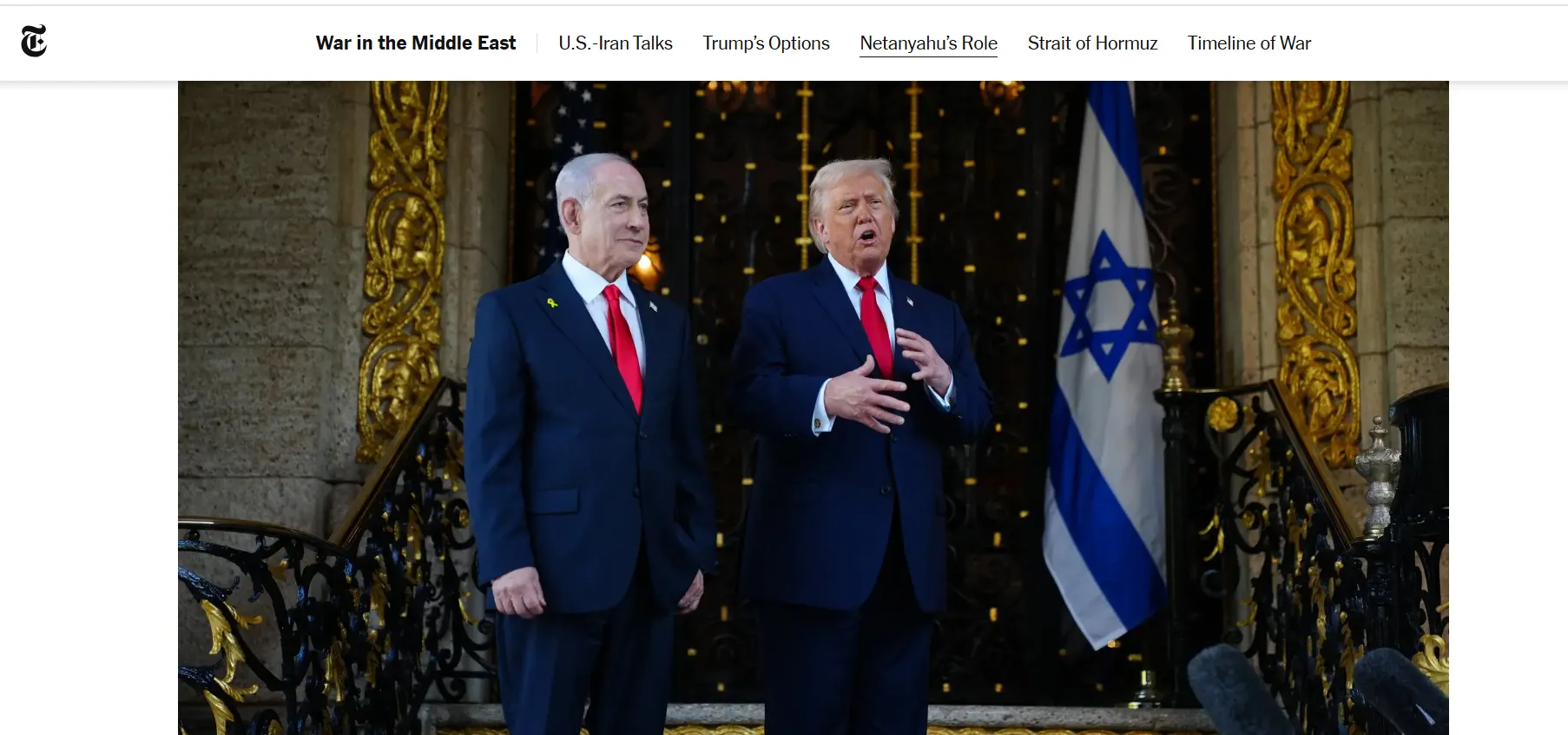
The administration of U.S. President Donald Trump has decided to exclude Israel from the negotiation process with Iran. The reason cited for this move is a divergence in assessments of the situation, particularly Prime Minister Benjamin Netanyahu’s overly optimistic predictions, which were later proven incorrect.
This is reported by The New York Times.
On the eve of the attack on Iran on February 28, Netanyahu was not only present in the situation room with Trump but also led discussions in which he predicted that a joint strike by the U.S. and Israel could well lead to the fall of the Islamic Republic.
However, several weeks later, after the optimistic assurances proved false, the situation had changed little.
According to two Israeli Defense Ministry officials, the Trump administration has sidelined the Israeli side to such an extent that the country’s leaders were virtually excluded from the ceasefire negotiations between the U.S. and Iran.
Now, Israelis, who feel they lack information from their closest ally, are forced to gather intelligence on what is happening between the U.S. and Iran through their connections with leaders and diplomats in the region, as well as through their own surveillance within the Iranian regime. This shift—effectively “from the cockpit to economy class”—could have serious consequences for Israel, and especially for Netanyahu, who faces a tough re-election battle this year.
As the NYT reports, Netanyahu has long positioned himself to voters as “Trump’s mentor,” someone with the ability to secure the president’s support and maintain it.
In a televised address at the start of the war, he presented himself as an equal to the U.S. president, assuring Israelis that he speaks with Trump “almost every day,” exchanging ideas and advice, “and making decisions together.”
Thus, in February, he dragged Israel into the war, harboring grand plans to achieve a goal he had sought for decades—to stop Iran’s quest for nuclear weapons once and for all.
When the war began with the defeat of Iran’s leadership, it seemed that another goal might also be achieved—the overthrow of the regime. However, many in Trump’s inner circle had always considered this idea absurd. Soon, the priorities of the U.S. and Israel began to diverge increasingly, especially after Iran closed the Strait of Hormuz, which led to a sharp rise in oil prices and forced Trump to agree to a ceasefire.
Israel, on the other hand, found that its three main objectives remained unattainable. Specifically, at the start of the war, Netanyahu wanted: the overthrow of the regime, the destruction of Iran’s nuclear program, and the elimination of Iran’s missile program. None of these goals were ever achieved.
Earlier, Iranian Foreign Minister Abbas Arakchi, during a conversation with UN Secretary-General António Guterres, stated that the United States is exerting pressure on Tehran within the framework of the negotiation process. According to The Times of Israel, the Iranian diplomat criticized the American side for “unreasonable demands” and an approach that Tehran described as an attempt to impose its own terms.
Earlier, Iran announced a new “control” zone in the Persian Gulf, which, according to its version, partially covers the waters of the United Arab Emirates. Abu Dhabi sharply rejected these claims, calling them unrealistic and provocative. Against this backdrop, tensions in the region have noticeably risen again.
Trump is willing to wait a few more days for Iran to provide the right answer.


