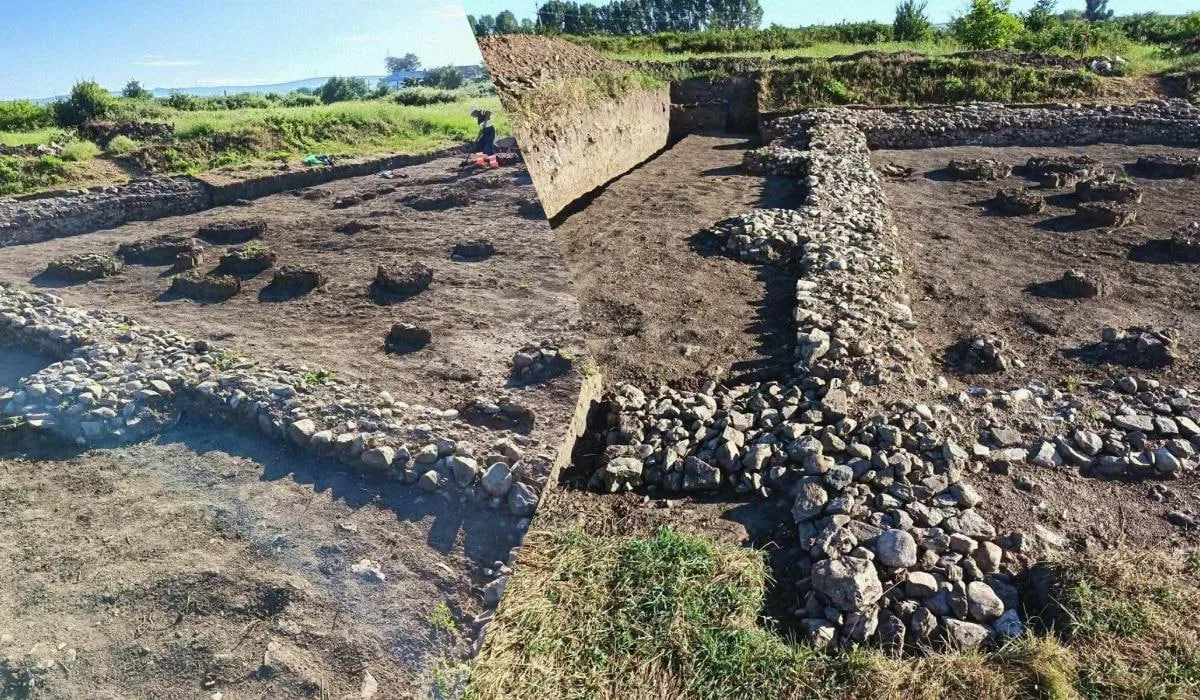
Archaeologists have uncovered the remains of one of the key structures of the ancient Roman fort of Recari in Romania, which was destroyed by fire nearly 1,800 years ago during the Gothic invasion.
Lia Olguța Vasileascu, mayor of Craiova, announced the results of the excavations. The research was conducted by specialists from the Oltenia Museum on the site of the Roman fort of Recari, which is considered the second-largest stone fortification in the historic region of Oltenia.
According to her, archaeologists discovered the stone foundation of a horreum—a granary that was the second most important building after the Roman garrison headquarters. It was here that the grain and food supplies needed to sustain the troops were stored.
Researchers discovered traces of a massive fire that destroyed the structure. In their opinion, the fortification may have been destroyed during the Gothic invasions in the 3rd century CE.
“The massive stone walls and traces of fire tell a story spanning nearly two millennia and provide a better understanding of the final moments of the Roman fortification’s existence,” Vasileascu commented.
The Roman fort of Recari is considered the second-largest stone fortification in the historical region of Oltenia. In ancient times, it played an important strategic role, as Roman troops controlled the Jiu River valley from there.
Experts emphasized that this discovery will provide a better understanding of the structure of Roman military settlements and the events that led to the destruction of one of the region’s largest fortifications nearly 1,800 years ago.
A tomb of a Celtic ruler containing gold treasures has been discovered in Germany.
Archaeologists have found unique medieval artifacts near Halych.
As a reminder, the sunken ship “Delta I,” discovered near the coast of Cádiz in Spain, continues to reveal new secrets. Archaeologists have determined that the ship was carrying Swedish cannons and silver ingots from the territory of modern-day Bolivia, which may indicate large-scale smuggling in the Atlantic more than 300 years ago.