
Belarus has restricted access to forests near the border with Ukraine
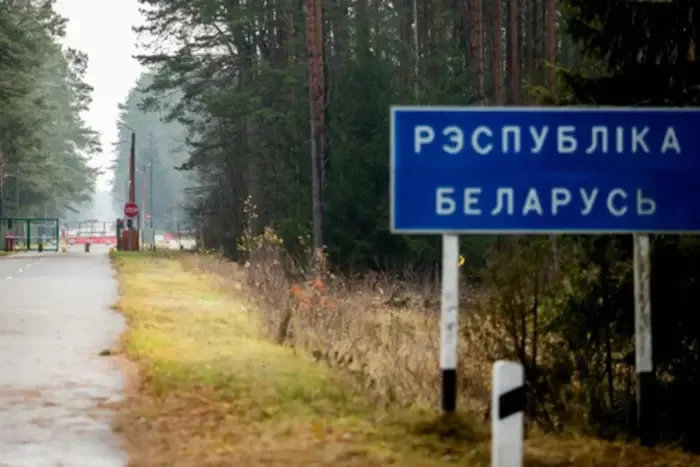
Belarusian authorities have officially imposed restrictions on visiting forests in 19 districts, particularly near the border with Ukraine. Viktor Yagun, former deputy head of the SBU, explained that the situation has drawn the attention of Kyiv and NATO due to potential risks ranging from increased border controls and provocations to the concealment of military movements or preparations for exercises. According to him, the most likely scenarios are information and psychological pressure and an increased military presence without escalating to full-scale actions.
As noted by Viktor Yagun, a major general in the SBU reserve and former deputy head of the Security Service of Ukraine, what attracts the most attention is that most of these areas are located near the borders with Ukraine, Poland, and Lithuania.
Yagun stated that formally, these are fire prevention measures and seasonal restrictions; however, the very configuration of the restricted areas and their concentration in the border zone compel one to view the situation also “from a military-political perspective.”
He explained that in modern military practice, such restrictions are often used to “ensure the covert movement of troops, the deployment of field logistics, the creation of temporary ammunition and fuel depots, and the establishment of command posts and engineering positions.”
In addition, as Yagun wrote, such measures help minimize “the risk of information leaks through photo and video documentation of the movement of equipment and personnel.”
Separately, the general noted that these restrictions emerged “against the backdrop of reports from Ukrainian intelligence regarding the activation of military infrastructure on Belarusian territory and an increase in the intensity of joint military activities between Minsk and Moscow.”
What scenarios are being considered
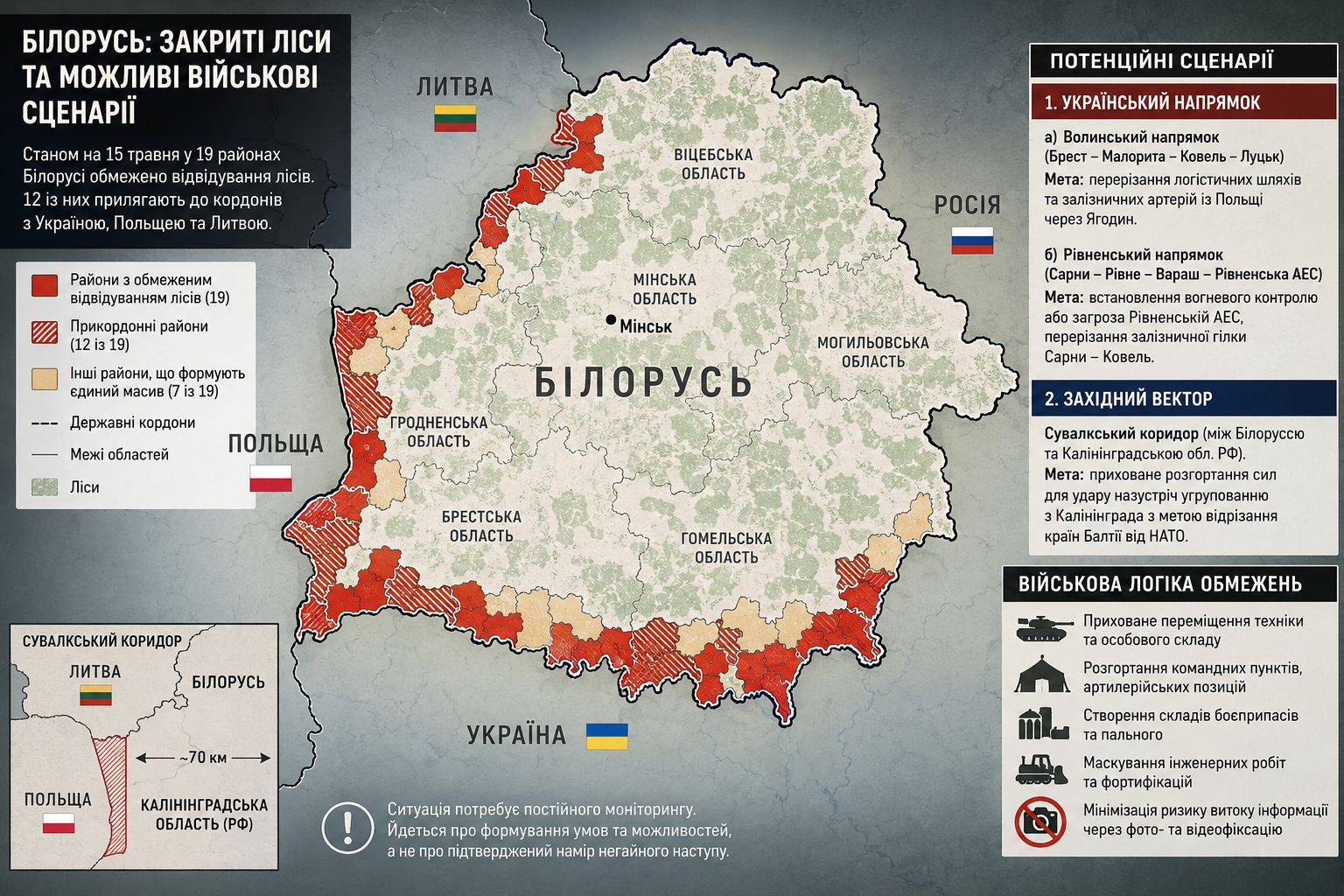
According to Viktor Yagun, there are currently “two main potential directions” where these actions could have military significance.
The first is the Ukrainian direction. The expert noted that the southern and southwestern parts of the Brest region, which border the Volyn and Rivne regions of Ukraine, are attracting the most attention.
“This particular area is important from the perspective of Ukrainian logistics, as a significant portion of the transport and rail routes that ensure the delivery of Western military aid pass through Volyn,” he wrote.
In this context, Yagun outlined two possible scenarios. The first is “the creation of a threat in the Volyn direction, specifically in the Kovel and Lutsk areas.”
Even without a large-scale offensive, as the expert explained, the mere emergence of the risk of an attack from Belarus forces Ukraine to “maintain significant reserves on the northern border and disperse its forces.”
The second scenario, according to Yagun, is linked to the “Sarny–Rivne–Varash” direction. He explained that the strategic importance of this area is determined “both by the presence of critically important railway infrastructure and the location of the Rivne Nuclear Power Plant.”
Suwałki Corridor
The second potential direction identified by the expert, the western one, is linked to the so-called Suwalki Corridor.
“This refers to the narrow strip between Belarus and the Kaliningrad Oblast of the Russian Federation, which connects the Baltic states with the main territory of NATO,” Yagun noted.
According to him, in Western military assessments, this direction “has been considered one of the most vulnerable in the alliance’s security system for many years.”
The expert added that the concentration of restricted areas in western Belarus “theoretically creates conditions for the covert deployment of forces near the Polish and Lithuanian borders.”
At the same time, Viktor Yagun emphasized that the situation should not currently be interpreted as a direct sign of an imminent offensive.
According to him, Belarus and Russia may be “deliberately creating an atmosphere of constant military threat in the northern direction without intending to move to immediate active operations.”
The main goal of such actions, as the expert explained, is to force Ukraine, Poland, and the Baltic states “to maintain significant forces along their borders, thereby dispersing reserves, air defense resources, and logistical capabilities.”
“At this stage, it is more about creating conditions and opportunities than a confirmed intention to use force immediately,” Yagun concluded.
As a reminder, Belarus has launched exercises to practice the use of nuclear weapons.
President Volodymyr Zelenskyy stated that Russia is attempting to draw Belarus deeper into the war against Ukraine and is considering new scenarios for aggression from its territory.
Belarus’s self-proclaimed president, Alexander Lukashenko, held a meeting on arming the army and announced the preparation of a new state armament program for 2026–2030.
Belarus continues to build infrastructure facilities deep within its territory and is not moving them closer to the Ukrainian border. At the same time, it cannot be ruled out that Russia may use these facilities in the future to deploy additional forces and equipment.




