
Dawn: Pakistan should turn clean air policy into funded action
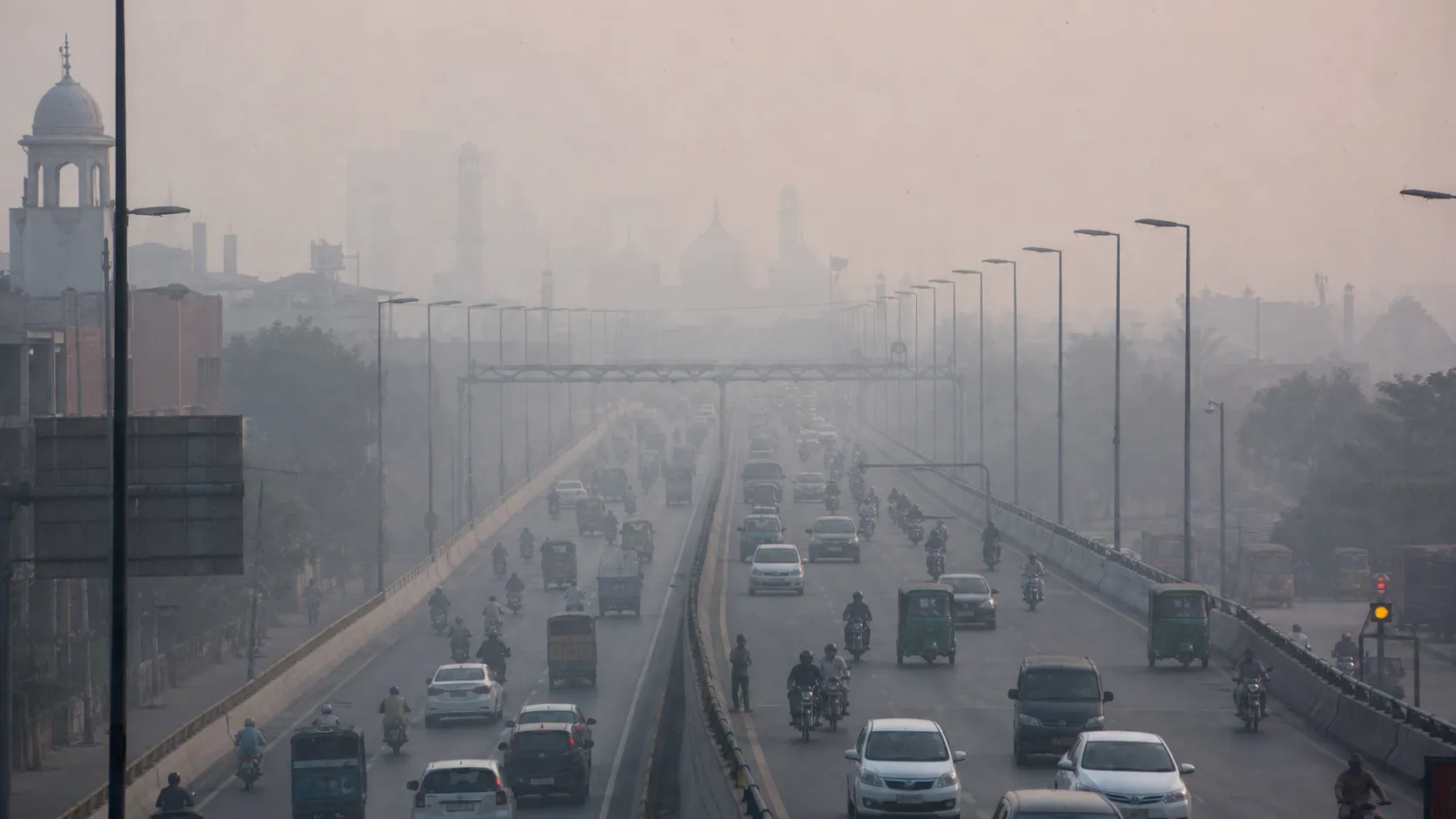
A Dawn article states that Pakistan should move from policy declarations on clean air to measurable and funded implementation of relevant measures. The country’s federal government adopted the National Clean Air Policy in 2023, and in the same year the province of Punjab approved its own policy and phased action plan.
The authors emphasize that air pollution in Pakistan is not only a problem of winter smog, but also a year-round threat to public health, labour productivity, public finances, and business operations. According to a World Bank estimate, economic losses from air pollution may amount to up to 6.5% of the country’s GDP annually.
Pollution levels in Punjab
According to the World Bank’s assessment for Punjab, the province’s average annual exposure to fine particulate matter PM2.5 is about 52 micrograms per cubic metre. This is more than ten times higher than the World Health Organization’s annual guideline of 5 micrograms per cubic metre. In central Lahore, measured average annual levels were 110–130 micrograms per cubic metre.
In its 2024 assessment, IQAir ranked Pakistan third among the world’s most polluted countries. World Bank modelling showed that residential sources, primarily the burning of solid fuels for cooking, account for about 23% of PM2.5 concentrations in Punjab and 28% in Greater Lahore.
More current news is available on the UA.News Telegram channel Telegram.
Monitoring, accountability and financing
An analytical brief by Fair Finance Pakistan, developed with the participation of the University of California, Davis Air Quality Research Center, identified nine structural gaps in the national system and five in Punjab’s policy. Among the priorities, the authors named the creation of a nationally harmonized and verified database on PM2.5 concentrations, research into pollution sources, and regular updates of emissions inventories.
The national policy envisages reducing PM2.5 emissions by 38% by 2030 and by 81% by 2040 compared with the baseline scenario. To meet these targets, the authors believe that responsible institutions, sectoral interim indicators, funded action plans, monitoring mechanisms, and public reporting are needed.
According to the World Bank model, in 2021, 53% of PM2.5 pollution in Punjab originated within the province itself, 9% came from other provinces of Pakistan, and 13% came from other countries. The article’s authors also propose that banks, investors, and development finance institutions take air pollution risks into account when lending and direct financing toward cleaner transport, industrial modernization, crop residue processing, municipal waste management, and the upgrading of brick kilns.


