
The gasoline shortage has made life more difficult for 55% of Russians
Gasoline shortages in August made life more difficult for 55% of Russians. Most respondents faced fuel shortages or gas stations that were closed, and the gasoline crisis itself had a more significant impact on people than problems with the internet and messaging apps.
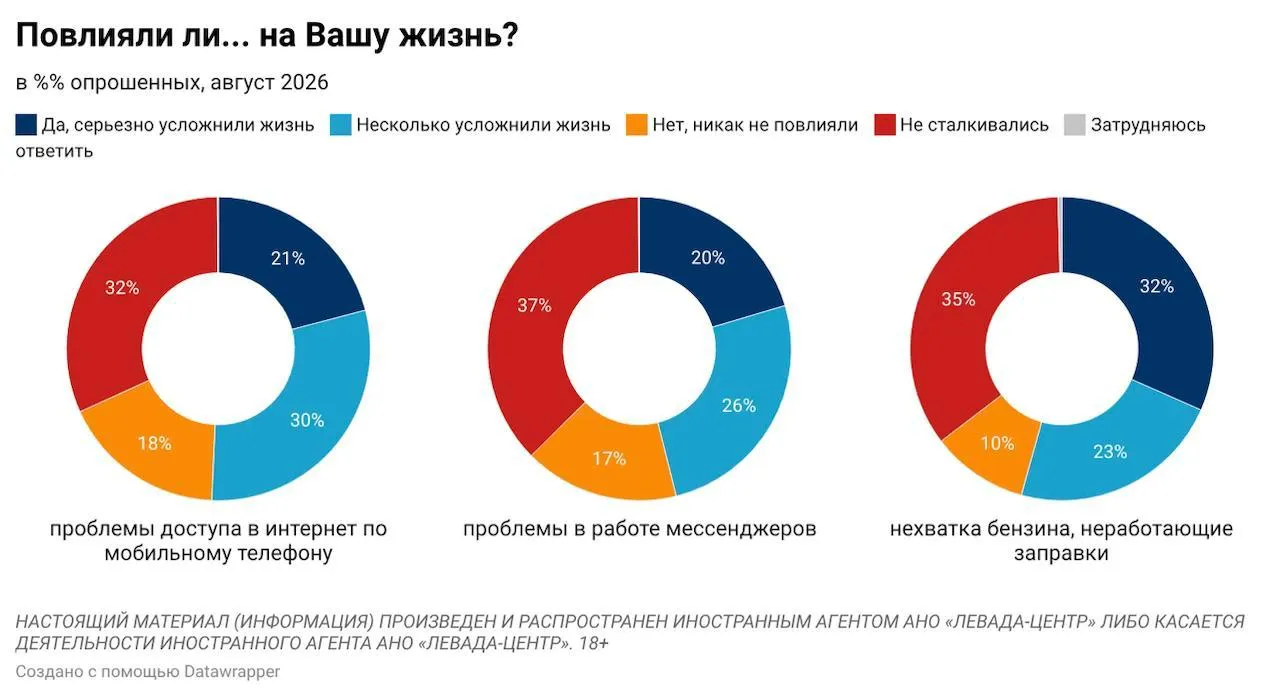
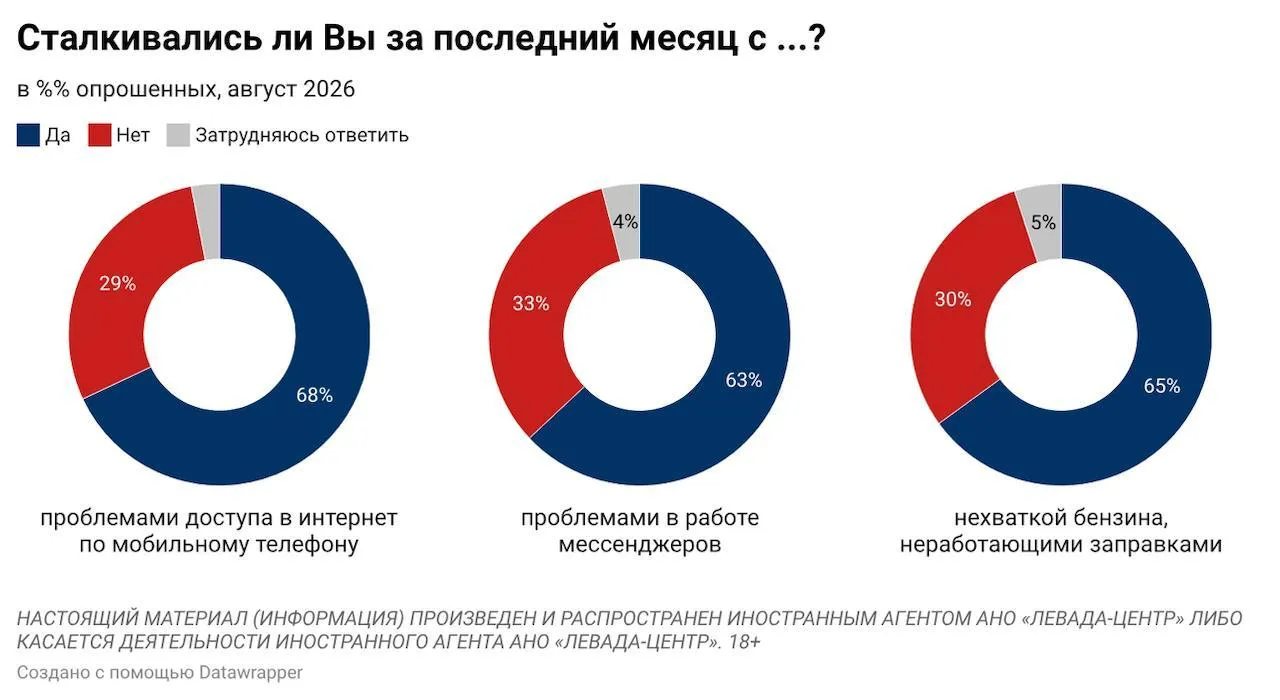
In Russia, gasoline shortages have become one of the most prominent everyday problems for the population. This is evidenced by the results of a Levada Center survey conducted August 18–28. According to sociologists, 65% of respondents personally encountered gasoline shortages or closed gas stations. For 32% of respondents, these problems significantly complicated their lives. Another 23% said the gasoline crisis had somewhat affected their daily lives.
Only 10% of those surveyed said that fuel problems had no effect on them whatsoever. In other words, a total of 55% of Russians have personally felt the effects of the gasoline crisis. This includes not only those who were unable to find fuel at a specific gas station. The shortage also affects routine trips, prices, and the ability to use a car without any problems.
Gas Turned Out to Be More Important Than the Internet
Interestingly, fuel shortages in August were more noticeable to Russians than disruptions in internet access and the operation of popular messaging apps. Over the course of the month, 68% of respondents noticed problems accessing the internet on their phones. Another 63% experienced disruptions in messaging apps. However, these issues were not a serious inconvenience for everyone. Internet disruptions made life more difficult for 51% of respondents, while messaging app issues affected 46%.
By comparison, the gasoline crisis affected the lives of 55% of respondents. In other words, even though more people experienced disruptions in mobile internet service, it was the fuel shortage that proved to be a more significant issue for many. The reason is simple: gasoline is directly linked to everyday life. If there’s no fuel at a gas station, it can mean problems getting to work, delivering goods, traveling outside the city, or running ordinary errands.
In Russia, there is talk of a second wave of the fuel crisis
Gasoline shortages in Russia did not arise suddenly. The country has been facing disruptions in the fuel market for several months now. One of the cited causes is Ukrainian drone strikes on Russian oil infrastructure. Due to damage to oil refineries, some facilities have been forced to shut down or scale back operations. Against this backdrop, gasoline production in Russia is declining, and supply issues are arising in certain regions.
According to Bloomberg, in the first three weeks of August, gasoline production in Russia and its supply to the domestic market fell by nearly 20% year-over-year. This marks the second wave of the fuel crisis. The first wave was particularly severe in the summer, when long lines formed at gas stations in a number of Russian regions, and drivers complained about shortages of certain types of fuel. Now the problem has once again become apparent to the public. And survey results show that Russians are already directly feeling its effects.
Russians have begun to adapt
At the same time, sociologists are noting an interesting shift. While at the start of the fuel crisis, gasoline shortages had a stronger impact on people’s moods, by August some Russians had already begun to adapt to them. One Russian sociologist, who spoke with “The Agency” on condition of anonymity, noted that the fuel crisis had previously been one of the reasons for the deterioration of public sentiment. According to him, this was particularly evident in June, when the gasoline crisis was at its peak.
At the same time, the situation partially normalized in August. People began to get used to the new restrictions, and the Russian government’s approval ratings—which had previously been falling amid the fuel crisis—began to gradually recover. Recent data from the Levada Center also show that the overall emotional climate in Russia improved somewhat in August. The percentage of people who reported feeling tension, fear, irritation, or melancholy dropped to 25% compared to June. But this does not mean that the gasoline problem has disappeared. On the contrary, more than half of those surveyed continue to speak about its impact on their own lives.
Putin called the situation “inconveniences”
Russian President Vladimir Putin also addressed the issue. On August 23, he acknowledged that gasoline shortages were causing problems for the population, but at the same time tried to downplay the scale of the situation. “Yes, of course, there are certain inconveniences for people, but the government, of course, must keep this under control,” Putin said.
At the same time, survey results show that for a significant portion of the population, this is no longer just a minor inconvenience. For 32% of people, gasoline shortages have seriously complicated their lives. Another 23% have been affected to a lesser extent. Thus, 55% of respondents explicitly stated that the fuel crisis has had a negative impact on their daily lives.
Why Gasoline Has Become Such a Problem
The fuel crisis is particularly acute because its effects quickly extend beyond the gas stations themselves. If there isn’t enough fuel, it can disrupt transportation, the delivery of goods, and business operations. For drivers, the problem is immediately apparent—they have to search for a gas station, wait in lines, or change their usual routes.
In addition, the shortage can put additional upward pressure on prices. If the supply of fuel shrinks while demand remains high, sellers have more reason to raise prices. That is precisely why the gasoline crisis is quickly becoming more than just a problem for motorists. It may gradually affect the cost of transportation, goods, and other services. Unlike issues with a messaging app, which can be partially circumvented by using another app, it is much harder to work around a gasoline shortage.
What the Survey Revealed
An August survey shows that the fuel crisis remains a significant issue for Russians even after the situation has partially stabilized. 65% of respondents encountered gasoline shortages or closed gas stations. For 55%, this directly complicated their lives. At the same time, problems with the internet and messaging apps—although they affected an even larger number of people—proved to be less of a burden for many.
This is an important signal for the Russian authorities. The fuel crisis does not concern abstract economic indicators, but rather ordinary everyday matters that people face on a daily basis. And although some Russians have already adapted to the disruptions, the problem has not yet been fully resolved. Against the backdrop of reduced fuel production and attacks on oil infrastructure, the risk of new disruptions in the Russian fuel market remains. This is evidenced by the results of a Levada Center poll.
Russian President Vladimir Putin stated that the country’s citizens should be prepared for further gasoline shortages. According to him, the Russian authorities did not anticipate a series of attacks on oil refineries, which have caused fuel production to drop significantly.


