
Syria decree on Kurds fails to address northeast self-governance demands
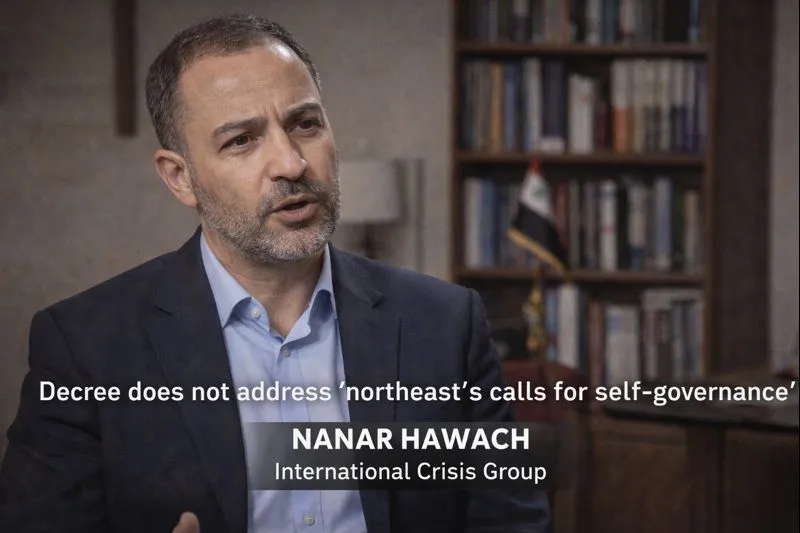
A decree issued by Syrian President Ahmed al-Sharaa, which for the first time formally recognises Kurdish rights, does not resolve long-standing demands for self-governance in the country’s northeast.
The measure includes cultural concessions, acknowledging Kurdish identity as part of Syria’s national framework. However, it stops short of offering any form of political autonomy or power-sharing arrangements for regions that have operated with de facto self-rule for years.
Observers say the government is willing to make symbolic and cultural gestures, but remains unwilling to cede political authority that could weaken central control. The approach reflects an effort to reassert a strong centralised system following the restoration of state authority across much of the country.
The policy is also seen as an attempt to separate Kurdish civilians from the armed forces that governed the region for the past decade, reducing the influence of local power structures without direct confrontation.
While the decree marks a historic first in recognising Kurdish rights at the state level, its failure to address self-governance leaves the core political dispute unresolved.


