
EU plans to increase investment in Greenland amid Trump’s demands
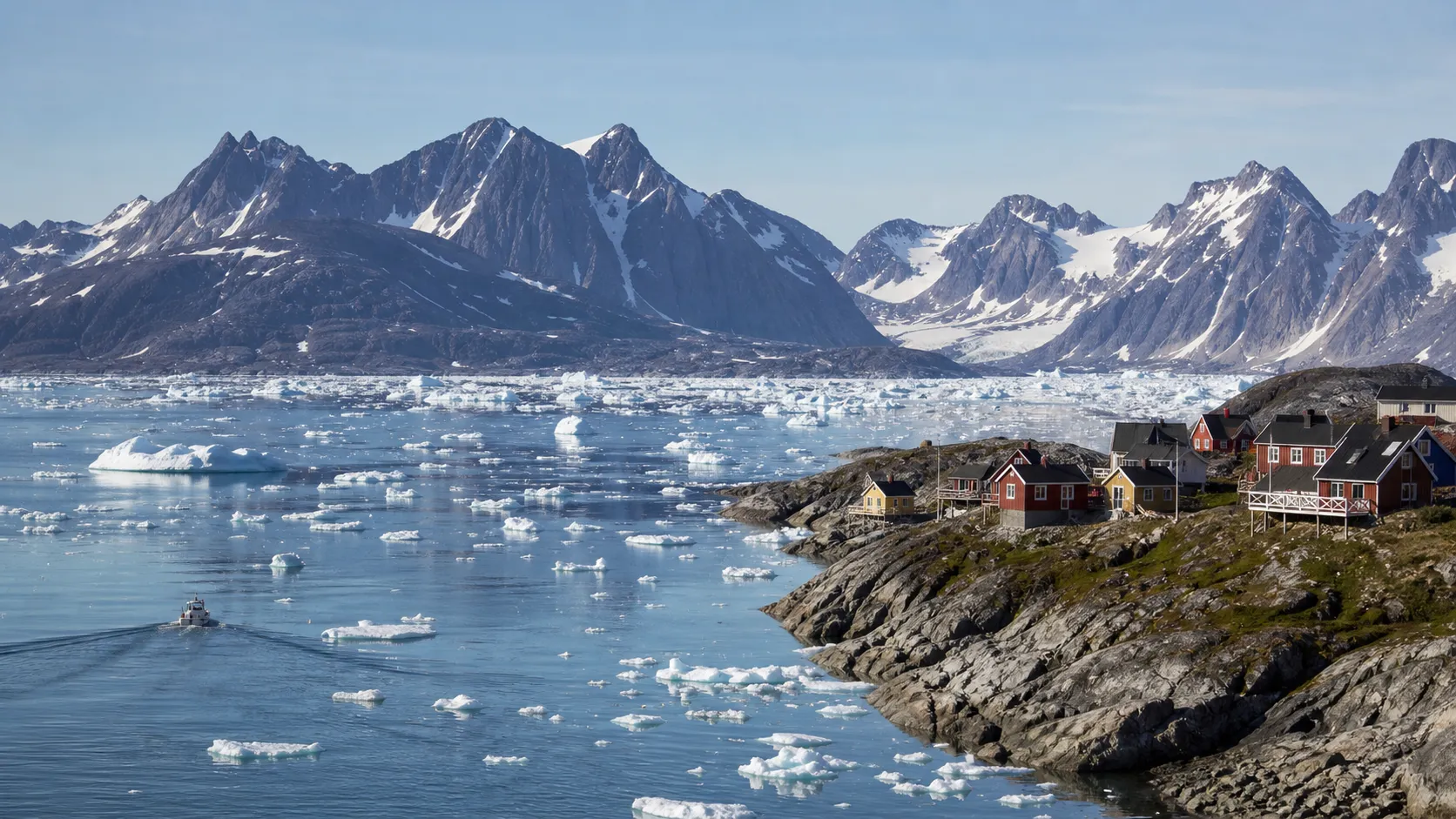
European Commission President Ursula von der Leyen is expected to announce a significant increase in EU investment and stronger political ties with Greenland, a territory within the Kingdom of Denmark, during a visit to Nuuk. The initiative will cover, in particular, critical minerals, satellite communications and renewable energy, France 24 English reports.
Visit to Nuuk
Von der Leyen arrived in Greenland on Sunday for a two-day visit intended to demonstrate support for the governments of Greenland and Denmark. Both governments have rejected the campaign by US President Donald Trump, who insists on American control over the world’s largest island.
In Nuuk, the head of the European Commission said the investment package would be “significant,” but provided no details. Greenlandic Prime Minister Jens-Frederik Nielsen, for his part, said the country seeks to develop “close friendship and good partnership” with the European Union.
More current news is available on the UA.News Telegram channel Telegram.
The Arctic dimension
The Arctic is gaining increasing geopolitical importance for the United States, Russia, China and Europe. Melting ice is opening new sea routes and facilitating access to the region’s mineral resources. After a boat trip through a fjord, von der Leyen wrote that the effects of climate change are visible on the ice sheet and that a new reality is taking shape along with the melting ice.
European officials stressed that Greenland is part of NATO territory and is protected by the Alliance’s collective defense provisions. The United States also has the right to increase its military presence there under a long-standing agreement. In January, Trump and NATO Secretary General Mark Rutte agreed to begin talks involving the United States, Denmark and Greenland, but they have not yet resulted in an agreement.
Greenland left the EU in 1985, but its residents, as Danish citizens, remain citizens of the European Union. The EU has already funded the territory, mainly by paying for fishing rights and supporting the education system. According to EU officials, the new package is intended not only to increase the amount of funding but also to expand the list of sectors that will receive funds.


