
MEP Juknevičienė calls for scrutiny of Russian House in Cyprus — Cyprus Mail
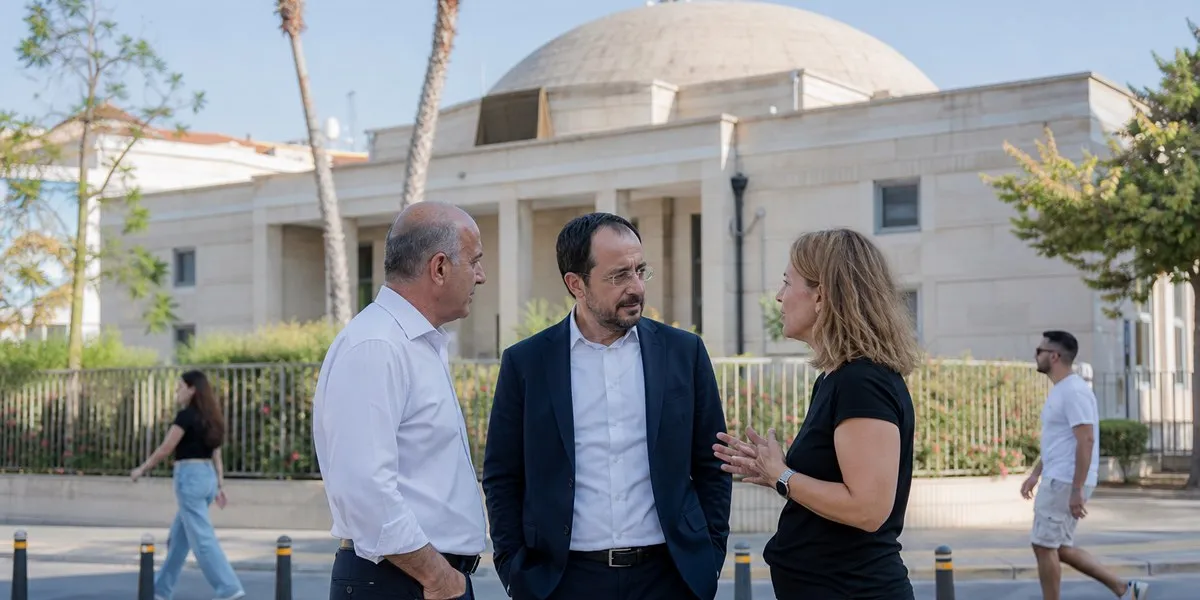
Lithuanian MEP and former defence minister Rasa Juknevičienė said that the activities of the Russian House in Cyprus should be considered in the context of Europe’s response to hybrid threats from the Russian Federation, an aggressor state. She said this in a comment to the Cyprus News Agency, Cyprus Mail reports.
Juknevičienė mentioned the Russian House in Cyprus and similar centres in other European countries. Referring to public assessments by Estonian intelligence services, she said that such institutions may be used by Russian special services. The MEP also questioned whether EU countries assess this potential threat seriously enough.
Hybrid threats to the EU
According to the politician, hybrid threats concern the entire European Union, although they are more visible on the eastern flank. She noted that representatives of NATO military structures warn that no EU capital is now completely safe, as Russia has the capacity to operate throughout Europe.
More current news is available on the UA.News Telegram channel Telegram.
Juknevičienė stressed that this concerns not only regional but also common European defence. She added that achieving one hundred percent readiness is impossible because circumstances and methods are constantly changing. As examples, she cited the growing importance of drones, air defence and long-range weapons in the war in Ukraine.
Coordination between countries
The MEP included sabotage, arson, cyberattacks, signal jamming, drone incursions, explosive devices and disinformation among hybrid operations. She also drew attention to the use of social media, YouTube, bloggers and networks of fake accounts to heighten tensions in European societies, including around migration, and to potentially influence electoral processes.
Juknevičienė called this grey-zone warfare, in which Russia, in her view, seeks to act below the threshold capable of triggering NATO’s collective defence mechanism under Article 5. She called on EU countries not to consider individual incidents in isolation and to strengthen coordination in order to form a common picture of hybrid activity. The politician also mentioned Lithuania’s experience, which strengthened security at its liquefied natural gas terminal.




