
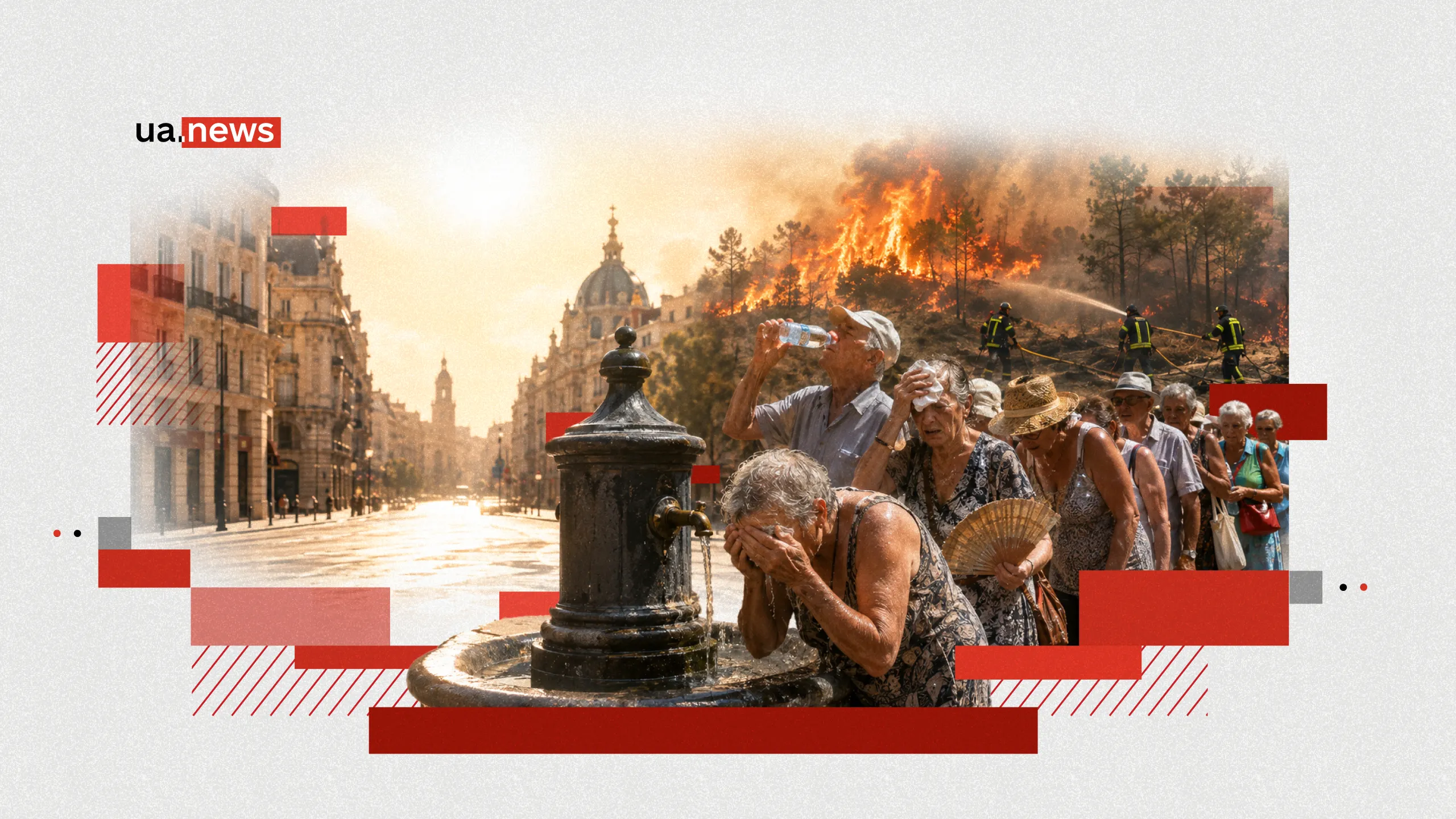
The European summer is looking less and less like a vacation season and more and more like a slow-moving emergency. In June 2026, Western Europe experienced its hottest June on record. The average temperature in the region was 20.74°C—3.06°C above the 1991–2020 average.
The May heat wave was followed by one in June, then another in July, and the lack of rainfall and parched soil created conditions for massive wildfires.
In early August, fires swept through parts of France, Spain, and Greece. In France alone, about 220,000 people were evacuated due to the fires, and total losses were preliminarily estimated at 10–15 billion euros.
However, the most devastating effects of the heat are not always visible in satellite images. It kills silently—through heart attacks, strokes, exacerbations of lung and kidney diseases, dehydration, and heatstroke.
During the peak of the heatwave in late June, more than 10,600 excess deaths were recorded across 27 European countries. More than 9,000 of the deceased were people aged 65 and older. The WHO also reports that in the last four years alone, heat waves have claimed more than 200,000 lives in the EU and associated countries, and most of these deaths could have been prevented.
UA.News explains why extreme heat has become not only a climate crisis but also a social crisis, and why the elderly and low-income families are most at risk.
Why Heat Kills the Elderly the Most
An older person may die not from “heat” as the officially stated cause, but from a heart attack, stroke, kidney failure, or an exacerbation of a chronic illness. That is why the true extent of heat-related mortality is often determined by excess mortality—the difference between the actual number of deaths and the statistically expected level.
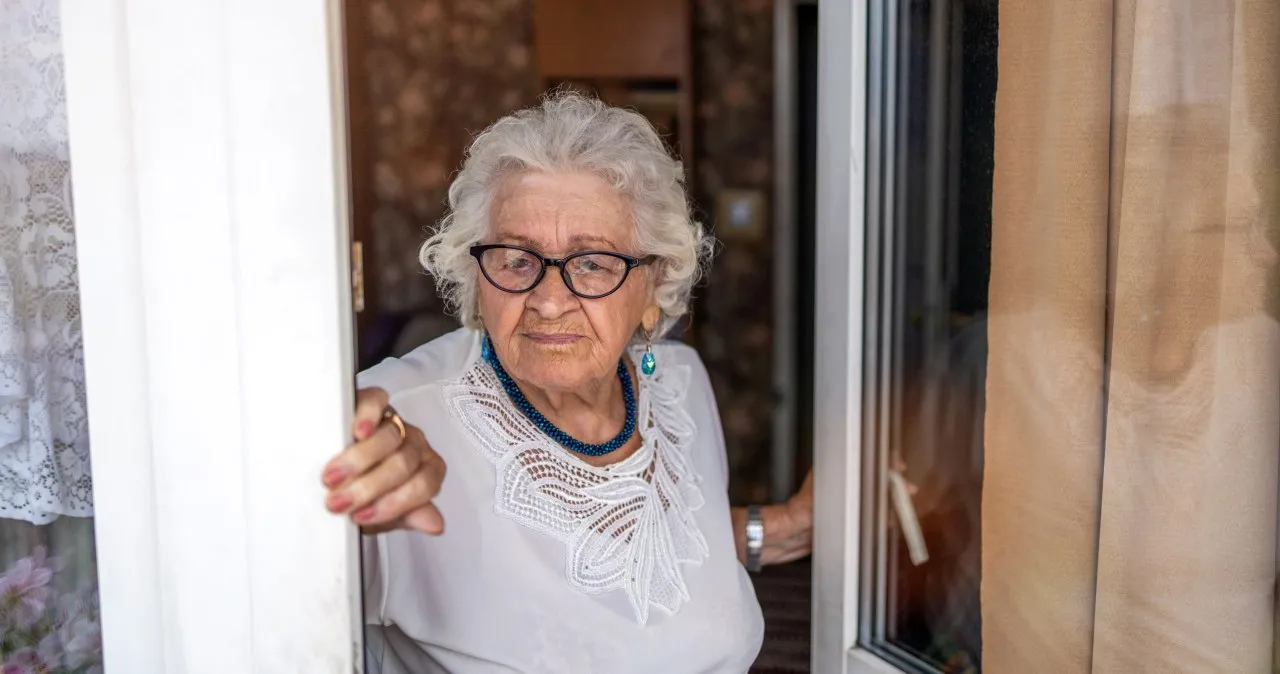
As we age, the body becomes less able to regulate its temperature. Sweating decreases, the circulatory system adapts more slowly to physical exertion, and the sensation of thirst may become dulled. The heart is forced to pump blood more intensely to the skin to dissipate excess heat, which places an additional strain on people with cardiovascular diseases.
The risk is exacerbated by diabetes, dementia, lung and kidney diseases, limited mobility, and the use of certain medications. Diuretics can accelerate fluid loss, and some psychotropic drugs, antihistamines, and other medications can affect sweating, the perception of thirst, or thermoregulation. You should not stop taking prescribed medications on your own, but during heat waves, patients with chronic conditions require special monitoring.
Another factor is loneliness. A person living alone may not notice the symptoms of heat exhaustion, may not be able to reach a cooling center, or may have no one to tell that they are feeling unwell. For this reason, modern response plans include not only smartphone alerts but also calls from social services, home visits, and check-ins on elderly residents living alone.
A study of mortality rates during the European summer of 2022 clearly illustrates the differences between age groups. Per million people, there were approximately 16 heat-related deaths among those under 64, 160 in the 65–79 age group, and 1,684 among people over 80.
Why the Poor Suffer More from the Heat
Temperatures are the same across the entire city only on the weather forecast map. In reality, a resident of a top-floor apartment in an old building without blinds or air conditioning lives in a different microclimate than a homeowner near a park who has insulation, ventilation, and the ability to temporarily leave the city.
Low-income families are more likely to live in densely built-up areas with fewer trees, yards, and open green spaces. The European Environment Agency notes that neighborhoods with lower socioeconomic status typically have fewer green spaces, and those that do exist are of poorer quality. Asphalt, concrete, and dark roofs absorb heat during the day and slowly release it back into the environment at night.
Air conditioning does not eliminate inequality; rather, it often exacerbates it. It must be purchased, installed, and the electricity costs must be paid. A low-income family may own a cooling system but may not turn it on because of the bills. Renters also cannot always install exterior shutters, upgrade ventilation, or insulate the roof.
For the homeless, refugees, migrants, and people in temporary housing, even the basic advice to “stay in a cool place” may be impossible to follow. The WHO explicitly classifies people with limited resources, inadequate housing, and poor access to social and health services as particularly vulnerable groups.
The poor are also more likely to work in places without air-conditioned offices: in construction, agriculture, delivery, street cleaning, warehouse logistics, transportation, and kitchens. Refusing to work a shift can mean a loss of income, and for seasonal workers, it can also mean losing the housing provided by their employer.
Thus, the heat punishes people not only for their age or health status. It punishes them for a lack of savings, housing alternatives, paid leave, access to medical care, and political influence. Climate inequality manifests itself quite literally in the amount of shade on the street.
Who Else Is Most Vulnerable to Extreme Heat
At-risk groups also include infants and young children, people with heart, respiratory, kidney, and mental health conditions, people with disabilities, the homeless, outdoor workers, and those taking medications that affect fluid balance or thermoregulation.
Children overheat more quickly, depend on adults, and cannot always explain when they are feeling unwell. People with limited mobility may be physically unable to reach a cool shelter. Patients with dementia may not realize the danger or may forget to drink water. Heat also disrupts sleep and can exacerbate mental health conditions.
Hot nights are particularly dangerous. When the body cannot cool down during sleep, physiological stress builds up. Therefore, prolonged heat waves, during which temperatures do not drop even at night, often cause more deaths than a single record-breaking hot day.
Why European Cities Were Unprepared for the Heat
Most European cities were built in conditions where winter was the main climatic challenge. Buildings were designed to retain heat. During cooler seasons, this remains an advantage, but during a heatwave lasting several days, an attic apartment or a space with large glass facades turns into a heat trap.
For decades, urban space has been devoted to cars, parking lots, and dense commercial development. Asphalt and concrete absorb solar energy, and trees are often cleared to make way for roads and utilities. This creates the urban heat island effect: temperatures in densely built-up neighborhoods are higher than in outlying areas or green spaces.
It’s not just homes that overheat. Hospitals, schools, nursing homes, public transportation, and rail infrastructure are also vulnerable. During the June heatwave, the WHO reported cooling system failures in healthcare facilities, equipment malfunctions, and staff exhaustion due to the hot nights. About 60% of hospitalizations following emergency room visits were among people aged 75 and older.
Some cities are already planting trees, creating cool public spaces, painting roofs in light colors, and removing asphalt from schoolyards. However, such adaptation is occurring slowly and unevenly. A tree planted today will not provide full shade tomorrow, and renovating the housing stock requires years and significant investment.
How Heat Creates Conditions for Large-Scale Fires
High temperatures are not always the direct cause of a fire. Fires often start due to human carelessness, technical malfunctions, arson, or lightning. However, heat, drought, dry vegetation, low humidity, and strong winds create an environment in which a single spark can quickly turn into an uncontrollable fire front.
Western Europe entered the 2026 fire season after months of moisture deficit and several waves of extreme temperatures. Researchers at World Weather Attribution concluded that climate change increased the likelihood of the combination of factors that contributed to the severe wildfires in France and Spain.
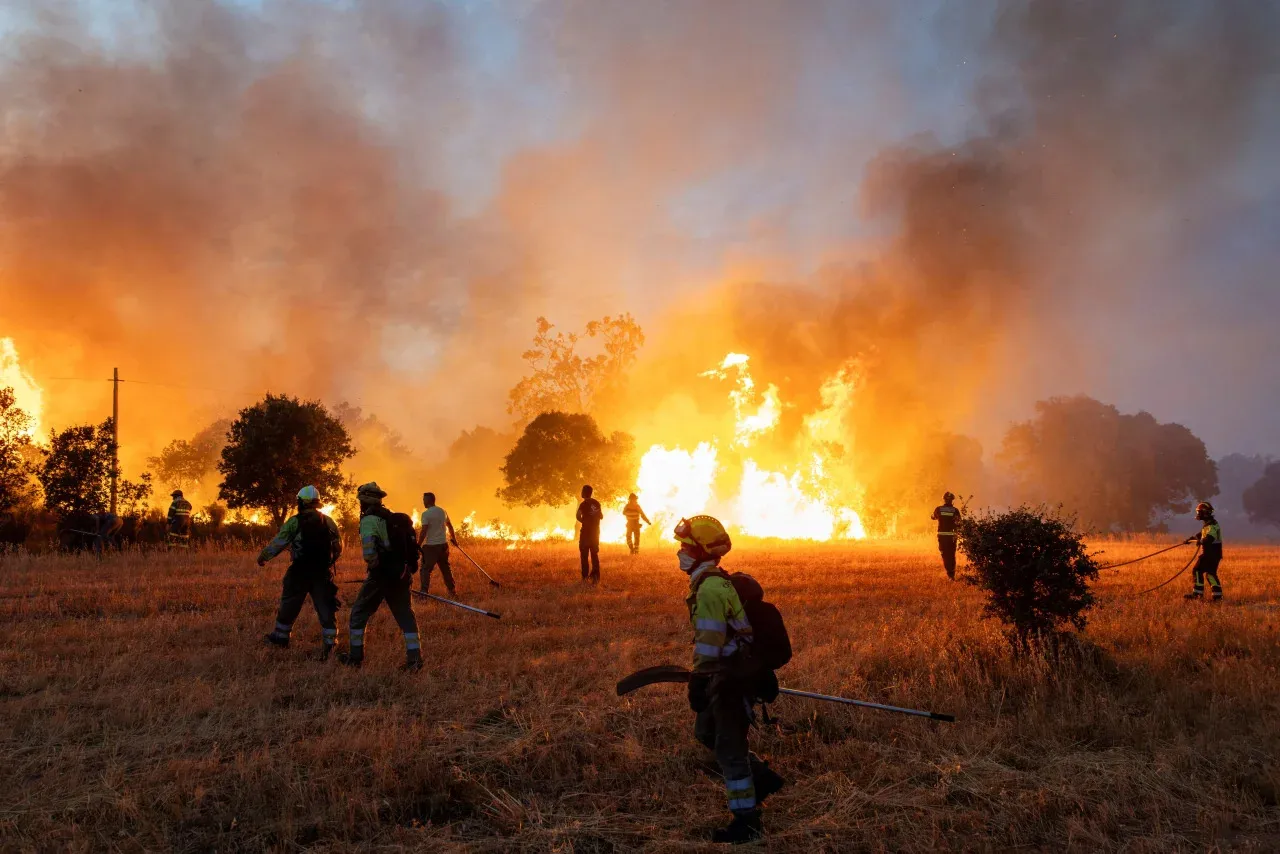
A fire is not just a burned-down house. It means evacuation, temporary housing, business shutdowns, damage to power grids, crop losses, smoke damage, cleanup efforts, and a drop in property values. This is where many homeowners discover that there is a significant gap between the actual damage and the insurance payout.
Why insurance companies don’t always cover fire damage caused by heat
In many home insurance policies, direct fire damage is covered regardless of the air temperature. The problem lies in the details of the contract: whether natural disasters, evacuation, smoke damage, outbuildings, vehicles, gardens, loss of income, or business interruption are included.
There is no single European model. In France, for example, wildfires are not included in the state’s natural disaster compensation scheme, which covers floods and certain other natural disasters. The main burden falls on private insurers.
In other countries, fire coverage may be included in a home insurance policy, sold separately, or vary depending on the region and type of property.
The second problem is underinsurance. A person may have a policy, but the insured amount no longer matches the actual cost of reconstruction. With the rising cost of materials and labor, the payout is sufficient to cover only part of the repairs.
Additionally, there are deductibles, limits, and exclusions. Losses resulting from gradual soil drying, drought, or crop failure may not be considered a sudden insured event.
The third reason is low coverage. According to data from the European insurance regulator EIOPA, over the past decades, only about a quarter of losses from natural disasters have been insured.
A 2024 survey showed that only 18% of consumers in the EU reported having property coverage against such events. Nearly one in five was unsure what risks and exclusions were included in their policy.
The climate crisis is also transforming the insurance industry. Companies set prices based on historical statistics, but past seasons are becoming an increasingly poor predictor of future risks.
In high-risk areas, insurers may raise premiums, increase deductibles, or reduce coverage. This creates a vicious cycle: insurance is needed most where it becomes the most expensive.
The current wildfires in France illustrate the scale of this disconnect. Insurance losses could amount to several billion euros, while total losses are estimated at 10–15 billion euros. The remainder will ultimately have to be covered by homeowners, businesses, local governments, and the state.
How Europe Can Protect Itself from Future Heat Waves
First and foremost, heat waves must be treated as emergencies, not merely as unpleasant weather. Warnings should automatically trigger the opening of cooling centers, free access to water, checks on elderly people living alone, reinforcement of medical teams, adjustments to working hours, and restrictions on the most dangerous types of work during the midday hours.
Cities need trees and canopies along pedestrian routes, light-colored and green roofs, less solid asphalt, ventilation corridors, and accessible public spaces with cooling. Investments should begin in neighborhoods with little greenery, many elderly residents, and low incomes—not just in tourist centers.
Housing modernization is also essential. Europe needs standards to protect against not only the cold but also overheating: exterior blinds, roof insulation, natural ventilation, shading, and passive cooling. Subsidies should go to retirees, renters, and low-income families; otherwise, climate adaptation will remain the privilege of the wealthy.
Regulators also propose reducing the insurance “protection gap” through clearer contracts, broader basic coverage, and the shared allocation of catastrophic risks between insurers and the state. At the same time, insurance policies cannot replace firebreaks, the clearing of dry vegetation, resilient power grids, and restrictions on development in the most hazardous areas.
The climate crisis does not make everyone equally vulnerable. Some can turn on the air conditioner, work remotely, and temporarily leave the city. Others remain in an overheated apartment, go to work under the scorching sun, or wait for a social worker who may not arrive in time.
Therefore, the number of victims is not determined solely by temperature. It depends on housing quality, income, age, health, the number of trees in the area, access to a doctor, working conditions, and whether the government knows who lives alone and needs help.
A new European summer has already arrived. The question now is not whether extreme heat will strike again, but how many people will find themselves without shade, water, medical care, or financial protection the next time it does.


