
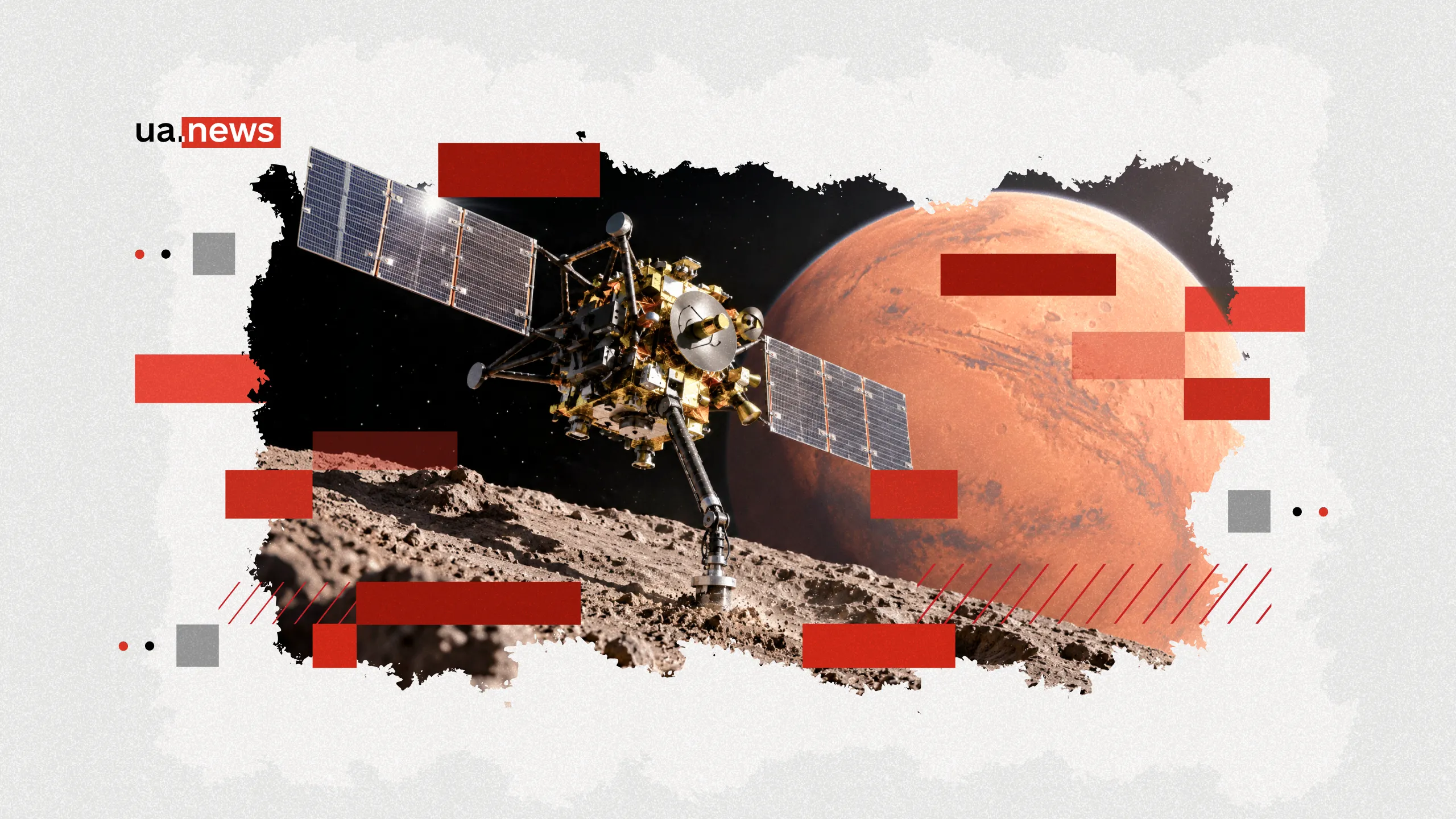
Japan has launched the Martian Moons eXploration (MMX) mission, which is designed to explore Phobos and Deimos—Mars’s two moons—and return soil samples from Phobos to Earth. The spacecraft launched on October 20, 2026, aboard an H3 rocket. The mission is expected to last approximately five years and should help scientists better understand the origin of Mars’s moons and the early history of the Solar System.
MMX is not only of scientific significance. The mission will advance technologies for landing on small celestial bodies, collecting samples, and returning them to Earth. These capabilities are crucial for the next stages of deep-space exploration, where nations aim not only to send unmanned spacecraft but also to learn how to utilize local resources for long-duration expeditions.
UA.News explains what the Japanese mission will study, why Phobos interests scientists, what resources can be obtained beyond Earth, and which countries are already developing technologies to utilize them.
What Is Known About the Japanese MMX Mission
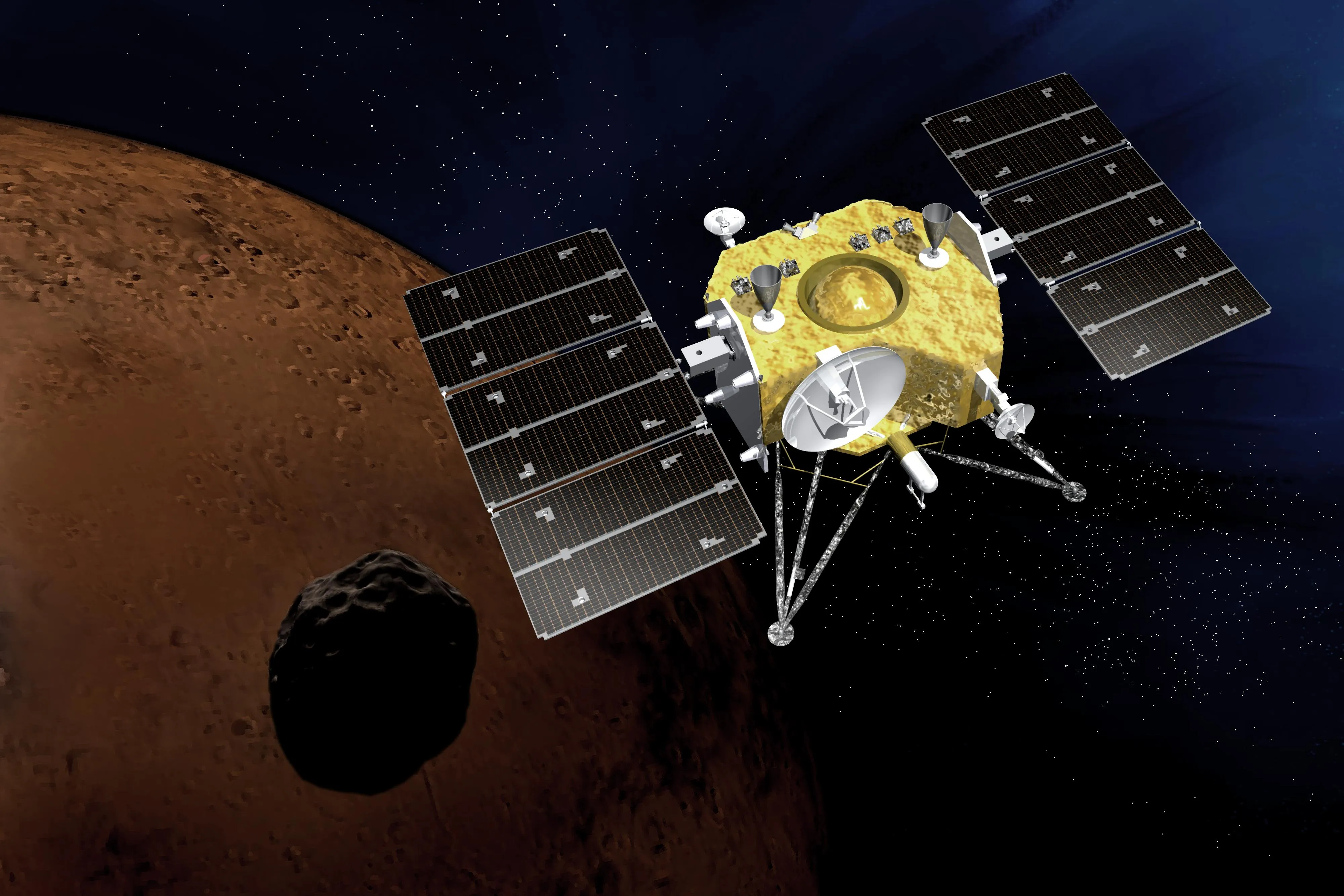
The MMX project is led by the Japan Aerospace Exploration Agency (JAXA). NASA, the French National Center for Space Studies (CNES), the German Aerospace Center (DLR), and the European Space Agency (ESA) have joined the international collaboration.
The spacecraft was launched into space from the Tanegashima Space Center in southwestern Japan aboard an H3 rocket. According to JAXA’s plan, it is scheduled to reach the Martian system in 2027, after which it will begin studying the planet’s moons. The return of the sample return capsule to Earth is scheduled for 2031.
The main target of the mission is Phobos, the larger of Mars’s two moons. It measures approximately 27 × 22 × 18 kilometers, and its orbit passes just a few thousand kilometers from the planet’s surface. The second moon, Deimos, is significantly smaller and located farther from Mars.
Upon arrival at the planet, MMX will study Phobos from orbit, examining its surface, topography, composition, and physical characteristics. A small research rover named IDEFIX, developed in collaboration with French and German experts, is also scheduled to land on the moon. It will collect data on the surface and help determine the operating conditions for the main spacecraft.
The next stage will be the landing of MMX on Phobos. JAXA plans to conduct sample collection operations at at least two locations on the surface and return at least 10 grams of samples to Earth. After that, the spacecraft will continue exploring Mars and Deimos before returning to Earth.
This is the first mission aimed at returning samples from a Martian moon. Japan already has experience with similar operations on smaller celestial bodies: the Hayabusa2 mission brought material from the asteroid Ryugu back to Earth. MMX is intended to build on these technologies for a significantly more complex expedition to another planetary system.
Why Do Scientists Need Soil from Phobos?

The origin of Phobos and Deimos remains one of the unsolved questions in planetary science. Their composition and structure can help reconstruct the history of Mars’s formation and that of its immediate surroundings.
Scientists are exploring two main scenarios for the formation of the moons. According to one scenario, they could have formed from material left over after a massive collision between Mars and another celestial body. The other scenario suggests that the moons are asteroids captured by the planet’s gravity.
It is the analysis of these samples that will allow scientists to study the materials that make up Phobos’s surface in Earth-based laboratories. There, the material can be studied using precision instruments, its chemical and mineral composition can be compared with other samples, and data obtained directly in space can be verified.
To this end, MMX will be equipped with scientific instruments that will study the surface composition, minerals, topography, gravitational characteristics, and internal structure of the moon. One of the instruments, MEGANE, developed in collaboration with NASA, will determine Phobos’s elemental composition by measuring neutrons and gamma rays.
The research also addresses the history of the materials from which the planets formed. The samples may contain information about materials that existed during the early stages of the Solar System’s development, particularly substances important for understanding the distribution of water and organic compounds. That is why the mission’s results will be of interest not only to Mars experts but also to scientists studying the origin of planets and the conditions for the emergence of life.
What Resources Can Be Obtained in Space
The exploration of Phobos is part of a broader trend in space programs related to the use of resources beyond Earth. In the field, this is referred to as in-situ resource utilization, or ISRU. It involves the extraction and processing of materials on celestial bodies to supply spacecraft, robotic systems, and future expeditions.
One of the most important resources is water. Water ice has been detected in shadowed regions near the Moon’s poles, and on Mars, water exists, in particular, in the form of subsurface ice. If technology allows for its extraction and effective purification, it could meet the needs of crews, be used for technical processes, and serve as a raw material for producing hydrogen and oxygen.
Oxygen is needed for breathing, and together with other components, it can be used as an oxidizer in rocket fuel. On Mars, it can be obtained from carbon dioxide, which makes up the bulk of the planet’s atmosphere. This was demonstrated by the MOXIE experiment on the Perseverance rover: the device collected Martian air and electrochemically extracted oxygen from it.
The experiment confirmed the feasibility of this approach under Martian conditions.
Another approach involves using lunar soil, or regolith. It contains silicates and compounds of various elements, including iron, aluminum, and silicon. Scientists and engineers are exploring ways to process this material to produce oxygen, metals, and raw materials for construction. This approach could be useful when building infrastructure on the Moon’s surface, since transporting every material from Earth is expensive.
Asteroids are of particular interest. Depending on their type, they may contain metals, silicates, carbon compounds, and minerals containing water. However, the composition of different asteroids varies, and the presence of useful elements does not in itself mean that they can be mined economically. To do so, it is necessary to deliver equipment, ensure a power supply, organize the processing of raw materials, and transport the resulting material.
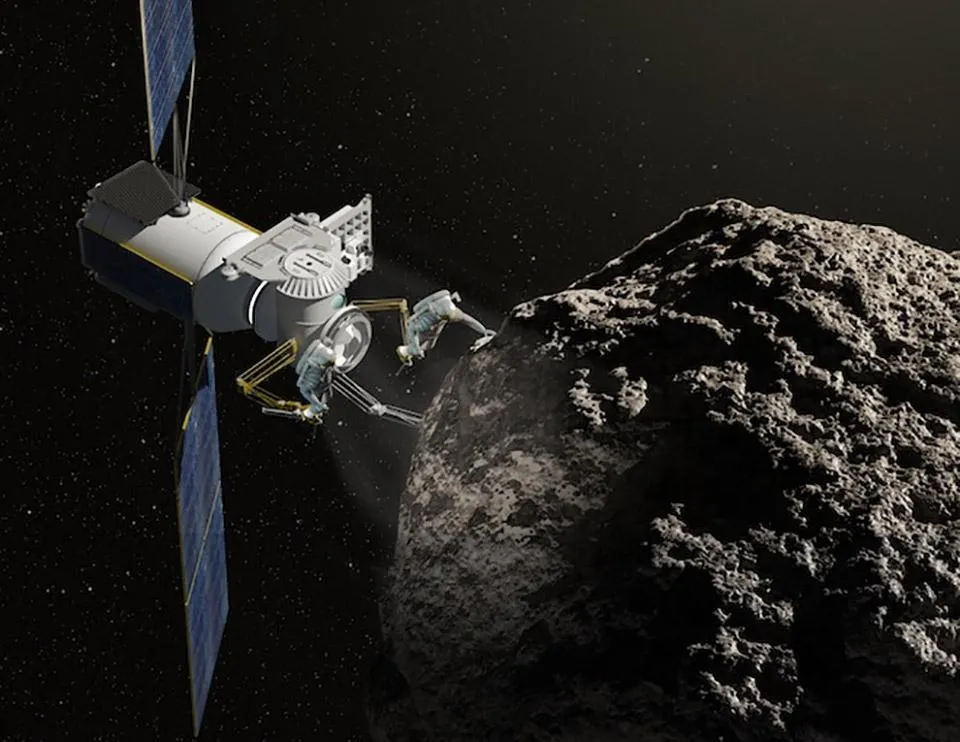
NASA views water, oxygen, methane, and construction materials as key areas for the development of technologies for utilizing space resources. The agency emphasizes that for the practical application of these technologies, it is necessary to better determine the location of resources, their concentration, and their accessibility.
Who Has Made Progress in the Development of Space Resources
The United States, China, Japan, and European countries are developing various components of space exploration technologies: from sample return to experiments in oxygen production and the search for water ice. Currently, the main practical results are related to robotic missions, mapping celestial bodies, and testing specific technologies. Full-scale industrial extraction of resources on other planets has not yet become a reality.
The United States has an extensive program for exploring the Moon and Mars. NASA is developing the Artemis program, which aims to return astronauts to the Moon, and is also funding the technologies necessary for a sustained human presence on its surface. Priorities include the search for water ice, extracting oxygen from lunar soil, energy production, and the use of local materials for construction.
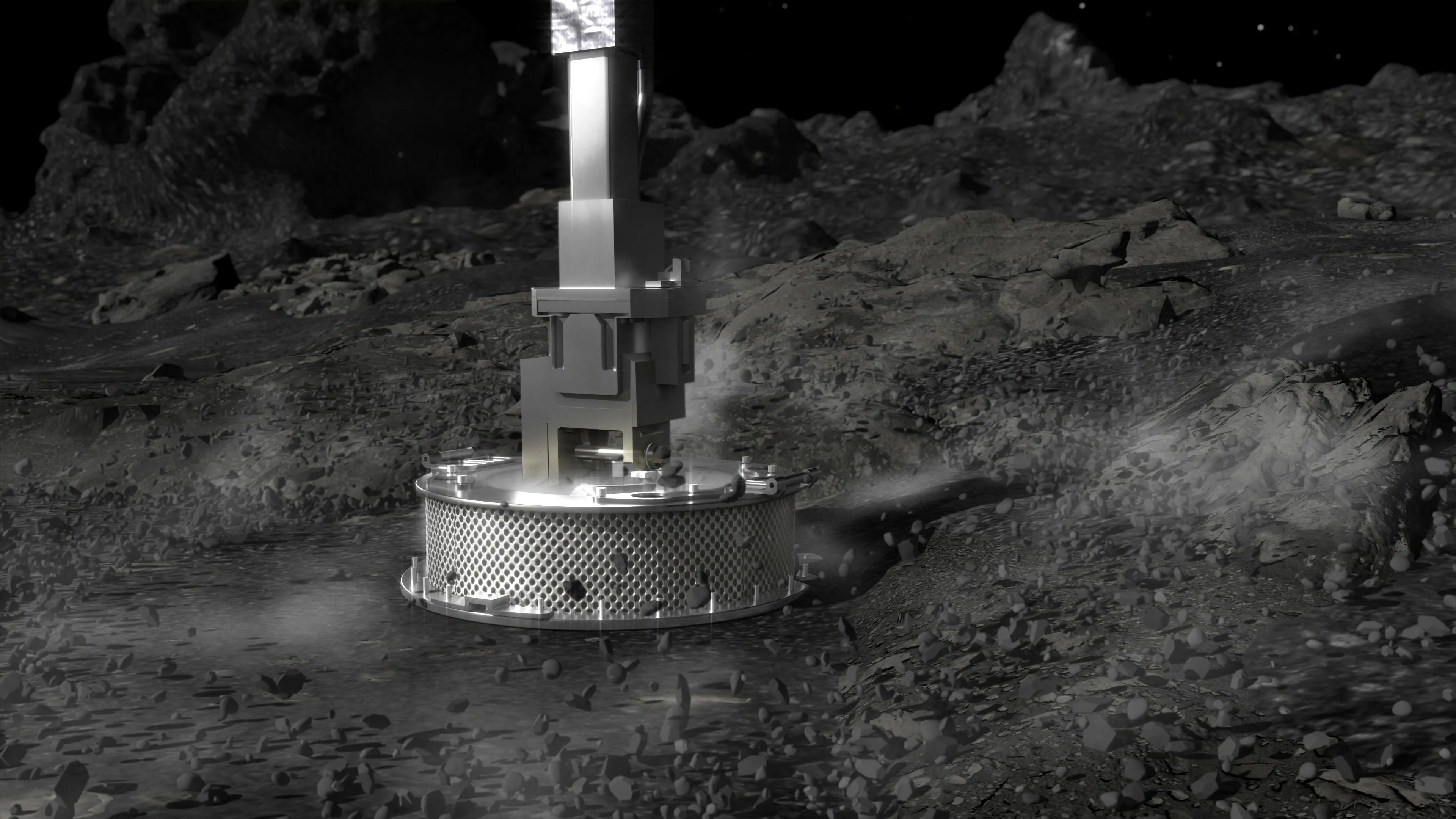
In September 2026, NASA announced a new call for proposals to develop lunar infrastructure technologies. Areas of focus include systems for extracting oxygen from regolith, power generation equipment, and the production of materials directly on the Moon.
China has made significant strides in lunar exploration in recent years. In 2024, the Chang’e-6 mission brought 1,935.3 grams of samples from the Moon’s far side back to Earth—a first in history. The material was handed over to scientists to study the Moon’s geological history and the differences between its regions.
The return of samples is a crucial step in resource exploration: it allows for a detailed determination of soil composition and an assessment of what substances are present in specific areas. At the same time, the Chang’e-6 mission was a scientific sample-return expedition, not a commercial mining project.
Japan is pursuing a different approach—high-precision operations on small celestial bodies. The Hayabusa and Hayabusa2 missions brought asteroid samples back to Earth, and MMX is set to apply this experience to a Mars moon. This requires systems for navigation, autonomous control, landing, and sample collection in low-gravity conditions.
The European Space Agency also supports resource exploration. In particular, the ESA and the European Space Resources Innovation Center are holding technology competitions focused on using lunar regolith to build future infrastructure. Among the developments being considered are methods for converting local material into building components and equipment.
Thus, the U.S. has a significant portfolio of programs and technological developments for future expeditions; China has demonstrated the ability to return samples from challenging regions of the Moon; Japan specializes in missions to small celestial bodies; and European institutions are developing specific technologies for utilizing local materials. These areas complement one another, but their results do not yet signal the start of large-scale resource extraction in space.
Why Countries Are Competing for Space
Space programs have scientific, technological, and strategic significance. The ability to send spacecraft to other celestial bodies, return samples, and conduct complex operations at a distance demonstrates the level of advancement in rocket technology, robotics, communications, navigation, and autonomous control systems.
Access to resources could become a key component of future long-duration missions. If water, oxygen, or construction materials can be obtained on site, expeditions will need to transport less cargo from Earth. This could facilitate the supply of lunar bases and the preparation of flights to Mars.
At the same time, countries are developing space programs to support their own industries. The development of rockets, landing modules, robotic systems, and equipment for exploring other planets creates demand for high-tech manufacturing and scientific research. International missions, such as MMX, make it possible to combine the expertise of different countries while simultaneously advancing their national space programs.
For Japan, MMX is the next step following successful missions to asteroids. For the project’s partners, this is an opportunity to participate in Mars exploration and test instruments that will operate in challenging conditions. For the entire space industry, the mission will serve as a test of the technologies needed to travel to planetary moons and return materials from them.
How the MMX Mission Could Change Things
The main outcome of MMX will depend on the successful completion of several complex tasks: reaching the Martian system, exploring Phobos and Deimos, landing on Phobos, collecting samples, and returning the capsule to Earth. Each of these stages requires precise control and the operation of equipment at a great distance from Earth.
Scientists will have the opportunity to study material from Phobos in laboratories, while engineers will be able to test technologies for future expeditions to small celestial bodies. These results will complement the experience gained from previous missions to asteroids and lunar explorations.

At the same time, the development of space resources requires specific technological breakthroughs: it is necessary to identify usable materials, develop systems for their extraction and processing, provide power to equipment, and organize operations in conditions of low gravity and extreme temperatures.
The Japanese MMX mission is not intended for industrial resource extraction. Its objectives are to explore Mars’ moons, return samples, and advance space exploration technologies. However, it is precisely such expeditions that lay the scientific and technical foundation for the next phase of Solar System exploration, in which the use of local resources could play a significant role.




