
Iran reported "trillion-level" losses amid oil spills in the Gulf
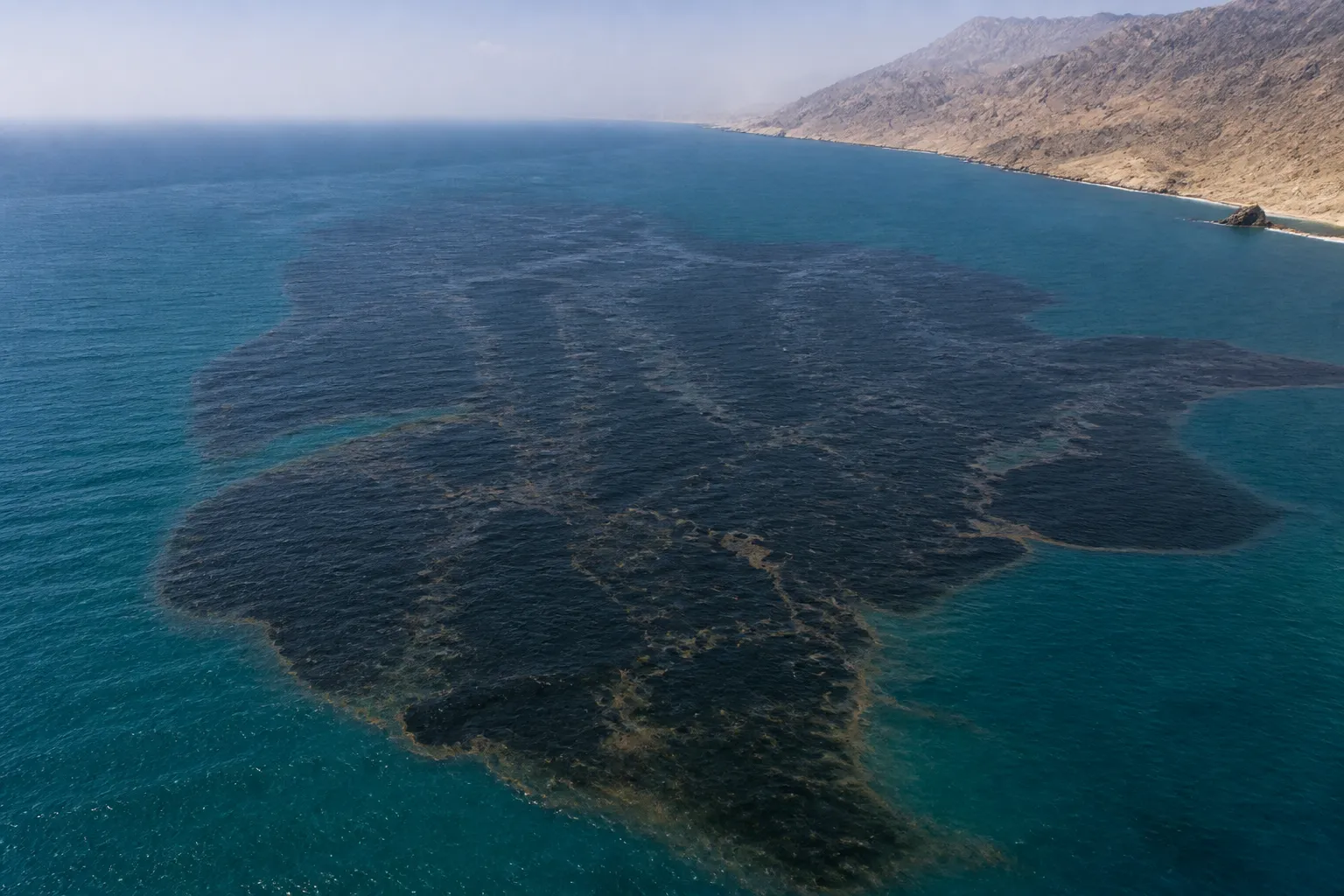
Oil residue from a damaged dry cargo ship has washed ashore on the Iranian island of Qeshm in the Persian Gulf. Meanwhile, off the coast of Oman, the spill from the Caroline Bezengi, a tanker belonging to the Russian shadow fleet, has exceeded 2,000 square kilometers, according to an analysis of satellite images by Reuters, Euronews reports.
Dark oil residues were found along the coast of Qeshm—from Susa Beach to the Shib-Deraz area and the Hara mangrove forests near the village of Nakashe. Iranian environmental authorities stated that by Wednesday evening, most of the pollution had been cleaned up, but monitoring continues.
According to preliminary data from the Iranian Foreign Ministry, the source of the spill was a foreign dry cargo ship. Ministry spokesman Esmail Baghai called for compensation for the damage caused and stated that this incident is just one example of pollution that, over the decades, he claims, has caused “trillion-level” losses to Iran’s coastal regions. He also said that parties benefiting from commercial shipping in the area bear legal and moral responsibility for remedying the environmental damage.
For more breaking news, follow the UA.News Telegram channel.
The shipping monitoring service TankerTrackers, based on satellite imagery, suggested that the oil slick most likely originated from the dry cargo ship Minoan Pioneer, flying the Liberian flag and operated by a Greek company. On August 3, the vessel was struck by an explosive device approximately 20 nautical miles northeast of Khasab in the Omani province of Musandam. This resulted in a fire, a complete power outage in the engine room, and one crew member missing. Several maritime security firms have linked the attack to Iranian forces, though Tehran has neither confirmed nor denied this.
The Suezmax-class tanker Caroline Bezengi, which was carrying about 1 million barrels of Russian oil, has been leaking since June after running aground on a reef near the Omani Hallaniyat Islands. Prior to that, on June 8, the vessel was rocked by an explosion off the coast of Yemen; no one has claimed responsibility for it. The tanker is subject to sanctions imposed by the EU and the United Kingdom.
According to Oman’s estimates, the oil slick covered an area of 390 square kilometers on Monday. According to Reuters, by Wednesday it had exceeded 2,000 square kilometers. The oil reached the beaches of Ras Madra on the mainland, contaminating up to 40 kilometers of coastline; this was confirmed by the International Maritime Organization. The Hallaniyat Islands are designated as a nature reserve and serve as a habitat for Arabian Sea humpback whales, sea turtles, and coral reefs.


