
Harri Tiido describes risks of permafrost thawing in Russia — ERR News
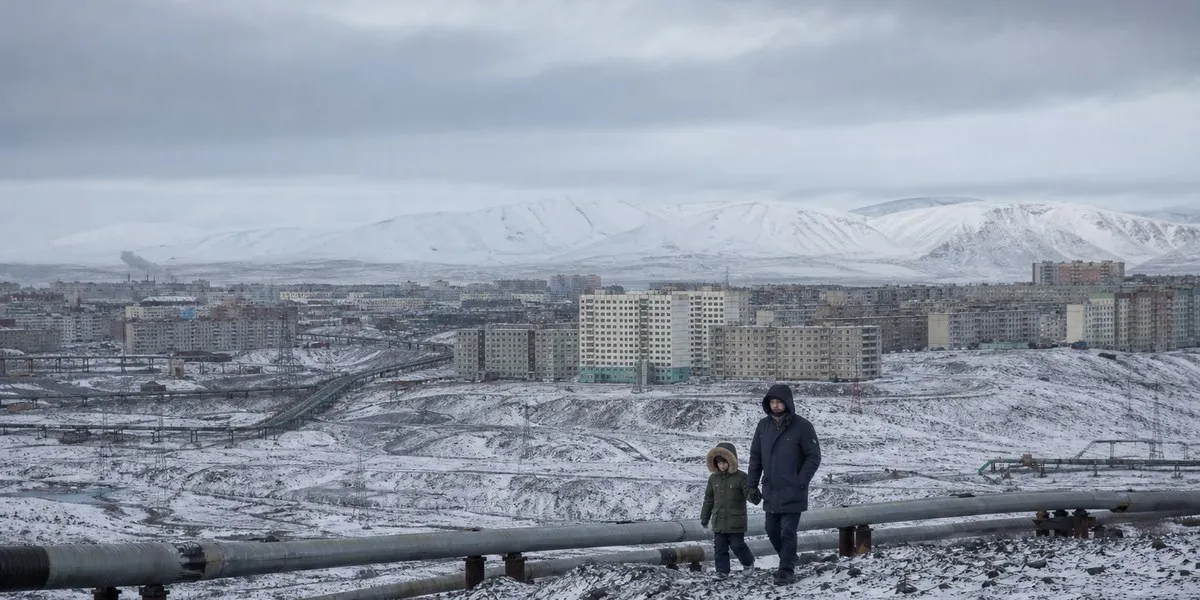
Permafrost in the Arctic regions of Russia — the aggressor state — is thawing ever deeper, creating risks for cities, pipelines and extraction infrastructure, while prospects for new agriculture in Siberia remain doubtful. Journalist and former diplomat Harri Tiido writes about this in his column, ERR News reports.
According to data cited in the column, the average depth of seasonal permafrost thawing in Russia increased from 45 centimeters in the summer of 1996 to 70 centimeters in 2023. Arctic territories cover 4.3 million square kilometers of Russia, or about two-thirds of its area. Vorkuta, Norilsk and Yakutsk are located in this zone, along with thousands of kilometers of railways and pipelines. Seventy-five percent of Russian oil and 80% of its gas are extracted there.
Risks for cities and infrastructure
Tiido notes that buildings and infrastructure in the region were constructed on the assumption that the ground would remain permanently frozen. Currently, according to his data, between 40% and 80% of buildings in Arctic cities have become deformed or subsided. Deformations and damage are also recorded on pipelines, leading to oil leaks and environmental harm.
According to an estimate by George Washington University professor Dmitry Streletskiy, Russia’s losses from permafrost thawing could reach $250 billion by 2050. At the same time, the column’s author indicates that some structures could theoretically be reinforced or rebuilt if funds are available for this.
More current news is available on the UA.News Telegram channel Telegram.
Agricultural prospects
Warming may open up some northern lands for growing wheat, potatoes, corn and soybeans, but this process may take from 50 to 100 years. The experience of Alaska, where efforts are being made to expand local food production, has so far not produced a significant breakthrough. Large solar panels installed above fields are also being tested there: they generate electricity and shade the soil, slowing its thawing.
The author emphasizes that after deforestation or forest fires, permafrost thaws and the ground often turns not into arable land but into marshy and uneven terrain. The thawing of ice lenses creates depressions in which machinery can get stuck. He also cites population outflow from northern regions and droughts in Russia’s traditional grain belt as additional problems: in some areas, up to 70% of former arable land has become unusable.
Tiido also draws attention to the climatic consequences of developing the Arctic. According to Canadian researchers’ estimate, converting all Arctic lands worldwide into agricultural land could release about 177 gigatons of greenhouse gases from the soil. A significant share of these emissions could be methane, which, as stated in the column, warms the climate 80 times more strongly than carbon dioxide.




