
China asked Ukraine not to strike Vladivostok during the delegation's visit
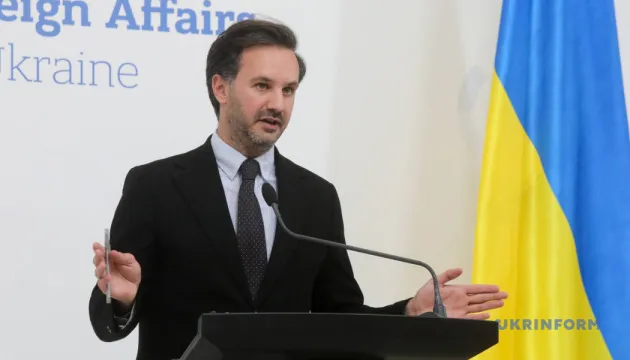
China officially appealed to Ukraine, asking it not to launch strikes on Vladivostok while a high-level Chinese delegation was there. The Ukrainian Ministry of Foreign Affairs confirmed that such a request had indeed been received, and ministry spokesperson Heorhiy Tykhyi called it telling, given the distance to Vladivostok and Ukraine’s capabilities.
Beijing’s request came to light following a report by the Japanese news agency Kyodo News. According to its sources, on September 4, China approached Ukraine through diplomatic channels with a request to refrain from attacking Vladivostok. At that time, Ding Xuexiang, Vice Premier of the State Council of the People’s Republic of China, was in the Russian city to attend the Eastern Economic Forum. Initially, news of the request appeared in the media, but there was no official confirmation from Kyiv. Now, Georgiy Tykhyi, a spokesperson for the Ukrainian Ministry of Foreign Affairs, has confirmed it during a briefing on September 8.
“I can confirm that the Chinese side did indeed officially appeal to the Ukrainian Ministry of Foreign Affairs with a request not to strike the part of the Russian Federation where the high-level Chinese delegation will be staying. Such a request was made,” Tykhyi said. According to him, Ukraine has taken note of this request. At the same time, the Foreign Ministry spokesperson emphasized that this situation is not new for Kyiv. “We have received similar requests in the past when Chinese officials, including high-ranking ones, were on Russian territory,” Tykhyi explained.
Who Is Ding Xuexiang
Ding Xuexiang is one of China’s highest-ranking officials. He serves as Vice Premier of the State Council of the People’s Republic of China and is a member of the Standing Committee of the Politburo of the Central Committee of the Communist Party of China. In early September, he was in Vladivostok, where the Eastern Economic Forum was taking place. According to Ukrainian and international media reports, the Chinese official participated in the forum’s events and met with Russian leadership.
In particular, Ding Xuexiang met with Vladimir Putin. The two sides discussed the development of Russia’s Far East, economic and energy cooperation, as well as further collaboration between China and Russia. The Eastern Economic Forum itself is a major international event that Russia hosts in Vladivostok to promote its Far East and attract foreign investment. It traditionally brings together representatives of the Russian government, business, and foreign states. Therefore, for Beijing, the security of its delegation during its stay in Vladivostok was a separate diplomatic issue.
Why China Turned to Ukraine Specifically
Officially, China explained its request by citing the need to guarantee the safety of its delegation. According to Kyodo News, Beijing wanted to avoid a possible Ukrainian strike on the city specifically during the period when Chinese high-ranking officials were there. This is a region of Russia that is very far from Ukraine. Vladivostok is located on the Pacific coast, thousands of kilometers from the Ukrainian border.
Georgiy Tykhy specifically emphasized this point. He called the situation telling and suggested “looking at a map to see where Vladivostok is located.” In his view, the very fact of such a request demonstrates that China is taking into account Ukraine’s capability to strike Russian military targets from a great distance. “We believe that this, as they say, is a recognition of Ukraine’s statehood, if you look at a map to see where Vladivostok is located,” the Foreign Ministry spokesperson stated. In other words, this is not just about a specific visit by a Chinese official. For Ukrainian diplomacy, what matters is the very fact that Beijing reached out to Kyiv regarding the security of its delegation on Russian territory.
Ukraine has already received similar requests
Heorhiy Tykhyi separately noted that China’s request regarding Vladivostok was not the first. According to him, Beijing had previously contacted the Ukrainian side when high-ranking Chinese officials were in Russia. In other words, the Chinese side had already taken into account the risk that Ukrainian forces might strike Russian targets in the area where Chinese representatives were staying.
At the same time, the Ministry of Foreign Affairs did not disclose details of the previous requests. It is not reported exactly when they were received, which cities or targets were mentioned, or what the Ukrainian side’s reaction was. It is also important to distinguish between two points. Ukraine may have taken note of the diplomatic request, but this does not mean that Kyiv is assuming a general obligation not to attack certain Russian territories. Tykhyi specifically stated that the Ukrainian side “took note” of China’s request. He did not publicly disclose any other details regarding the agreements between Kyiv and Beijing.
Did Ukraine agree not to attack Vladivostok?
There is an important detail here. Kyodo News, citing sources, reported that Kyiv agreed to refrain from attacking Vladivostok while the Chinese delegation was there. However, in the Ukrainian Foreign Ministry’s public statement, this information is phrased more cautiously. Tykhyi confirmed the fact of China’s official appeal and said that Ukraine had taken note of it.
Therefore, it would be premature to claim that there are any broad agreements between Kyiv and Beijing. Only the request from the Chinese side has been publicly confirmed. Furthermore, there is no information indicating that Ukraine has ruled out the possibility of striking Russian military targets in this region in the future. This is an important clarification, since we are talking about a war, not a general agreement between the two countries regarding the entire territory of Russia’s Far East.
Why is Vladivostok important in this context?
Vladivostok is located in the far east of Russia, near the borders with China, Japan, and North Korea. It is one of Russia’s main ports on the Pacific Ocean and an important economic center of the Far East. The city also holds military significance. It is home to facilities of the Russian Pacific Fleet and other military installations. This is precisely why the mention of Vladivostok in the context of Russia’s war against Ukraine has drawn particular attention. Previously, Ukrainian sources reported on operations and explosions in the Russian Far East, although there have been no publicly confirmed Ukrainian strikes specifically targeting Vladivostok in this context.
According to Kyodo, the Chinese side may have feared a repeat of situations where Ukrainian drones reached Russian military facilities far from the Ukrainian border. The agency linked these concerns, in particular, to Operation “Spiderweb” in 2025, during which Ukrainian drones attacked Russian strategic aviation.
What This Means for Ukraine
For Kyiv, this story has another important aspect. China did not merely express concern over a possible attack but officially addressed the Ukrainian Ministry of Foreign Affairs directly. This means that Beijing views Ukraine as a party on which the safety of Chinese officials depends, even when they are far beyond Ukraine’s borders. This is precisely what Georgiy Tykhyi highlighted. His remarks about “Ukraine’s agency” effectively refer to Kyiv’s ability to independently make decisions regarding military operations and influence the situation far beyond Ukraine’s borders.
At the same time, this story also highlights the complexity of Ukraine’s relations with China. Beijing maintains contacts with Moscow, and high-ranking Chinese officials regularly participate in Russian international events. For Ukraine, China remains an important player that officially speaks of the need for a political settlement of the war, but at the same time maintains close economic and political ties with Russia.
What is known as of September 8
As of September 8, 2026, it has been confirmed that China officially appealed to the Ukrainian Ministry of Foreign Affairs, requesting that Ukraine refrain from striking the part of Russian territory where a high-level Chinese delegation was present. This request was prompted by the visit of Chinese Vice Premier Ding Xuexiang to Vladivostok and his participation in the Eastern Economic Forum in early September.
The Ukrainian side confirmed receipt of the request and stated that it had taken note of it. At the same time, the Ministry of Foreign Affairs emphasized that similar requests from China had been received previously. At present, there are no public reports of any broader agreement between Kyiv and Beijing regarding the Russian Far East. The situation itself is telling for one simple reason: China asked Ukraine to guarantee the safety of its representatives on Russian territory located thousands of kilometers from the Ukrainian border.


