
Committee finds systemic failures in investigation of Islamabad hospital fire — Dawn
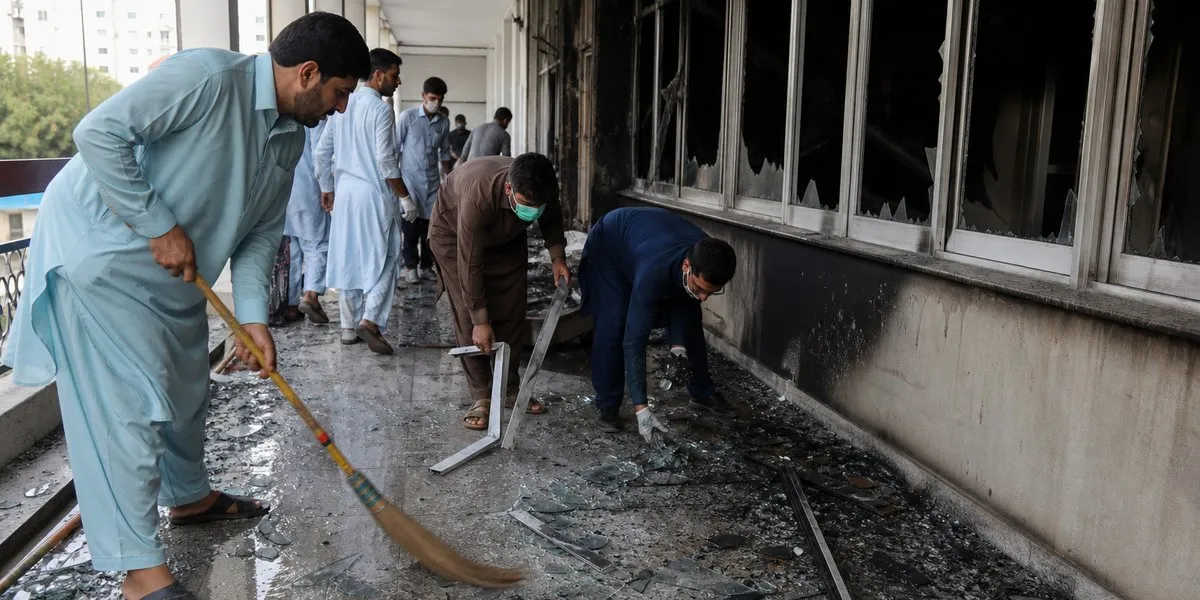
The committee investigating the fire at the Pakistan Institute of Medical Sciences (PIMS) in Islamabad said that systemic and institutional failures led to the scale of the tragedy. The August 26 fire in the neonatal ward of the mother-and-child hospital claimed the lives of 14 infants, Dawn reports.
The committee, chaired by former interior secretary Shahid Khan, was established on the orders of Prime Minister Shehbaz Sharif on the day of the fire. The 43-page report states that PIMS and its management bear primary institutional responsibility for failing to turn known risks, previous warnings and identified duties into an effective safety system.
Probable cause of ignition
According to the technical findings of the National Forensic Agency, the most probable point of ignition was the power cable of air conditioner No. 2, located near or above air conditioner No. 1. The committee believes that localized abnormal heating of electrical equipment — possibly due to excessive current, high connection resistance or another local defect — most likely caused insulation damage and the ignition of combustible materials nearby.
The report states that the evidence does not support arson, multiple points of ignition, a fault on the part of the Islamabad Electric Supply Company, an oxygen leak before the fire, or the involvement of an incubator. At the same time, combustible materials and an oxygen-use environment, in the committee's assessment, intensified the spread of fire and smoke after ignition.
More current news is available on the UA.News Telegram channel Telegram.
Evacuation and response shortcomings
The ward, designed for 10 beds, housed 15 newborns who required medical care and could not evacuate independently. Several children depended on oxygen or respiratory support. Only two doctors and two nurses were immediately available, while the capacity for protected evacuation was limited.
The committee reported that no properly documented, approved, trained and practiced fire evacuation procedure specifically adapted for the neonatal ward was demonstrated. The affected area also did not demonstrate the operation of an automatic smoke detection system, alarms or sprinklers.
According to CCTV records, frontline staff responded within seconds after the fire appeared at 6:38. The committee rejected generalized accusations that employees abandoned the infants and noted that several staff members acted promptly and courageously in circumstances that became critical within minutes. External services were notified at 6:54, and operational units arrived at 7:01. The committee identified the interval between detecting the fire and seeking external assistance as the main problem.
Shortcomings in fire detection systems, alarms, electrical network inspections, evacuation, firefighting equipment and emergency planning had previously been documented in correspondence from the Capital Development Authority, the findings of the federal ombudsman from 2015, and following a fire at the PIMS nurses' hostel on July 6, 2026. According to the report, before the fire in the neonatal ward, these warnings were not turned into a comprehensive remediation program with defined deadlines and independent verification.




