
The Kremlin has appointed a general to lead the crisis in the Belgorod region
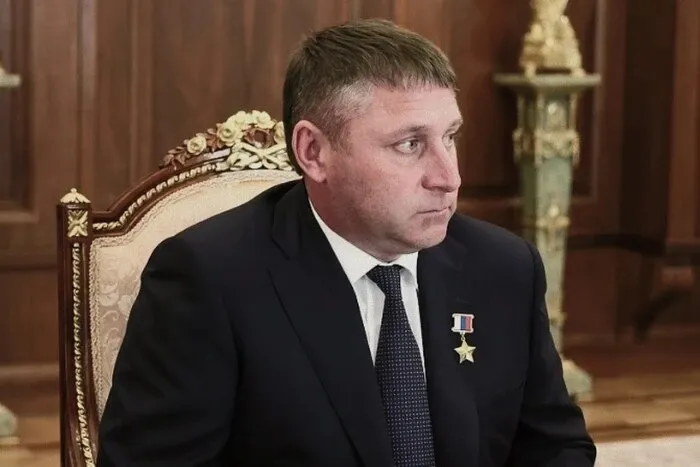
Russia has appointed a military general to head the Belgorod region, and this decision is already being cited as a sign of a deep governance crisis in the Kremlin. According to Ukrainian intelligence, the region has effectively entered a state of socio-economic collapse, where civilian administration can no longer withstand the pressures of war. This was reported by the Foreign Intelligence Service of Ukraine.
Russian dictator Vladimir Putin has appointed General Alexander Shuvaev as acting governor of the Belgorod region, and this decision, according to the Foreign Intelligence Service of Ukraine, is yet another sign that the Kremlin has fewer and fewer options for governing its own regions. A military officer with no experience in civilian administration is now tasked with leading a region under constant pressure from the war, economic decline, and mass population flight.
Intelligence sources note that the appointment was made on the principle of “no choice but to choose,” as the Belgorod region has become such a risky and problematic territory that even civilian administrators refused the post. This is why the resignation of the previous governor, Vyacheslav Gladkov, was delayed, and the region itself was effectively left without a stable governance model.
Local officials have already dubbed the new leader a “boots-on-the-ground figure with no experience,” highlighting the stark contrast between the general’s military past and the needs of a civilian region. According to the Security Service of Ukraine (SBU), his career is linked to participation in military campaigns in Chechnya, Georgia, Syria, and Ukraine, including commanding units implicated in allegations of brutal actions during the battles for Avdiivka.
Now this background has effectively become a ticket to governing a region with a population of one million, which is simultaneously facing shelling, blackouts, and economic decline. The Kremlin has formally tasked the new leader with everything from infrastructure restoration to social support and demographic programs, but in reality, the region’s resources are rapidly running out.
The intelligence report cites data on a massive crisis: in 2025, the Belgorod region’s budget deficit reached 14 billion rubles, and 17.4 billion rubles have already been projected for 2026. At the same time, tens of thousands of people have left the region—between 60,000 and 70,000 residents, accounting for about 5% of the population. Investment projects have been halted, construction is effectively frozen, and the labor market is shrinking.
The new leader’s first decisions only exacerbated social tensions. One of them was the cancellation of compensation for damaged vehicles and property belonging to civilians who suffered as a result of missile strikes and drone attacks, which sparked further outrage among the population. “Previously, ‘frontline’ allowances (about €120 per month) were canceled for public sector employees. The authorities have also repeatedly delayed the payment of compensation for housing rentals for refugees,” the SZRU notes.
Against this backdrop, the intelligence agency concludes that appointing a military officer to a civilian post in a crisis region effectively means further militarization of governance and disregard for the social needs of a population already living in conditions of constant instability and economic decline.
In Novorossiysk, Russia, fires broke out at several strategic facilities following the fall of drone debris, including the oil depot and the “Sheshkharis” fuel terminal.


