
Lagarde said the postwar model of growth in Europe is losing steam
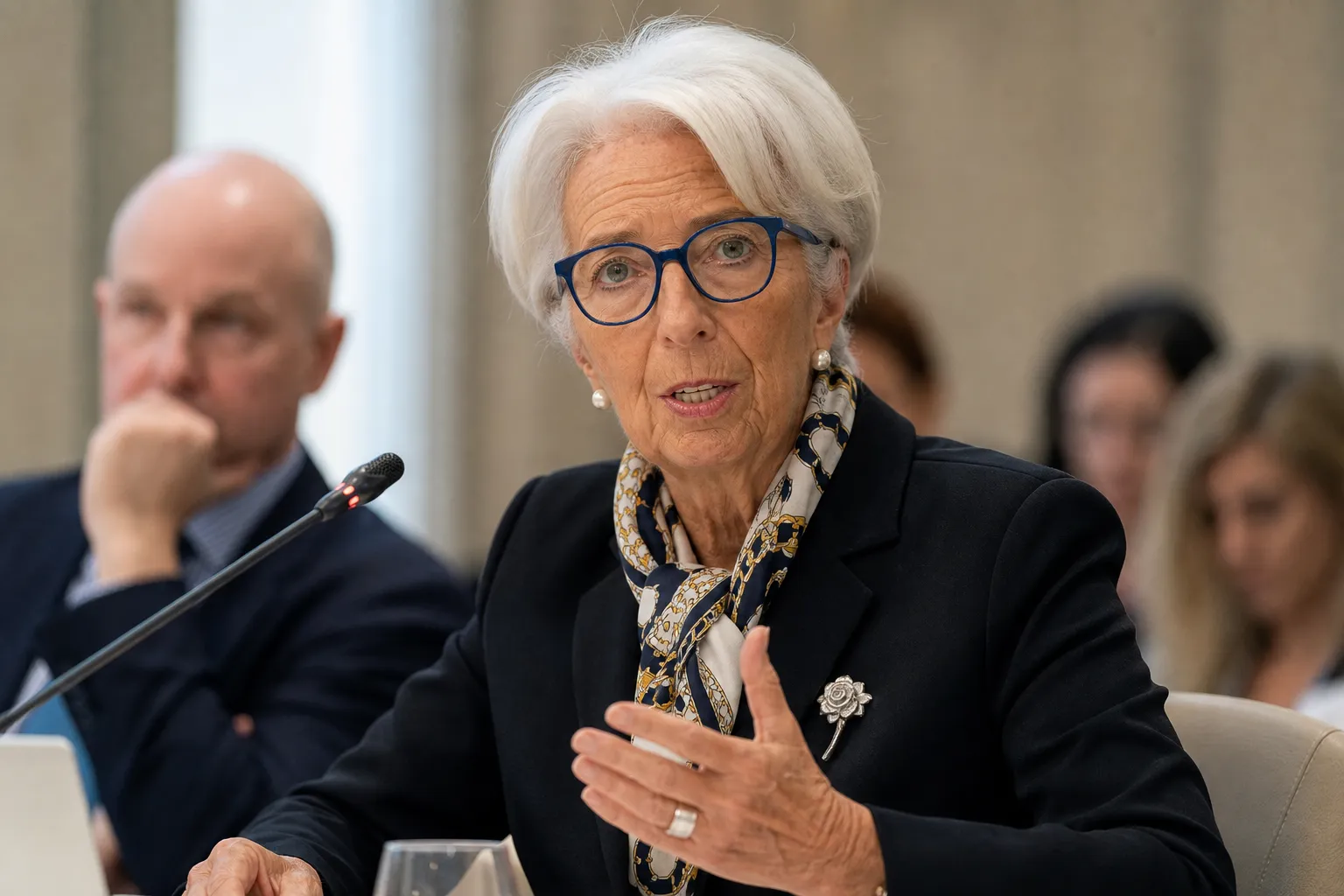
European Central Bank President Christine Lagarde stated during an event hosted by the World Economic Forum’s International Business Council in Geneva that Europe’s postwar model of economic growth is weakening and is unlikely to return to its former state. This was reported by CNBC Top News.
According to Lagarde, this model relied on the expansion of global trade, an industrial sector with access to cheap energy, and a stable, rules-based international order supported by the U.S. security umbrella. All of these factors are now weakening. The ECB president noted that last year alone, more than 2,500 trade restrictions were introduced worldwide.
She also pointed to additional pressure on the European economy due to the U.S. stepping back from its leading role in guaranteeing the security of its Western allies. In the past, this allowed European companies to build supply chains focused primarily on efficiency rather than resilience. Now, geopolitical tensions are heightening attention on critical dependencies and supply chain bottlenecks, and Europe is facing growing security threats near its borders.
For more breaking news, follow the UA.News Telegram channel.
Lagarde said that economic dependencies can become a tool for exerting pressure, and that a diminished sense of security affects investment decisions. In her view, companies invest less when they perceive their capital as less secure, which impacts production and consumption.
At the same time, the ECB president emphasized that Europe has significant advantages: the world’s largest network of trade agreements, world-class industrial capabilities, and the EU’s large single market. She urged that we not repeat the mistakes of the first digital revolution, when the main commercial benefits of the spread of information and communication technologies went primarily to other regions.
Lagarde noted that there are already encouraging signs of investment by European companies in artificial intelligence. At the same time, she said, the question remains whether Europe will be able to create the conditions for the spread and scaling up of such investments. Among the possible solutions, she cited the concept of “EU Inc.”—a voluntary pan-European corporate structure that would allow a company to register once and operate under uniform rules throughout the EU. Capital market reforms are also being developed to help companies scale up within Europe.


