
Forests took more than 100,000 years to recover after warming 56 million years ago
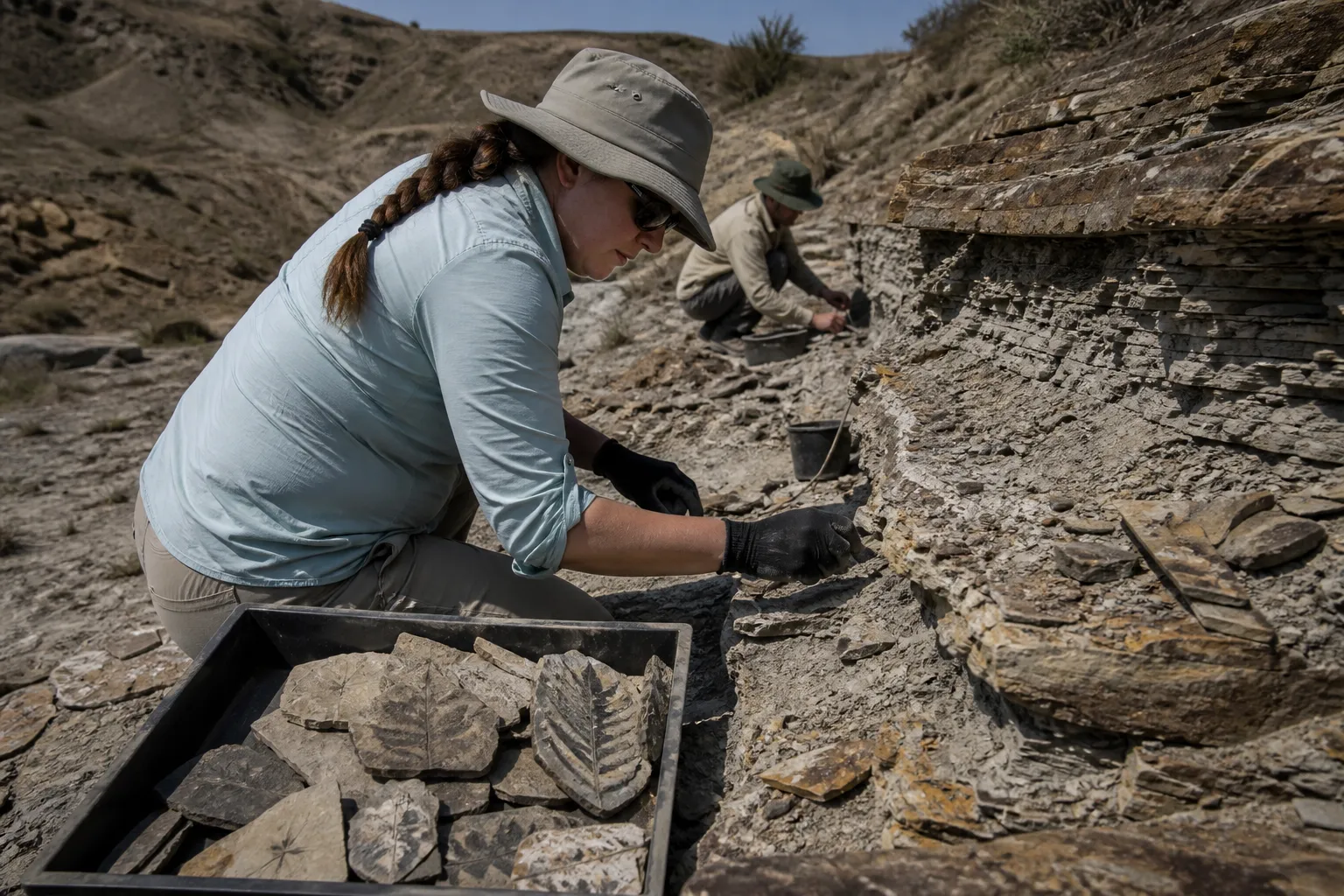
Forests in what is now southern Wyoming lost about 60% of their canopy during a sharp episode of global warming 56 million years ago, and their recovery took more than 100,000 years. This was concluded by the authors of a study published in the journal Science, Fortune reports.
Heat and drought changed the forest
Researchers studied the Paleocene-Eocene Thermal Maximum, when global temperatures rose by up to 6 degrees Celsius. Heat and drought caused the death of a large number of trees, thinning the forest canopy and allowing more sunlight to reach the ground.
In southern Wyoming, ferns temporarily spread into areas where relatives of elms, walnuts, metasequoias and avocados had previously grown. Later, palms and other heat-loving plants spread northward. According to ancient deposits, the change in forest cover may also have affected the movement of water and sediment in the basin.
More current news is available on the UA.News Telegram channel Telegram.
How canopy density was assessed
Scientists reconstructed the state of ancient forests using microscopic fragments of leaf cuticle preserved in organic-rich deposits. The shape of epidermal cells was compared with canopy density indicators in modern forests of Central and South America. Elongated cells indicate that leaves grew in shade, while rounder ones point to stronger sunlight exposure.
Before the onset of rapid warming, forest canopies in this region were the densest they had been in hundreds of thousands of years. However, as temperatures rose, the benefits of higher carbon dioxide concentrations for plant growth were outweighed by heat and water shortages.
Parallel with modern warming
The authors note that the Paleocene-Eocene Thermal Maximum is the closest natural analogue of modern warming. At the same time, humans are emitting carbon dioxide about ten times faster than natural processes did during that ancient period. Later, intensified weathering of rocks gradually removed carbon from the atmosphere and accumulated it in marine deposits, contributing to cooling and the recovery of the forest canopy.


