
Media executive Kapur on student protests and pressure on the press in India — Daily Maverick
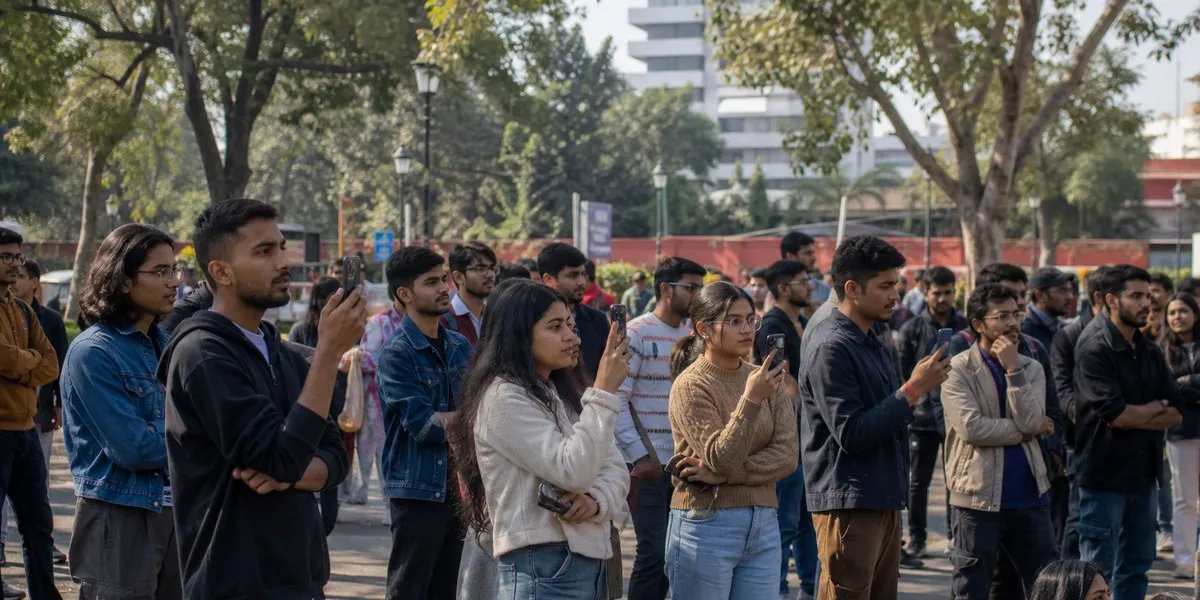
In India, student protests in New Delhi this summer showed how citizens, content creators and independent journalists are taking on part of the media’s role amid pressure on press freedom. This assessment was made in a column for Daily Maverick by Ritu Kapur, co-founder, managing director and chief executive officer of Quint Digital Limited.
According to her, the wave of outrage was intensified by a statement from India’s chief justice, who in May compared unemployed young people to cockroaches. He later explained that his words referred only to people using fake diplomas. Kapur writes that Indian student Abhijit Dipke, who studies in Boston, created the satirical Cockroach Janta Party page. It played on the name of the ruling Bharatiya Janata Party and gained more than 22 million followers.
Protests in New Delhi
Kapur also links the protests to a leak of medical entrance exam materials and irregularities in the review of school exam results. She claims that the leak led to at least 17 student suicides, while thousands of others were left in uncertainty because of the reassessment of results.
According to the author’s description, the rallies at Jantar Mantar in New Delhi lasted seven weeks. Participants went on hunger strikes and demanded the education minister’s resignation. On July 20, protesters tried to march to parliament, after which police used tear gas and batons. Kapur also writes about internet shutdowns and restrictions on food and water supplies during the rallies.
More current news is available on the UA.News Telegram channel Telegram.
Content blocking and pressure
Against the backdrop of the protests, major Indian broadcasters and publishers called the participants hooligans, while young reporters and content creators streamed from the scene and documented police actions, Kapur notes. In her view, citizens’ activity on social media cannot replace independent newsrooms.
The author draws attention to Article 69A of India’s Information Technology Act, which allows authorities to require platforms to remove content on grounds of sovereignty or national security. According to The Indian Express, cited by Kapur, from March to July 2026 the Indian government sent social platforms an average of one blocking order per minute.
Kapur also named criminal proceedings, tax and anti-money-laundering inspections, the seizure of phones and laptops, restrictions on access to government data, and surveillance as factors putting pressure on journalists. In her view, press freedom requires financially independent newsrooms and the ability for journalists to work in their profession without depending on the authorities’ favor.




