
Sweden's Defense Minister Outlined Russia's Strengths and Weaknesses
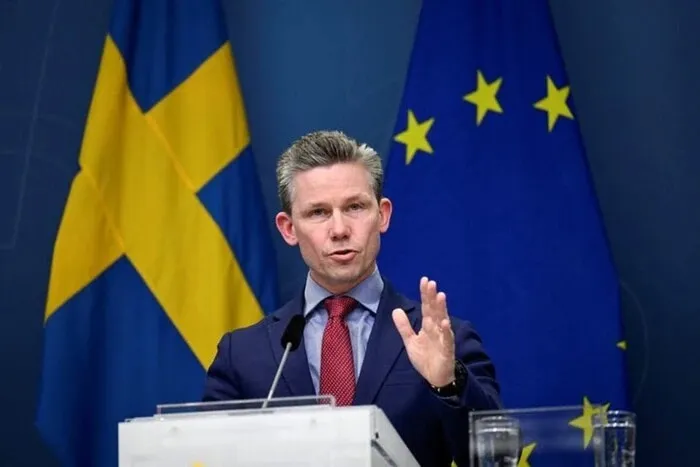
Swedish Defense Minister Paul Jonsson stated that Russia has not proven to be as strong a military power as some experts had assumed. At the same time, he urged people not to underestimate the Russian military, which continues to develop strike drones, long-range weapons, and electronic warfare capabilities.
Swedish Defense Minister Paul Jonsson assessed Russia’s military capabilities and its actions in the war against Ukraine. He spoke on September 17 during the Prague Defense Summit, organized by the International Institute for Strategic Studies (IISS). According to Jonsson, during the full-scale war, Russia has not demonstrated the kind of rapid military success that some experts had previously predicted.
To explain his assessment, the Swedish minister cited the ratio between the Russian army’s territorial gains and its losses. “Russia may not be as strong as some people assumed. After all, since December 2023, Russia has managed to capture only about 1.5% of Ukrainian territory, losing approximately 1,000 soldiers every day,” Jonsson said. At the same time, the minister emphasized that one should not conclude from this that Russia is weak. According to him, Moscow continues to develop its military and is investing significant resources in military technology.
Russia Is Developing Drones and Long-Range Strikes
Jonsson noted that Sweden is closely monitoring changes in Russia’s military capabilities. He paid particular attention to long-range strike capabilities. Russia continues to improve its long-range strike capabilities, which remain a key component of its war against Ukraine.
Moscow is also gaining experience in the use of electronic warfare systems. Russian forces employ these systems to disrupt communications, navigation, and the operation of unmanned aerial vehicles. Unmanned systems remain another area of development. Russia is actively using drones on the front lines and during strikes on Ukrainian territory, while simultaneously expanding its own production.
According to Jonsson, Moscow also has ambitious plans to rebuild and expand its armed forces. Russia aims to build an army that will be stronger than the one that existed before the full-scale invasion of Ukraine began.
Moscow Is Strengthening Its Military Infrastructure
The Swedish minister also drew attention to the development of Russia’s military infrastructure. In particular, he mentioned the Kaliningrad region, which holds an important strategic location near NATO countries. According to him, Russia continues to invest resources in the military capabilities of this region.
Jonsson also stated that Moscow is prepared to take significant political and military risks. “And they are willing to take significant political and military risks. We see Russia’s reckless behavior when it comes to hybrid operations,” the minister noted. This refers, in particular, to actions that are not limited to traditional combat operations. These may include cyberattacks, sabotage, information operations, and other means of pressure.
Sweden and Finland joined NATO after the start of the full-scale war
Separately, Jonsson spoke about how Russia’s full-scale war against Ukraine has changed security policy in Northern Europe. Following the start of the full-scale invasion, Sweden and Finland abandoned their long-standing policy of military non-alignment and applied for NATO membership.
Finland became a member of the Alliance in April 2023, and Sweden in March 2024. The Swedish government confirms that the country has been a member of NATO since March 7, 2024. Jonsson called the two countries’ accession to the Alliance “an unforeseen consequence for Russian strategic thinking.” According to him, Sweden’s and Finland’s membership has created new strategic challenges for Russia.
Sweden is strengthening its involvement in NATO
Stockholm states that it wants not only to benefit from NATO’s collective defense but also to make its own contribution to the Alliance’s security. Sweden is already participating in NATO military operations in the region. In particular, the country has deployed a heavy mechanized battalion to Latvia. Sweden has also become the framework nation for a multinational NATO battlegroup in Finland. If necessary, this force can be rapidly reinforced and expanded to brigade level.
Swedish Gripen fighter jets are also participating in NATO missions and patrolling Polish airspace. In addition, Swedish Navy ships are involved in Alliance operations in the Baltic Sea. At the same time, the Swedish government is increasing its defense spending. According to Jonsson, the country’s defense budget has tripled since 2020 and now stands at about 3.2% of GDP. Sweden plans to raise this figure to 3.5% by 2030.
Thus, Jonsson’s assessment consists of two parts. He believes that Russia has not demonstrated the expected speed of territorial advancement in Ukraine, but at the same time emphasizes its ability to adapt, develop new types of weapons, and increase its military capabilities. For Sweden, this means further strengthening its own defense and participation in NATO’s collective security framework. Swedish Defense Minister Paul Jonsson made this statement during the IISS Prague Defense Summit.
Swedish Prime Minister Ulf Kristersson resigned after his right-wing governing coalition narrowly lost the general election to the center-left opposition.


