
US Justice Department plans to revive prize law for Iran-linked tankers
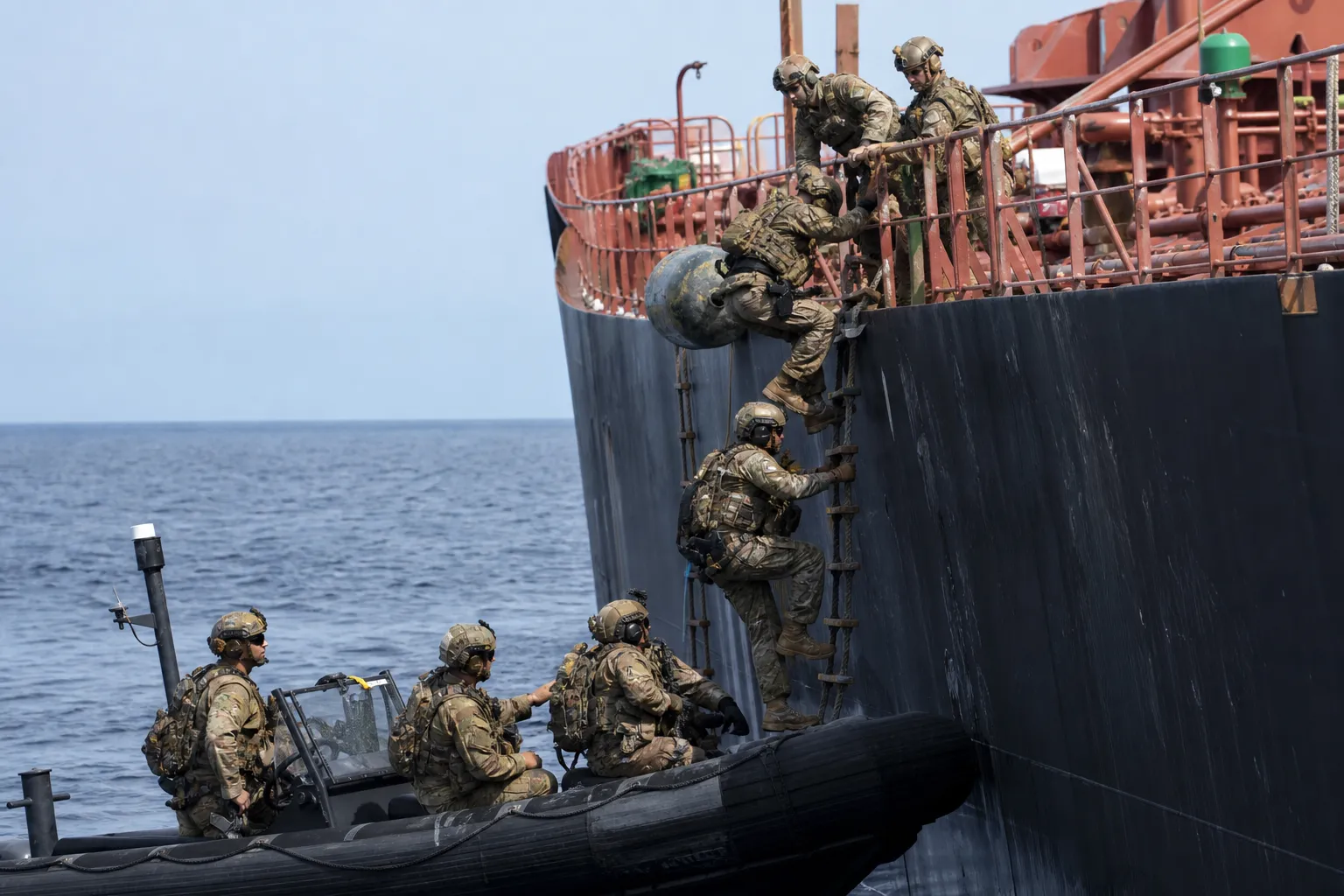
The US Department of Justice plans to use an ancient maritime-law regime known as prize law to expedite proceedings involving Iran-linked oil tankers and their cargoes seized during the conflict with Iran. CBS News reports.
Aaron Reitz, the federal prosecutor for the Southern District of Texas, confirmed last month that his office is involved in reviving this mechanism, which has not been used regularly since the Spanish-American War. According to him, US national security interests may require the military to seize vessels or cargoes that support an adversary during an armed conflict, and federal courts must be prepared to determine the further disposition of such property.
Conditions for applying the mechanism
Prize law sets out rules under which property seized at sea may be declared subject to transfer, return or other disposition. Its use could become an alternative to the civil asset-forfeiture procedure, which, according to CBS News, is often prolonged in court.
After a vessel is seized by the US military, a district court has jurisdiction to hear such a case. The Justice Department and the Pentagon must prove that the vessel was carrying contraband, transporting enemy military personnel, was under the enemy's control, used false documents or attempted to evade a blockade. If the court finds the authorities' position justified, the United States may obtain the oil or other cargo as prize, sell it, and the proceeds will likely be transferred to the Treasury Department.
More current news is available on the UA.News Telegram channel Telegram.
Legal difficulties
Michael Sterley, a professor of maritime law at the University of Texas, noted that a 1789 law grants federal courts jurisdiction in such cases, but the seized vessel must be physically brought to the district where the proceedings will take place. In this case, the Port of Houston could be a possible location.
Maritime law and security expert Ian Ralby believes that reviving the law of capture and prize law is possible, but sees significant domestic and international legal difficulties. He mentioned the US seizure in May of the Iranian cargo vessel Touska after it allegedly attempted, according to the source, to evade the US blockade of Iranian ports and vessels. Iran called the seizure piracy and urged the UN to intervene.
Thomas Lee, a professor of international law at Fordham University, warned that complications could arise regarding vessels that the United States considers linked to Iran or Venezuela but that sail under the flag of a third country. In his view, such a state may challenge the legality of the seizure, including due to the absence of US Congressional authorization for war with Iran. Experts also noted that US courts have not considered US-initiated prize cases since the Spanish-American War.


