
Tensions have arisen between Ukraine and Poland — The Guardian
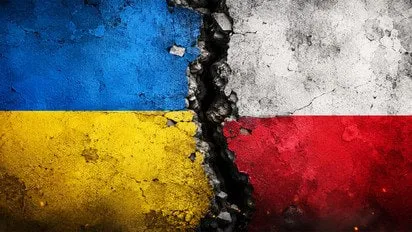
After Russia launched its full-scale invasion, Ukraine and Poland experienced an unprecedented rapprochement; however, relations between the two countries have since cooled noticeably.
This has been influenced by changes both within Ukraine itself and in the situation of millions of Ukrainians who settled in Poland after the war began. Kyiv has established direct channels to leading Western capitals, while Ukrainians in Poland are increasingly viewed not only as recipients of aid but also as competitors in the labor market and in the business sector.
In early 2022, Poland became one of Ukraine’s main allies. Warsaw opened its borders to millions of Ukrainians, provided Kyiv with weapons and financial aid, and actively championed Ukrainian interests among its Western partners.
Despite the complex chapters of their shared history, it seemed at the time that the two countries were embarking on a fundamentally new phase in their relations. However, as The Guardian reports, this “honeymoon” proved short-lived.
Poles Have Changed Their Attitude Toward Ukrainians
One indicator of the shift in public sentiment was the attitude toward Ukrainian refugees. According to a poll by the Polish CBOS center conducted last month, 52% of Poles opposed the country accepting Ukrainian refugees.
At the same time, talk of “fatigue” regarding support for Ukraine has become increasingly common in Poland. Representatives of Poland’s right-wing forces also claim that transferring a significant amount of weaponry to Kyiv has allegedly weakened the country’s own defense capabilities in the event of potential Russian aggression.
At the same time, The Guardian points to a deeper transformation. Ukrainians, whom Poles took into their homes during the first months of the war, have gradually begun to rent and buy housing, start businesses, and build independent lives.
As a result, they ceased to be merely refugees in need of assistance and became full-fledged participants in the Polish economy. At the same time, Ukrainians began competing with local residents for jobs, customers, and business opportunities.
According to the author of the article, this process is natural. However, for Poland—which remained a predominantly ethnically homogeneous country for a long time after World War II—such a rapid social transformation posed a serious challenge.
Kyiv no longer needs a Polish “advocate”
Ukraine’s international standing has also changed. After 2022, the Ukrainian leadership gained direct access to the leadership of the United States and leading Western European nations.
Ukraine is also developing its own military technologies and has accumulated unique experience in modern warfare. Because of this, as The Guardian notes, Kyiv no longer needs a mediator or “advocate” in Brussels, a role Poland has traditionally sought to play for Ukraine.
According to the author, Warsaw had hoped to retain a special role in Ukraine’s future. However, Kyiv can now work directly with Washington, Brussels, Paris, and Berlin. It is precisely this shift in the balance of relations, the publication argues, that is creating additional friction and tension between the two countries.
Historical disputes have deepened the crisis
Long-standing disputes over historical memory have further strained relations. The latest escalation occurred after Ukrainian President Volodymyr Zelenskyy named a military unit in honor of the Ukrainian Insurgent Army.
The Polish side reacted sharply to this decision. President Karol Nawrocki stripped Zelenskyy of the Order of the White Eagle—Poland’s highest state award that can be bestowed upon foreigners.
As a result, neither side was willing to back down from its position, and relations between Warsaw and Kyiv effectively came to a standstill.
Poland May Be Making a Strategic Mistake
The Guardian considers Poland’s alienation of Ukrainians to be short-sighted. According to the author, Warsaw has not adequately prepared its own society for the possibility that a significant portion of Ukrainians may remain in the country for the long term and become a full-fledged part of its economy.
At the same time, the Polish side has not fully taken into account the growing political and economic ambitions of Ukraine itself. In the coming years, the author predicts, Ukraine will integrate ever more deeply into the European sphere. Along with cooperation, competition will also grow: Ukrainian companies and workers will compete with Polish, French, and German counterparts, just as the Poles once began to compete in Western European markets.
The role of the Ukrainian government will also change. Representatives from Kyiv will increasingly travel to Brussels, Paris, and Berlin not merely as supplicants seeking aid, but as representatives of a state that views its contribution to Europe’s defense as the basis for an equal voice.
This is reported by The Guardian.
From brotherhood to mutual grievances: how relations between Ukraine and Poland have changed over the past four years.
Poland has warned Ukraine of problems with EU accession due to Bandera and Shukhevych.
Earlier, a court in Moscow ruled that Bandera, Shukhevych, the OUN, and the UPA were Nazi collaborators.
As a reminder, in Moscow, FSB officers detained Igor Moiseenko, deputy general director for corporate security at Gazprom Energoholding. He is suspected of accepting a bribe of approximately $630,000.
Ukrainian national hero Stepan Bandera verified his Twitter account, paid $8 for a month, and became the proud owner of the “blue checkmark” next to his name.




