
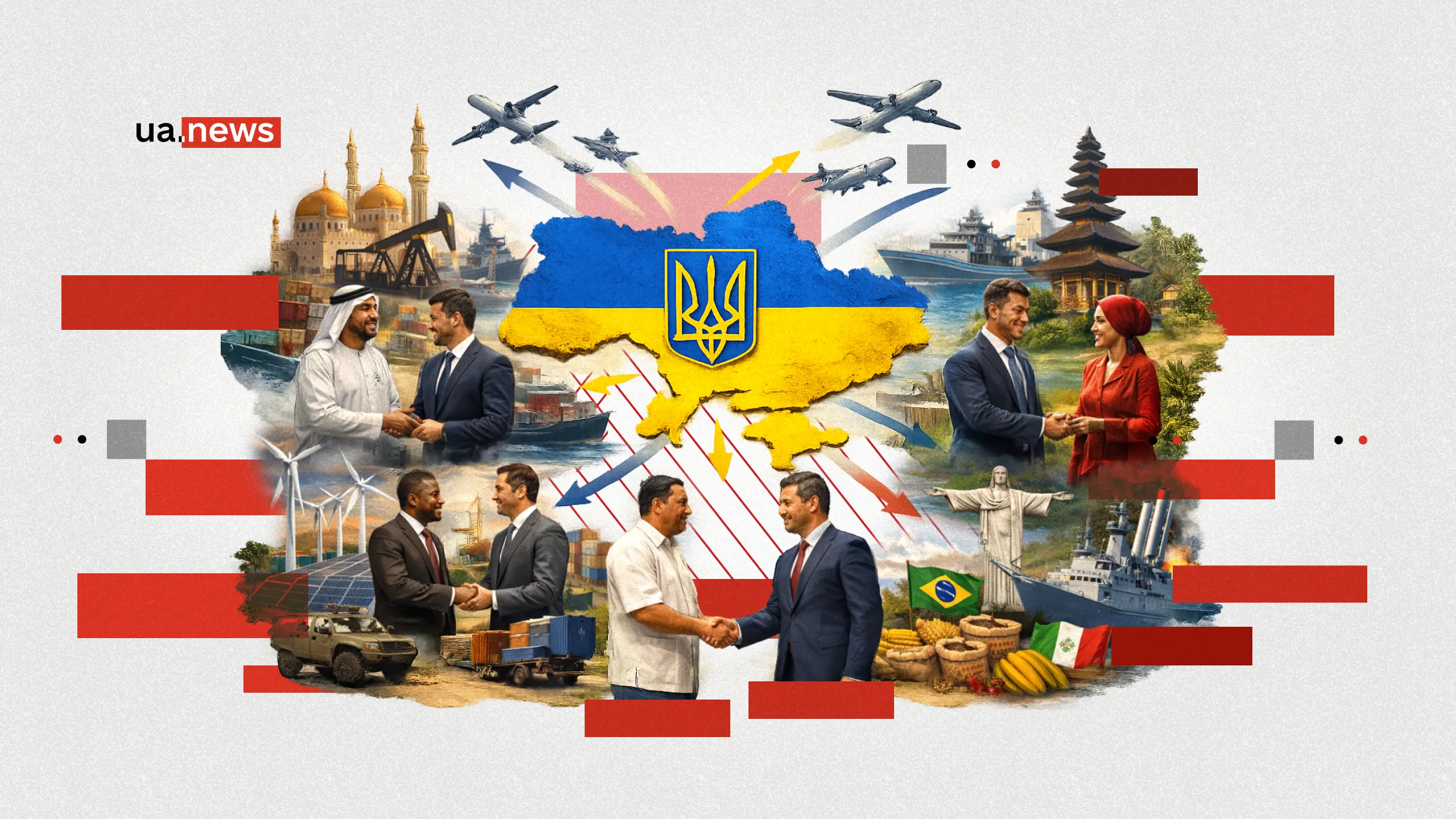
A week ago, President Volodymyr Zelenskyy made a statement that many found somewhat fantastic. The head of state said that Ukraine could receive gas from Mozambique—a country nearly 8,000 kilometers away, in East Africa—which suddenly became the focus of Ukrainian news.
So far, however, this does not involve any immediate supplies. There are too many questions about economic feasibility, logistics, and so on. At this stage, it is only a declaration of intent.
But it prompts a reminder that over nearly 35 years of independence, Ukraine has managed to establish cooperation with quite unexpected and non-obvious partners. Exotic, geographically distant, and sometimes politically risky, these cases show that Ukraine can find common ground even where it seemed there were no prior prerequisites.
Here are the top five most unexpected—but at least momentarily successful—partners of Ukraine, according to UA.News.
Iraq: The “Kolchuga” Detective
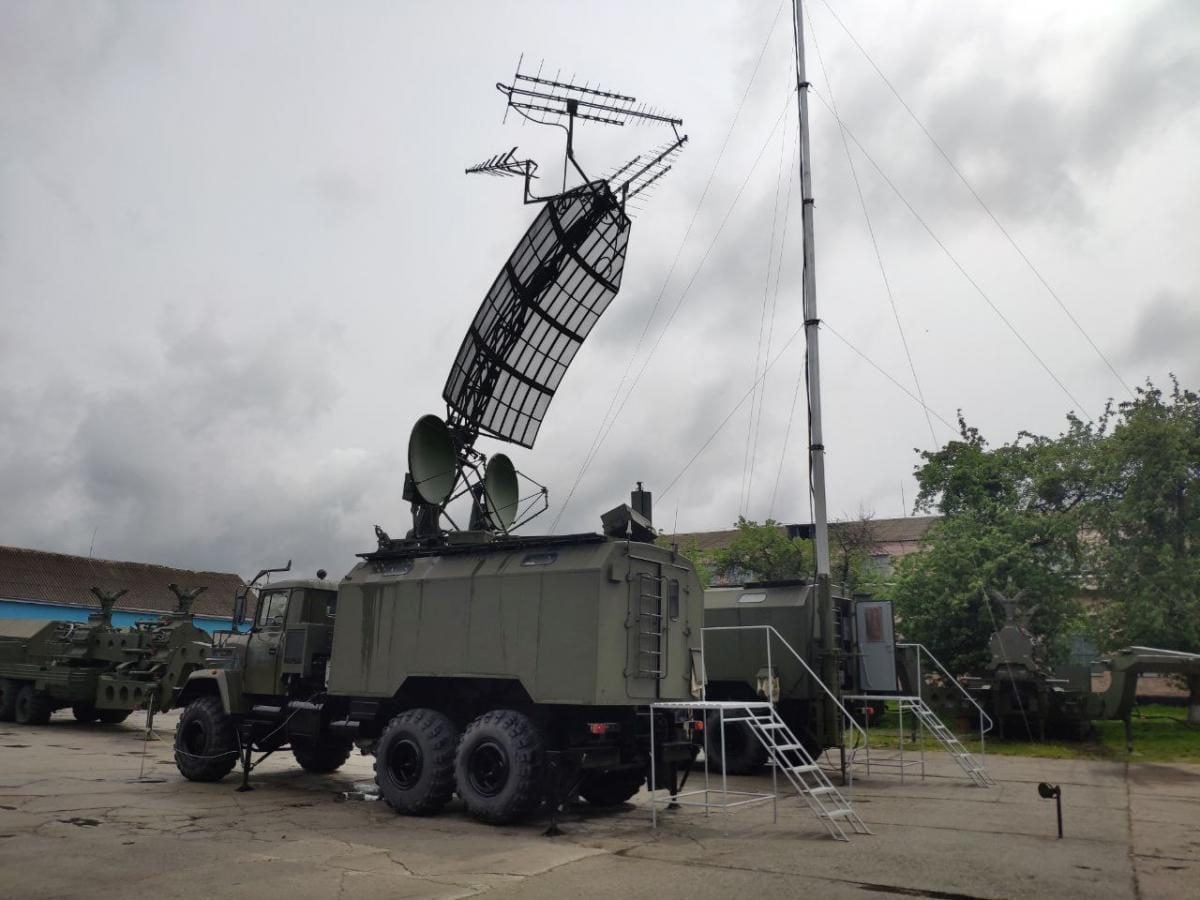
When it comes to very unexpected partners, the story with Iraq stands out—not only due to geography (the Middle East, over 2,000 kilometers from Ukraine) but also due to the resonance it caused in the early 2000s. At that time, Kyiv and Baghdad, then still under Saddam Hussein, allegedly signed a contract to supply passive radar systems “Kolchuga.” Estimates of the deal ranged around $100 million.
The timing made it controversial: Iraq was already under UN sanctions, and the US suspected that the “Kolchuga” systems could threaten its aircraft. Washington applied unprecedented pressure, and the press coined the terms “Kolchuga scandal” and “Kolchuga tape” (after the publication of audio recordings allegedly from President Leonid Kuchma’s office).
Ukraine firmly denied the case. “Kolchuga” systems were sold to some other countries, but officially there were none in Iraq. However, at that time, Western countries—primarily the US and the UK—actively accused Kyiv of selling this equipment to the Iraqi regime. Complete clarity on the matter still does not exist.
Interestingly, after Saddam Hussein’s regime fell, cooperation took new forms. Ukrainian peacekeepers joined multinational forces, and in the 2010s, Ukraine signed agreements to repair Iraqi armored vehicles and helicopters.
Vietnam: From Aircraft Hangars to Rice Fields
Ukraine’s cooperation with Vietnam is a story of how the Far Eastern legacy of the Soviet era transformed into a modern technological partnership. Hanoi, even before the full-scale war, signed contracts with Kyiv to import Ukrainian Antonovplanes, engines, and even air defense systems. However, few know that Vietnamese aviation factories have been serviced for many years partly by Ukrainian specialists, and a joint enterprise for aircraft repair still operates, with Ukrainians responsible for aircraft engines.
But the story is not only about complex equipment and weapons. Ukraine became a “window” to Europe for Vietnam’s agricultural sector: Vietnamese companies invested in Ukrainian soy and corn production, while Ukrainian farmers shared expertise on rice cultivation in unusual conditions. For many years, Ukrainian flour, meat, and oil have been directly exported to Vietnam.
Another special aspect is educational cooperation. This is rarely mentioned, but thousands of Vietnamese students have obtained higher education in Ukrainian universities, primarily in aviation, medical, and engineering fields. This “educational soft power” today strengthens bilateral relations more than any memorandum. For many Ukrainians, Vietnam still seems like an exotic tourist destination far away in Asia, but in fact, it has long been a proven partner of Ukraine.

Equatorial Guinea: Ukrainian “Outpost” in Central Africa
If Mozambique, mentioned by President Volodymyr Zelenskyy, seems like a very unexpected gas partner today, Equatorial Guinea is no less surprising. Kyiv is more than 6,000 kilometers from its capital, Malabo.
Diplomatic relations between Ukraine and Equatorial Guinea were established in 1992. The real breakthrough occurred in the 2000s, when Ukraine implemented several large-scale projects. Ukrainian enterprises built a frigate, a corvette, and two patrol boats for the African partner’s armed forces. Until the annexation of Crimea, cadets from Equatorial Guinea studied at the Nakhimov Naval Academy. Ukrainian engineers are currently constructing the largest hydroelectric plant in the country, Sendje.
Education is also key. As in the case of Vietnam, thousands of Equatorial Guinean students studied at Ukrainian universities. In 2023, then Foreign Minister Dmytro Kuleba made the first official visit in bilateral history to Malabo and Djiblo. They discussed increasing trade, digitalization based on Ukrainian technologies, pharmaceutical cooperation, and personnel training.
Interestingly, this cooperation was almost never highlighted in major media. Only narrow circles—diplomats, educators, engineers, manufacturers—knew about it. Meanwhile, Equatorial Guinea became a platform for Ukrainian business (mostly food) to enter Central African markets. This case shows that successful cooperation can develop not only through public agreements but also through professional networks within narrow communities.

Egypt: Metallurgy, Agriculture, and Record Contracts
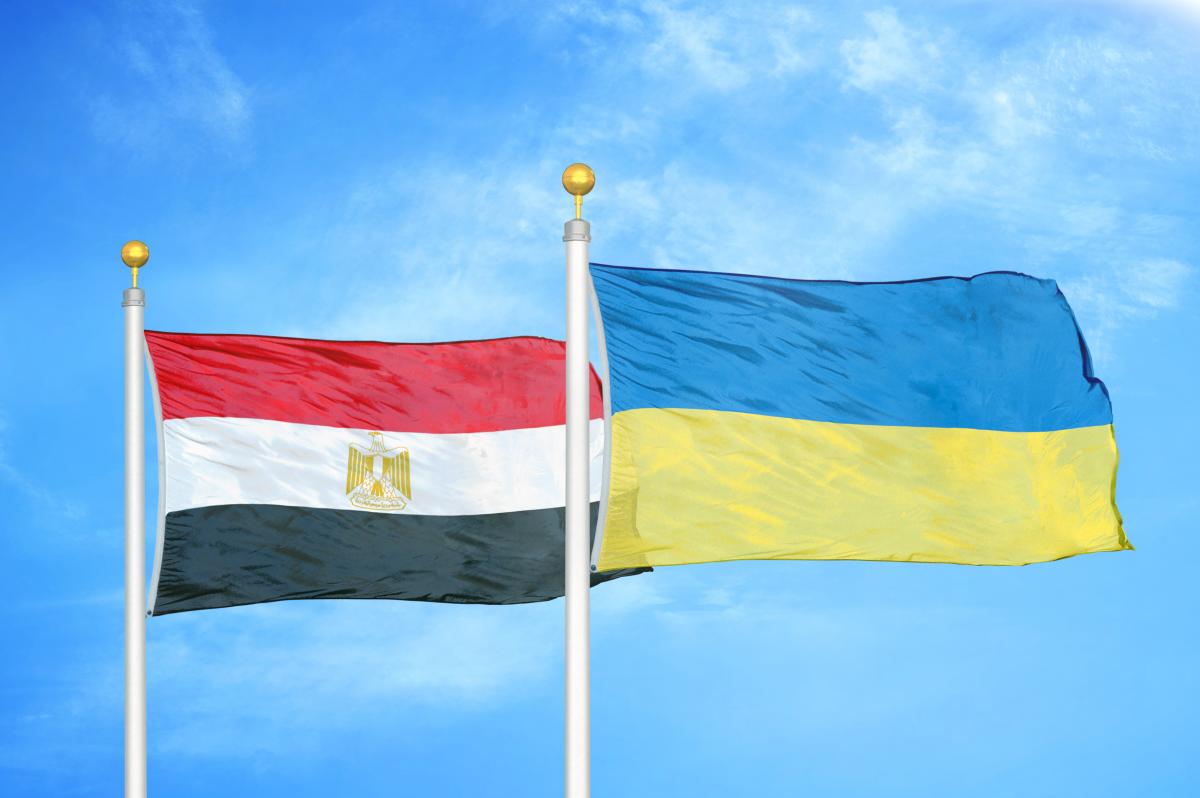
At first glance, the country of pyramids and beautiful beaches might seem to Ukraine only as a tourist destination—but Cairo is actually one of Ukraine’s most important and stable trade partners in Africa, especially in areas rarely covered by the news.
The most impressive is the metallurgy sector. In 2024, Ukraine increased exports of semi-finished steel products to Egypt by 1,233%, reaching over 356,000 tons. These figures reflect the recovery of maritime exports after a long hiatus. Egypt also became one of the top four buyers of Ukrainian metal, alongside Bulgaria, Poland, and Turkey, though volumes fell in 2025.
The agricultural sector is another strong area. Egypt is among the largest wheat importers in the world, and Ukraine has rapidly increased its presence. In 2024, Ukrainian wheat accounted for 10% of Egyptian imports; by 2025, it rose to over 13%. Overall, Egypt became Ukraine’s third-largest buyer of grain and oilseeds, importing goods worth over $1 billion.
Another area of cooperation is titanium raw materials. Ukraine is a key supplier of titanium ores and concentrates to Egypt. In 2024, Egypt became one of the top three importers, purchasing 7.3% of Ukraine’s titanium exports.
For Ukraine, Egypt is a strategic combination of a heavy metallurgy market, a key agricultural hub, and a source of industrial raw materials. This cooperation is based on mutual economic interests, tested over years of stable trade despite a complex geopolitical situation.
The Philippines: Wheat, Pharmaceuticals, and Zelenskyy’s Visit
Geographically unexpected, the Philippines is one of the best examples. An archipelago in Southeast Asia, nearly 10,000 kilometers from Ukraine, with no shared borders, historical ties, or cultural closeness. Yet in recent years, relations between Kyiv and Manila have reached an unprecedented level.
On June 3, 2024, Volodymyr Zelenskyy made a historic official visit to Manila. Ukraine now has an embassy there, and the countries have launched political consultations at the level of foreign ministries. Trade is not huge—$70 million in 2024—but it is stable with clear growth potential.
Key Ukrainian exports include wheat, dairy, and pharmaceuticals. From the archipelago, Ukraine imports electronics and high-value industrial components.
Ukraine has already passed several bilateral agreements to the Philippine government: a joint commission on trade and economic cooperation, a memorandum on agricultural cooperation, a memorandum on cybersecurity, a draft defense cooperation agreement, and more. Manila is equally interested in deepening relations, especially in trade, agriculture, defense, and innovation.
This is a case where two countries, separated by 10,000 kilometers, deliberately choose strategic alignment. No historical legacy, no shared border, language, or culture—but mutual interest exists: Ukraine gains access to ASEAN markets and international support, while the Philippines gains an alternative food supplier and technological partner.

Expert Opinion
Political expert Andriy Zolotaryov notes that recently, the Ukrainian authorities have made many high-profile statements about cooperation with various partners, such as supplying Ukrainian weapons, Qatari diesel, or liquefied gas. This includes the example of liquefied gas from Mozambique.
“But this is very speculative. How much will logistics from Mozambique cost? You either bring the gas through the Bab-el-Mandeb Strait, which is risky, or around Africa to Amsterdam. And it is unlikely to be cheaper than the Amsterdam market, roughly $800 per 1,000 cubic meters. So these are mostly PR statements without significant economic basis. Instead of ensuring domestic gas production and protecting local deposits, we look for other sources. For this, funds are needed. Look at Ukraine’s foreign trade deficit, and it becomes clear: to buy something, you must sell something. And that’s a problem,” Zolotaryov said.
He adds that this year will be even more crisis-ridden than the previous one: fuel prices are rising, and harvests will be worse, so export figures will be lower than in 2025.
“We need economic diplomacy. The Foreign Ministry should handle this. But economic diplomacy is ‘in a pen,’ especially given current personnel policies appointing people to key posts in embassies and consulates. Radical improvements are unlikely when consuls are appointed from modeling or escort businesses. This is a disaster. We need to develop economic diplomacy with various countries—not just EU members or the US—and right now, it’s very poor. If supplying diesel from Qatar makes sense, that can be mutually beneficial, but Mozambique gas will likely remain just a loud statement, nothing more. And again, we need to develop domestic gas production, because the volumes extracted before the war covered 100% of housing and utilities. LNG, given global prices, will simply be unaffordable for Ukrainians and businesses,” Zolotaryov concluded.


