
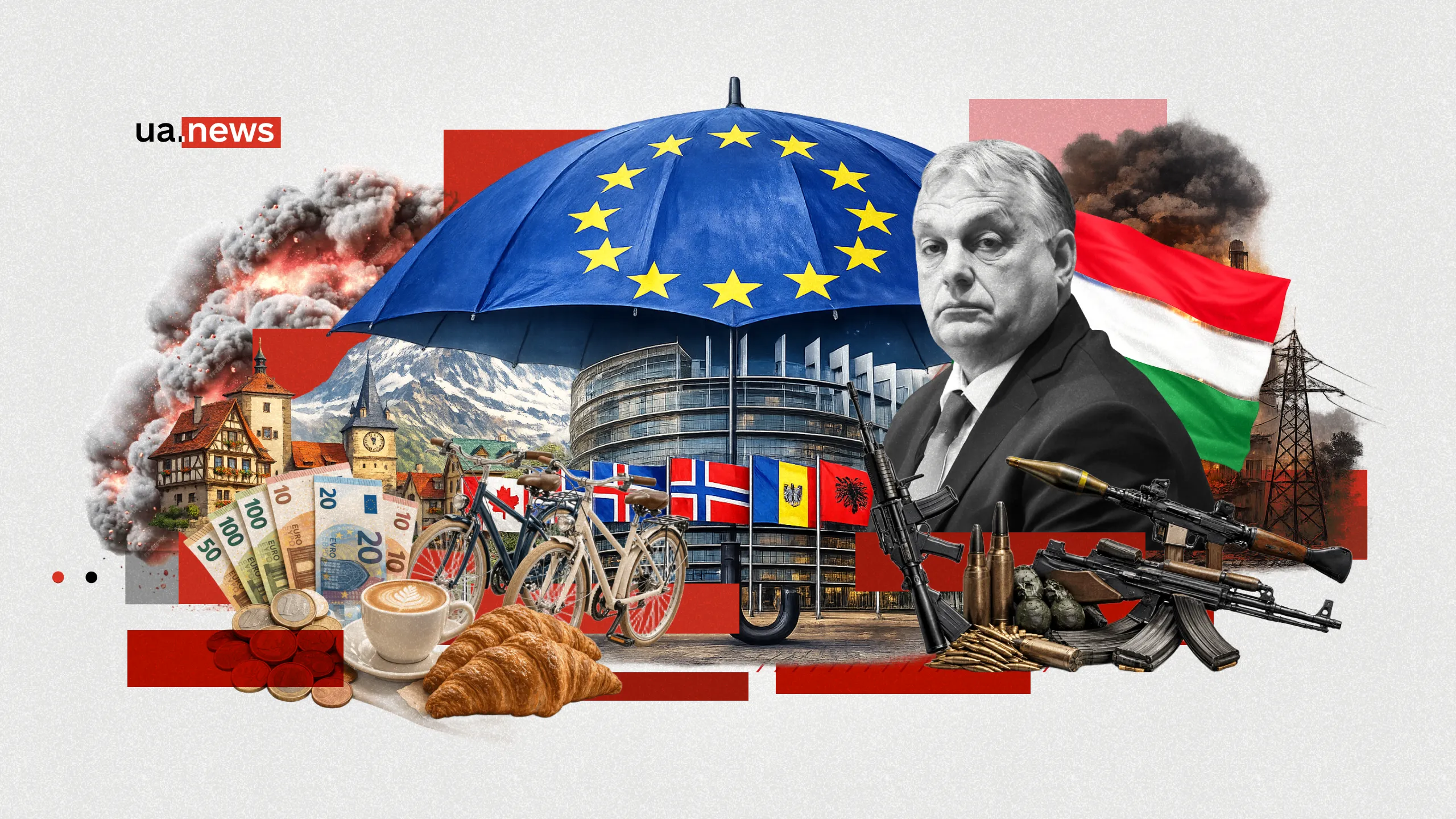
Against the backdrop of Russia’s full-scale invasion of Ukraine and the war in the Middle East, European leaders are seeking to strengthen the geopolitical role of the European Union, which must balance between centres of influence such as the United States and China.
On the one hand, there are statements about the possible expansion of the bloc to include Iceland, Norway, and Canada. On the other hand, Brussels is considering sanctions or even the exclusion of such “non-team players” as Hungary, in order to eliminate the factor of internal destabilisation.
How did it happen that wealthy countries, which had previously refused EU membership for economic reasons, began to look towards Brussels? And will this affect the architecture of EU enlargement to include countries of Eastern Europe and the Balkan Peninsula? More details are in the UA.News article.
Which Countries Could Strengthen the EU
After the United States stepped back from its role as Europe’s “protector”, small wealthy countries are reconsidering their attitude towards EU membership. What attracts them is not so much shared democratic values or economic benefits, but the opportunity to strengthen defence. The desire for security is gradually changing attitudes even among Eurosceptics, who previously categorically rejected a bloc with a single political centre in Brussels.
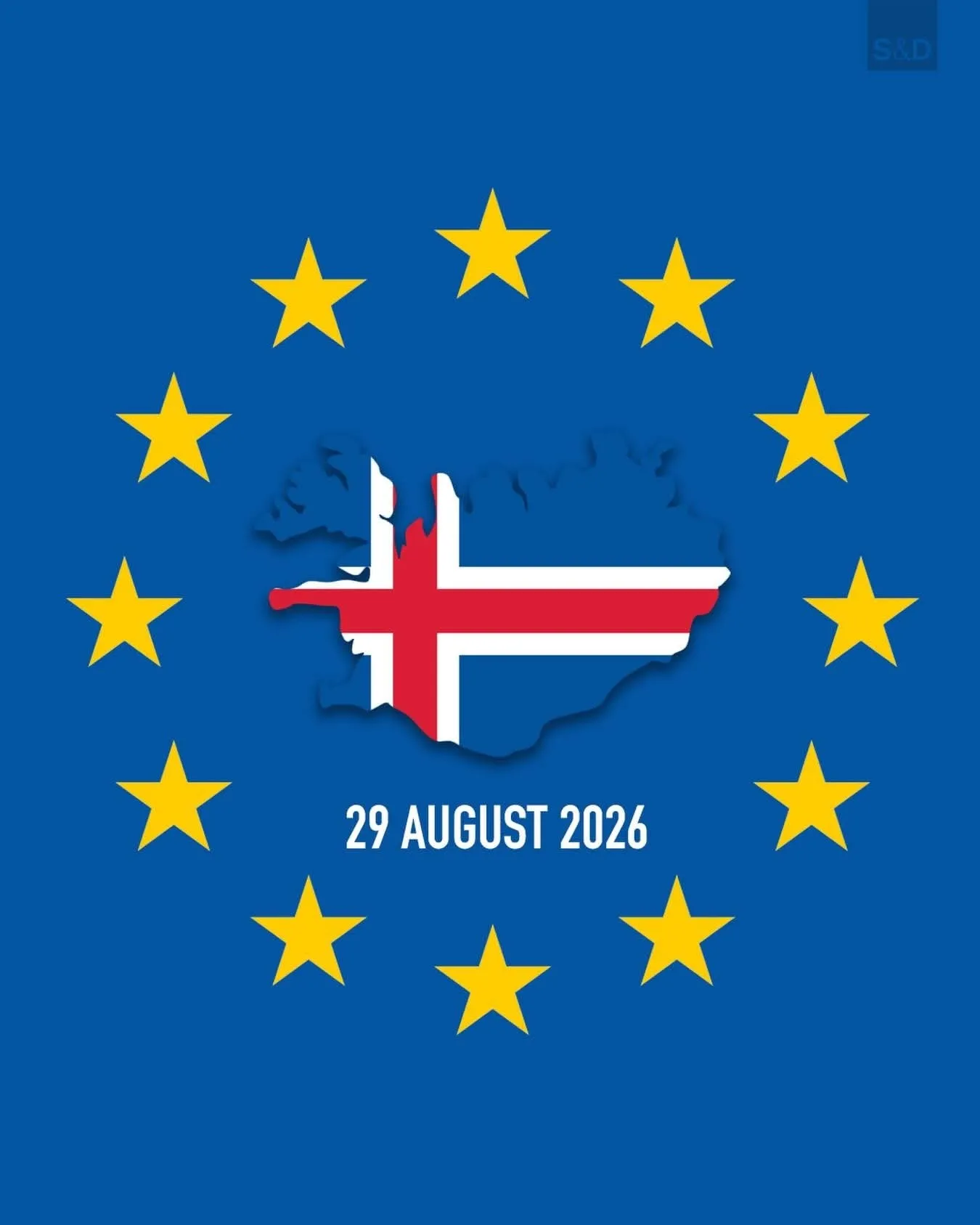
Iceland. The main reason for Iceland’s non-membership was the preservation of its most important economic resource — fisheries. By joining the EU, it would have had to open its waters to fishing fleets from other member states, resulting in a loss of control over fish stocks.
However, in critical situations, such as during the 2008 global financial crisis, Iceland discussed joining the EU and even applied for membership in order to receive financial assistance. After its economic situation improved in 2013, Reykjavík suspended negotiations with Brussels, and in 2015 withdrew its application.
A new reason for closer ties with Brussels has been growing security tensions. In January 2026, Billy Long, a candidate for the post of US ambassador to Iceland, joked during a conversation with congressmen that the island nation would become the “52nd state” and that he would be its governor. This caused a wave of outrage in Iceland. In a country of about 400,000 people with no standing army, thousands signed a petition to the Ministry of Foreign Affairs demanding that Long’s candidacy be rejected. He later apologised, but was still appointed ambassador.
Long made this “joke” at a time when US President Donald Trump was openly threatening to take control of Greenland. He also made disparaging remarks about Denmark, saying its defence of Greenland looked like “two dog sleds”. Given that Iceland lies in some places only 300 km from Greenland, such remarks heightened public concerns about national security.
Amid global security threats, in March 2026 Reykjavík decided to resume negotiations with Brussels and announced a referendum on EU membership. Whereas the vote had previously been planned for 2027, it has now been brought forward to August 2026.
Preliminary surveys show that 45% of Icelanders are ready to vote in favour of joining the EU, while 35% oppose it. This figure may change as negative attitudes towards US foreign policy grow.
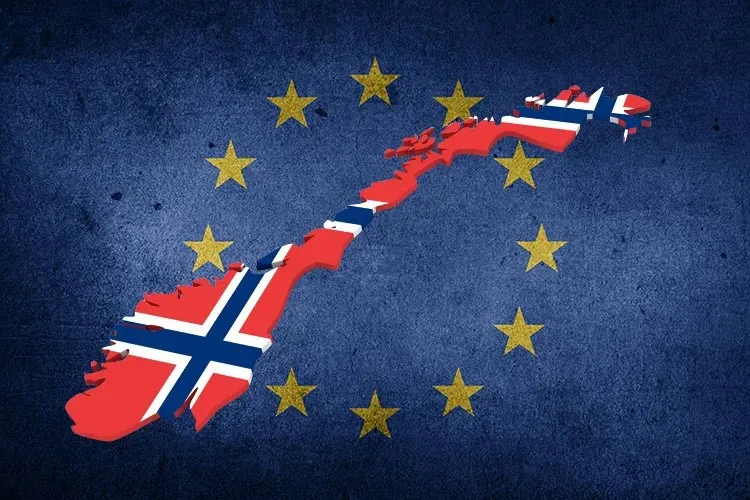
Norway. Following Iceland’s example, Norway refused EU membership in order not to open access to its natural resources — oil, gas, and fish stocks. The country held referendums on EU membership in 1972 and 1994, and in both cases voters rejected joining, opting instead for membership in the European Economic Area and NATO.
In recent years, the security situation has deteriorated to such an extent that some political forces have begun promoting the idea of joining the EU, primarily to strengthen defence. The situation is complicated by the fact that if Iceland joins the EU, Norway risks remaining completely isolated on the northern flank.
Leaders of the opposition Conservative Party, in particular, believe Norway should urgently reconsider its non-membership status. They argue that the country would benefit from EU membership in areas such as defence, space, healthcare, and Arctic security. Moreover, Norway has already implemented around 14,000 EU legal acts but has virtually no say in shaping them.
Although most Norwegians remain opposed to EU membership according to polls, opposing views are gradually gaining ground. Taking this into account, the Conservative Party, which plans to come to power in 2029, intends to steer the country towards the EU.
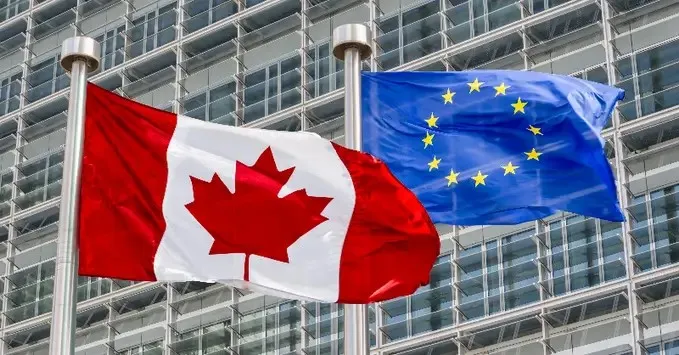
Canada. Warming attitudes among Canadians towards the EU were reflected in a poll published in March 2025. Around 68% of respondents expressed a positive view of the bloc, compared to 34% for the United States. The survey also showed that 44% supported joining the EU, while 34% opposed the idea.
At the time, Brussels explained that Canadian membership was impossible, as Article 49 of the Treaty on European Union allows only European states to apply for membership.
Canadian Prime Minister Mark Carney also rejected the idea of joining the EU, although he acknowledged that Canada is the “most European” country outside the Union. Instead, he advocated strengthening strategic partnership and participation in EU defence programmes. In March 2026, he announced an ambitious plan to double defence spending by 2035 and bring Canada into the top three NATO countries in terms of defence expenditure and investment, although it currently does not meet the existing NATO benchmark of 2% of GDP.
Given its relatively weak defence and geopolitical instability, some European leaders have begun to raise the possibility of Canada joining the EU. In March 2026, Finnish President Alexander Stubb suggested that Carney consider EU membership. A few days later, French Foreign Minister Jean-Noël Barrot expressed a similar view at the “Europe-2026” conference in Berlin, noting that the EU is increasingly attracting partners far beyond its borders.
“Today, nine countries are official candidates for EU membership. Others may join them. Iceland — in a few weeks or months. And perhaps Canada — at some point,” he suggested.
However, he clarified that mentioning Canada was not a concrete political proposal, but rather part of an argument that the EU is becoming a “third superpower” capable of balancing rivalry between the US and China.
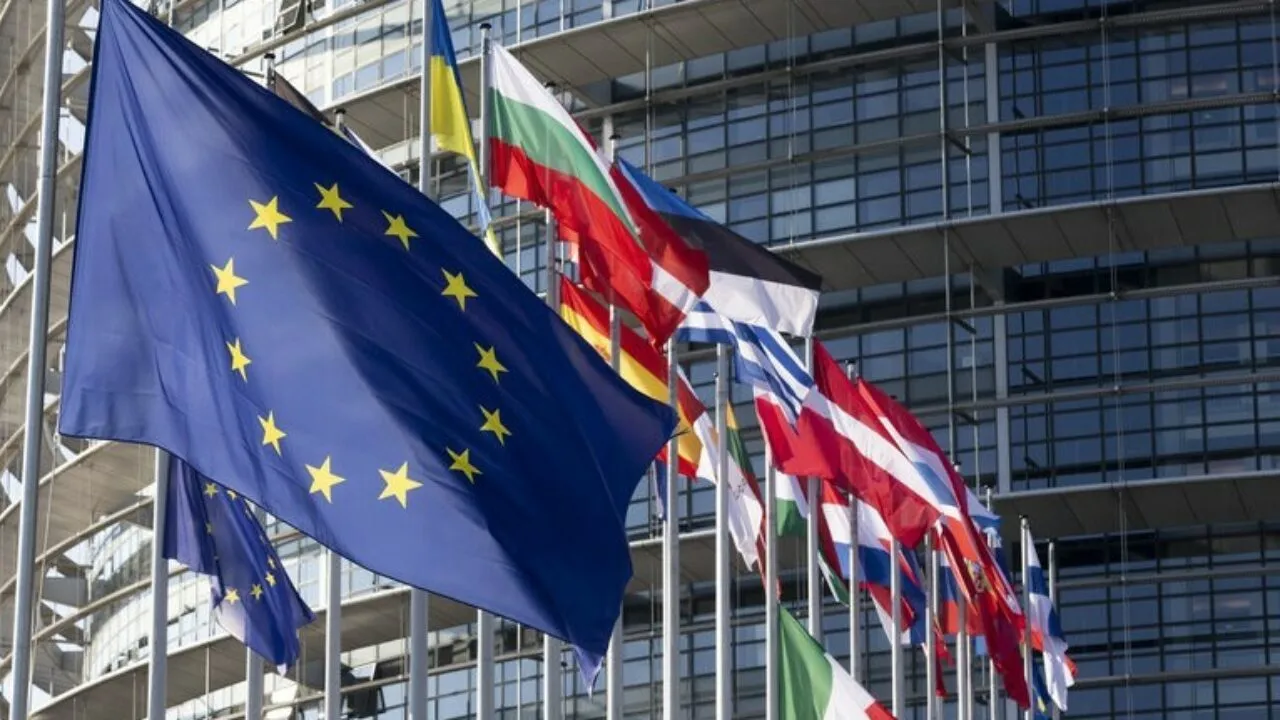
Queue for Membership and Funding
The accession of wealthier countries that would not require subsidies is beneficial for EU members that joined after 2004. Until now, these countries have received more financial support than they have contributed to the central budget. However, their share of subsidies would decrease if poorer countries from Eastern Europe were admitted.
Another factor is political predictability and the readiness of candidate countries’ legislation. Brussels does not want a “repeat of Hungary or Slovakia” — new political regimes that would block joint decisions.
This logic of enlargement suggests that countries currently in the queue for EU membership — including Ukraine, Moldova, Albania, Serbia, and Montenegro — could be overtaken by countries such as Iceland and Norway.
Thus, financial and political interests may reshape the very architecture of EU enlargement. These assumptions, published in Western media, sparked public debate, prompting a response from Brussels.
“We have clearly stated that the European Commission, on behalf of the European Union, is committed to all the countries you mentioned, at different stages of their accession or, in Iceland’s case, its intention to resume the process. At this point, we have nothing further to add. I can confidently say that these two issues are not linked, and we strongly reject any such assumptions,” said Deputy Chief Spokesperson of the European Commission Olof Gill.
The European Commission also stated that Ukraine’s accession would not be tied to Iceland or Norway if those countries seek membership.
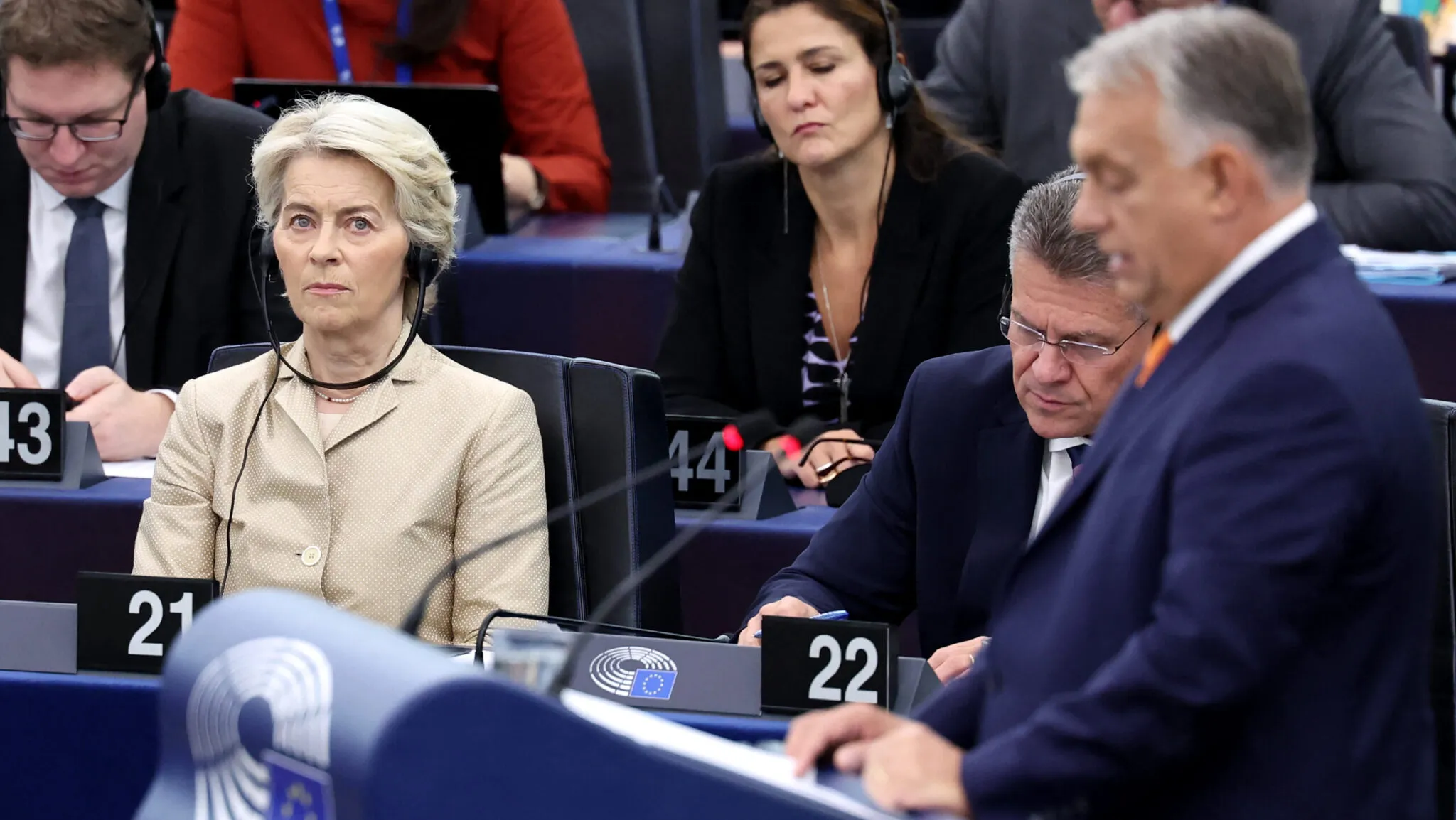
Will Hungary Remain in the EU After Orbán’s Victory?
The threat of war, increasingly felt across Europe, has also triggered political processes testing the resilience of the EU. This concerns divisions in foreign policy positions among certain leaders. The issue of Hungary is the most acute, as its government openly supports cooperation with Russia. European media have already labelled Hungarian Prime Minister Viktor Orbán a “vassal” of Russian leader Vladimir Putin.
Until now, the EU had hoped the issue would be resolved after Orbán’s party lost parliamentary elections and he left office. However, Brussels is no longer confident that Orbán will lose. In this scenario, five different courses of action are being discussed.
One option is to introduce qualified majority voting in foreign policy and long-term EU budget decisions, which currently require unanimity.
A second option is a shift towards a “multi-speed Europe”, involving broader use of flexible arrangements — from informal coalitions to cooperation among smaller groups of countries.
A third plan is to strengthen sanctions against Hungary, including blocking EU funds and suspending its voting rights in the Council of the EU. However, such a suspension would require unanimous agreement among all 27 member states, and Slovakia would not support it.
The least realistic option is expelling Hungary from the EU. No country has ever been stripped of membership at Brussels’ initiative. Nevertheless, diplomatic circles are considering reinterpreting the article on withdrawal or other mechanisms to “remove Hungary”. This scenario was theoretically discussed several years ago and has now resurfaced. Although the idea of any country leaving the EU has not previously been publicly debated, the emergence of such a mechanism could become the next step in the EU’s transformation.


