
NASA discovers 222-meter-wide crater on the Moon — Asharq Al-Awsat
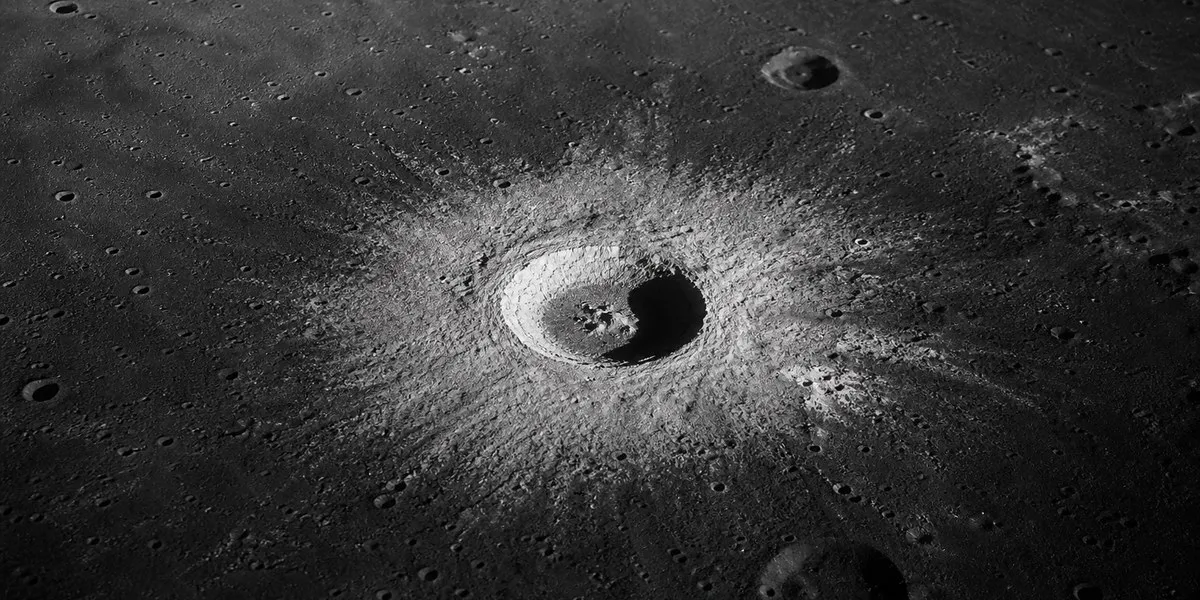
NASA researcher Robert Wagner discovered the recently formed 222-meter-wide McGetchin crater on the Moon. According to the agency's assessment, impacts of this scale occur on Earth's satellite approximately once a century or even less frequently, Asharq Al-Awsat reports.
Traces of the 2024 impact
NASA believes that the crater formed in the spring of 2024 as a result of a comet or asteroid striking the Moon. According to the researchers' description, the object that caused the impact was approximately the size of a three- to six-story building.
The crater had existed for several years, but it was noticed only during a new scan of the lunar surface. In images from the Lunar Reconnaissance Orbiter, it appeared as a large bright spot surrounded by a dark halo. This probe has been studying the Moon since 2009.
More current news is available on the UA.News Telegram channel Telegram.
Significance for lunar research
A study published in the journal Science Advances identified McGetchin as the largest new crater ever discovered in the Solar System. There are many significantly larger craters on the Moon, but studying a relatively fresh formation helps scientists better understand the geology of Earth's satellite.
Such data may be useful in preparing future crewed missions to the Moon planned by the United States and China. Unlike Earth, the Moon has virtually no atmosphere, so space objects do not slow down or burn up before colliding with its surface.


