
Estonia closes triple murder case due to statute of limitations — ERR News
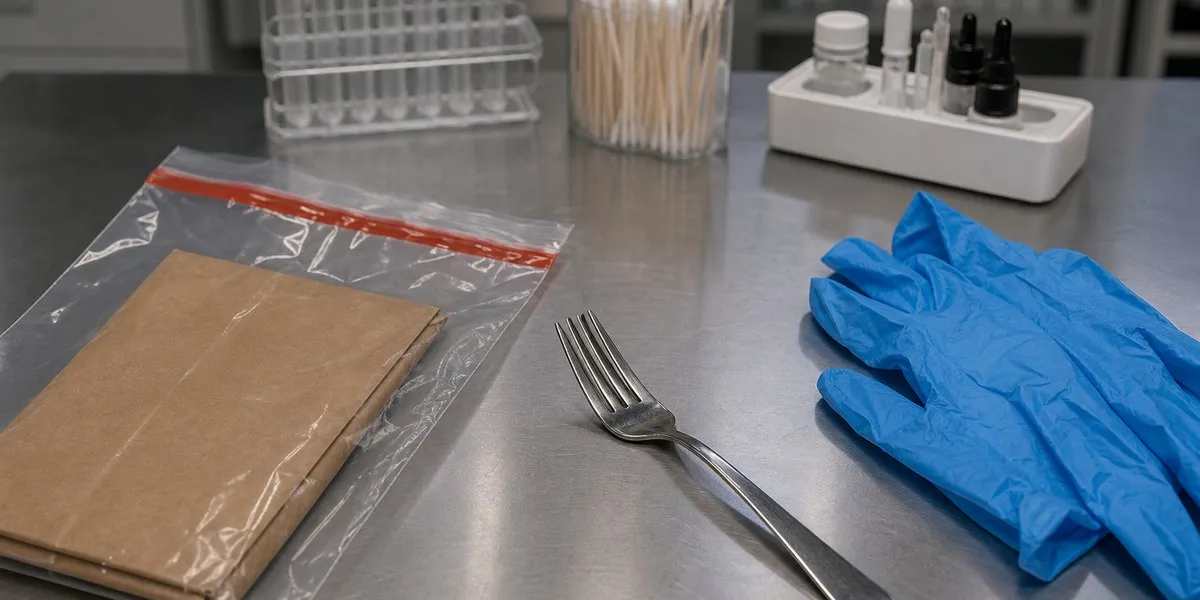
In Estonia, the investigation into a triple murder in Tartu committed in April 2001 has been closed due to the expiration of the statute of limitations. The decision was made after physical evidence was re-examined: DNA found on a fork from the apartment matched the profile of a former police officer, who denied involvement in the crime. This was reported by ERR News.
In an apartment on Põllu Street, father and daughter Elmo and Tiina Lätt, as well as Tiina's former partner, Estonian Defence Forces officer Urmas Aala, were killed. The two men were shot in the chest and the back of the head, while the woman was shot in the temple. A total of five shots were fired, but the neighbors heard nothing. The shooter took the shell casings and locked the apartment.
The theory of stolen keys
On the eve of the murder, Tiina Lätt's bag disappeared at a party. It was later returned, but it contained no money, apartment keys, or temporary driver's license stating her home address.
In 2005, a man named Aleksandr, imprisoned for other crimes, told police that he had stolen the bag and handed its remaining contents, including the keys, to an acquaintance named Aleksei. He denied visiting the apartment and said he had passed the keys to another man, Radik. Radik could not be questioned because he was killed during a conflict among drug addicts at the end of 2001 and was buried in Russia.
The investigation obtained no physical evidence confirming that any of these people had entered the apartment. Former investigators doubted the theory of a failed burglary. In a 2023 procedural document, prosecutor Mari Kartau stated that the available evidence rather pointed to a planned serious crime.
More current news is available on the UA.News Telegram channel Telegram.
DNA trace and case closure
In 2022, Mari Kartau, who arrived in Tartu, discovered that the case had formally remained open. Investigators sent physical evidence preserved since 2001 for modern examination. A DNA profile from a fork seized in the apartment's kitchen matched that of a former police officer.
According to the investigation, at the time of the murders he worked in another part of Estonia and had no known connection to the victims or the crime scene. At the beginning of 2025, the man was named a suspect and detained, but he denied involvement in the murders and could not explain the origin of the DNA. His name has not been disclosed because he was not charged.
It also emerged that in 2002, despite having no connection to the investigation, the man had viewed information in the police database about Urmas Aala and other people linked to the case. He could not remember the reasons for this.
Maarja Sadam, head of the DNA department at the Estonian Forensic Science Institute, said contamination in the DNA laboratory was impossible because the man's sample and the fork were analyzed nearly two decades apart and in different laboratories. At the same time, it was not possible to completely rule out earlier contamination of the fork during fingerprint examination in 2001.
In spring 2026, the families were informed that the proceedings had been closed. Due to the interaction of changes in Estonia's criminal legislation, murders committed during a short period in the late 1990s and early 2000s were subject to a 10-year statute of limitations. Police returned the physical evidence that had been stored for about a quarter of a century.




