
NATO is preparing for a scenario in which Russia invades the Baltic states
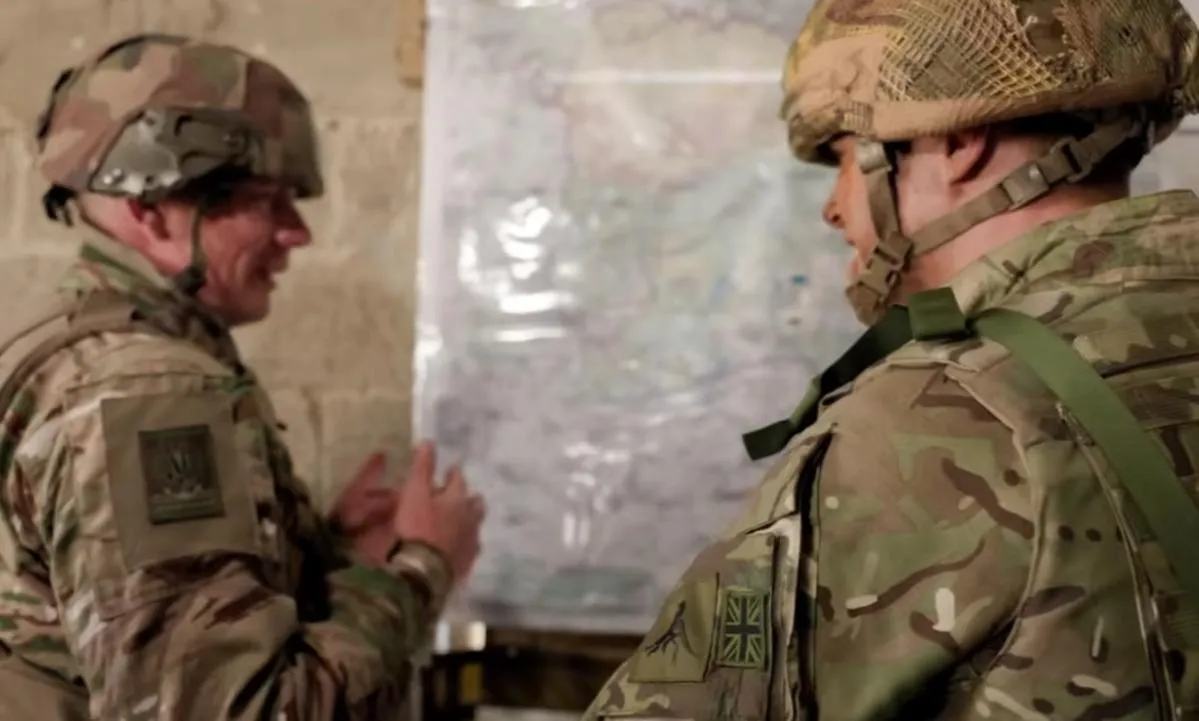
Large-scale military exercises were held in Britain, during which a scenario involving a war with Russia was simulated, and an underground command center was even set up in the London Underground. According to the exercise scenario, NATO is forced to respond to an invasion of the Baltic states, and events unfold as if Europe is on the brink of a major conflict, Sky News reports.
The British military took part in large-scale exercises simulating a full-scale Russian invasion of the Baltic states, with part of the scenario unfolding right in the London Underground, which was transformed into a simulated NATO headquarters operating as if from Tallinn.
According to the exercise scenario, in 2030, Russian troops attack Estonia, Latvia, and Lithuania, after which the Alliance invokes NATO Article 5 and launches a joint response, drawing in troops from various countries, including the U.S. and the U.K.
In a disused section of the Charing Cross subway station, British and allied military personnel worked as if in a real command center, using laptops, large screens, artificial intelligence systems, and digital tools to detect and engage simulated Russian targets. “Under the scenario, units must deploy more than 5,000 drones daily—for both reconnaissance and strikes—to have a chance of countering Russian forces,” according to the Sky News report.
Under the terms of the exercises, the allies had to simultaneously coordinate drone strikes, missiles, and electronic warfare systems, simulating a new type of war where the speed of information processing becomes no less important than the weapons themselves.
It is specifically noted that a significant portion of the technologies used in the scenario have not yet been fully implemented across all units of the British Army, and production capabilities are not yet ready for combat operations on this scale. “The scenario is deliberately set for 2030, as that is when the threat from Russia could be at its most acute,” explained Lieutenant General Mike Elviss, commander of the Allied Rapid Reaction Corps.
During the exercises, military personnel simulated the operations of a large NATO headquarters, which, in the event of a real operation, would have to coordinate up to 100,000 troops from more than 20 countries, using underground infrastructure to protect against potential strikes.
The publication also notes that the focus on Russia as a direct adversary in this scenario differs from previous NATO exercises, where the adversary is usually not named explicitly, leaving it as a hypothetical entity. Despite the training nature of the exercises, the headquarters discussed very real problems—a shortage of drones, limited production capabilities, and dependence on technologies not yet proven for mass military use.
The exercises will last several days and are intended to help allies better assess their vulnerabilities and prepare for possible scenarios of modern warfare, where not only tanks and artillery but also digital systems, drones, and cyber defense play a key role.
At the NATO summit in Ankara on May 22, U.S. President Donald Trump’s “disappointment” with the Alliance is expected to be discussed. U.S. Secretary of State Marco Rubio stated this, noting that the issue will be one of the items on the meeting’s agenda.
And Turkish President Recep Tayyip Erdogan stated that the NATO leaders’ summit, to be held in Ankara on July 7–8, will be one of the key events for the future of the Alliance and the entire international security system.


