
Nepal plans to change method for counting one-horned rhinos — Kathmandu Post
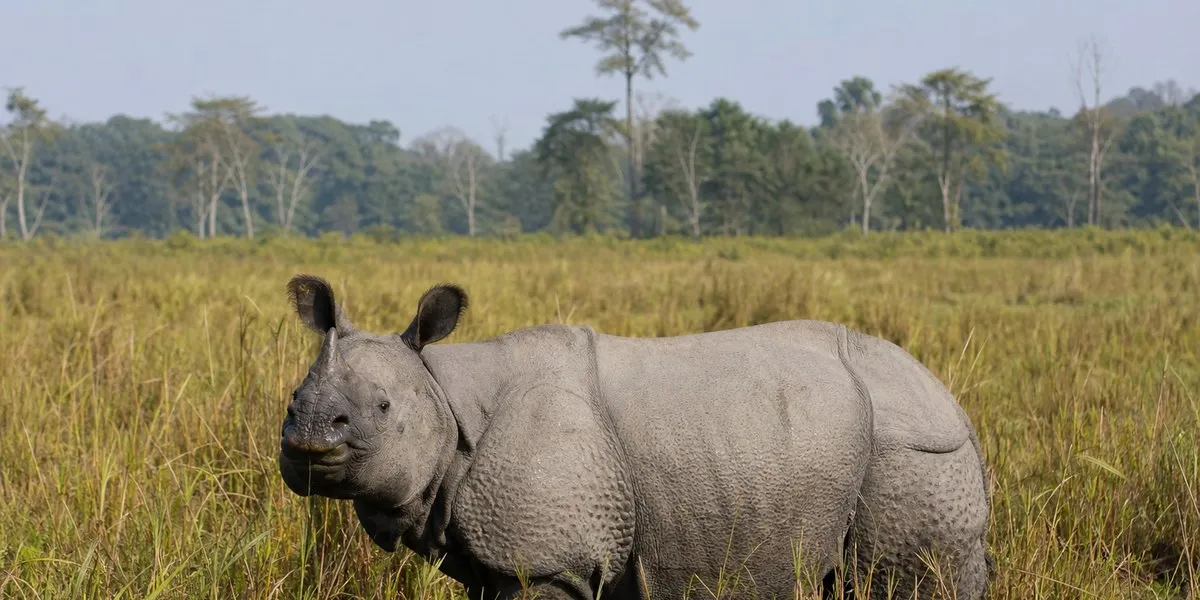
In Nepal, the Department of National Parks and Wildlife Conservation is preparing to change its methodology for counting one-horned rhinos. Instead of the long-standing practice of directly counting animals from elephants, authorities are considering genetic testing of samples, camera traps, or a combination of these methods, Kathmandu Post reports.
Before selecting the final methodology, a special committee must prepare a protocol and conduct pilot studies. The department's senior ecologist, Haribhadra Acharya, said the agency seeks to abandon the old approach and develop a new methodology.
Risks of traditional counting
Previously, census teams divided rhino habitats into sectors and moved through them on elephants, recording animals through direct observation. During previous counts, around 40 elephants were used each day, with two specialists on each elephant.
The department considers this method dangerous for people and animals, as well as insufficiently reliable for obtaining scientific data. During the 2021 census, a wild male elephant encountered the animal carrying a census team. The elephant bolted, threw off and dragged a technician, who was injured and, according to Acharya, was left with a disability.
More current news is available on the UA.News Telegram channel Telegram.
Camera traps are already used in Nepal to estimate tiger numbers. Rhinos, by contrast, were mostly counted through direct observation, which made it possible to establish the number of animals but did not provide the necessary level of data for population management.
Population and threats
According to the department, Nepal has 752 one-horned rhinos, with more than 92% living in Chitwan National Park. The 2021 census recorded 694 animals there, another 38 in Bardia National Park, 17 in Shuklaphanta National Park, and three in Parsa National Park.
The population recovered after falling to around 100 animals in the 1960s, but threats persist. Over the past five years, 133 rhinos have died in and around Chitwan National Park. Causes of death include old age, clashes between animals, getting trapped in swamps and mud, electrocution, and sometimes tiger attacks. Rhinos also enter agricultural land and damage crops.




