
Germany was slow to realize the scale of Russia's hybrid attacks, says Colonel Mararens
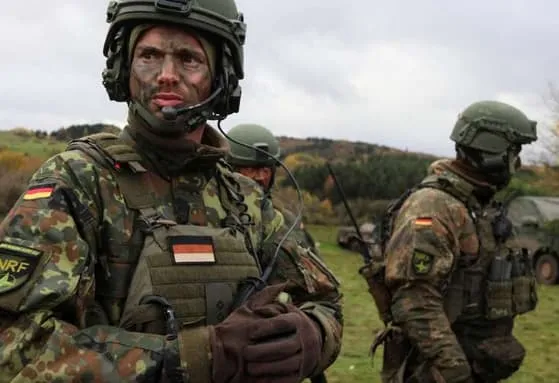
Germany has acknowledged that it was slow to recognize the scale of hybrid threats from Russia, but in recent years, the government and security agencies have significantly stepped up their efforts to inform the public about these risks.
For a long time, Germany underestimated the nature of modern threats.
“But I would say that over the past year and a half to two years, we have seen progress at the political level as well,” Mararens emphasized.
He noted that German intelligence agencies and government institutions are increasingly openly informing citizens about changes in the security environment and new challenges related to Russia’s activities.
The colonel stressed that hybrid warfare encompasses a much broader spectrum of threats than attacks on infrastructure or the use of drones.
“It’s not just drones and not just undersea cables; it’s also disinformation within our society. It’s the exploitation of the political and judicial systems, the concept of ‘one-time agents,’” the colonel emphasized.
He cited the flights of unidentified drones over Germany’s critical infrastructure as one of the most notable manifestations of hybrid activity in recent years. In his view, such actions primarily have a psychological impact on society rather than a military effect.
Mararens also stressed the need to strengthen state mechanisms for responding to hybrid threats. In particular, he believes that the National Security Council established in the country should be granted real authority to make rapid decisions in crisis situations.
In addition, the Bundeswehr representative emphasized that Germany is closely analyzing Ukraine’s experience in countering Russian aggression, viewing it as an important example for enhancing its own resilience to modern security challenges.
This was stated during the New Age Defence security conference in Berlin by Colonel Sönke Mararens, a representative of the Center for Digitalization and Capability Development of the Bundeswehr Cyber Information Command (CIR).
Earlier, German Federal Minister of the Interior Alexander Dobrindt announced a new security initiative set to launch next year to strengthen countermeasures against hybrid threats from abroad.
France plans to adopt Ukraine’s experience in combating hybrid threats, particularly in the areas of cybersecurity and countering sabotage.


