
The Kremlin is stepping up pressure on Moldova—in addition to its traditional efforts to destabilize the country’s domestic political life, there have been numerous air raid alerts. In recent weeks, Moscow has demonstrated brute force: a dozen Russian drones and even missiles have violated the country’s airspace, exploding and falling directly on Moldovan territory. These strikes are already posing risks to border infrastructure. Meanwhile, in Chisinau, pro-Russian political forces have resorted to a new provocation—demanding the impeachment of pro-European President Maia Sandu.
Oleksandr Kovalenko, a military and political analyst with the “Information Resistance” group, believes this is a large-scale hybrid attack by Russia, the consequences of which could directly threaten southern Ukraine. Read more in this UA.News article.
Russian Drones Over Moldova
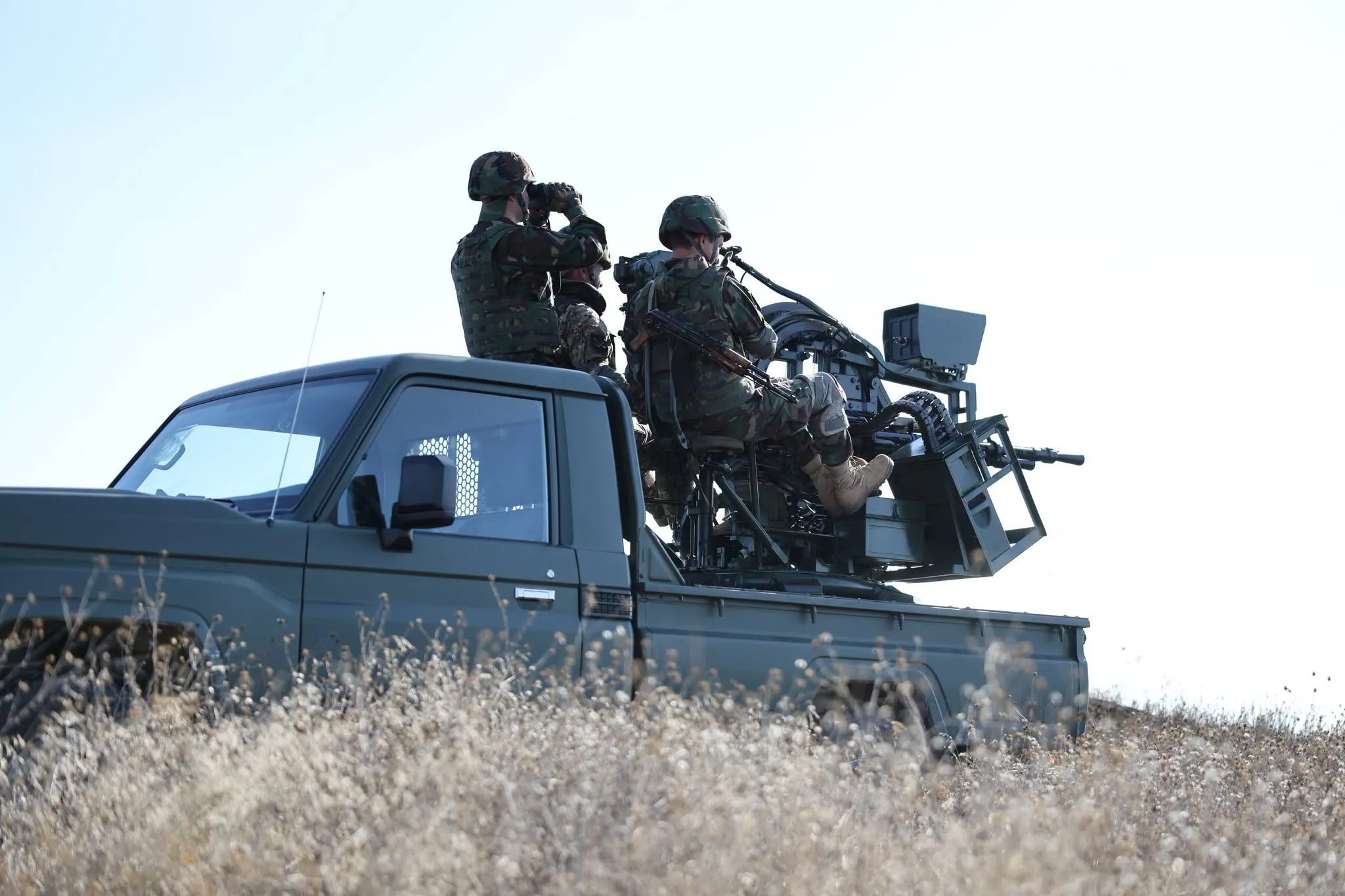
Russian drones and missiles are increasingly flying into Moldova. While such incidents were previously mostly attributed to “stray” drones, they now appear to be planned operations. In recent weeks, there have been instances where drones violated the country’s airspace and exploded several times a day.
On September 30, one such drone crashed in the Anenii-Noi district—it exploded at an altitude of 40 meters after colliding with a utility pole. On the same day, two more drones flew into Moldovan airspace. The Ministry of Defense confirmed that the drones were jet-powered. Airspace in the northern and central parts of the country had to be closed.
Moldova’s Ministry of Foreign Affairs then officially condemned the airspace violation and summoned Oleg Ozerov, the Russian Federation’s ambassador-designate, for a meeting. But the incursions did not stop after that; on the contrary, they intensified.
On the morning of October 3, Moldova’s national airspace monitoring system detected five aircraft flying through its airspace at the very same time that the Russian army was bombing Ukraine. According to the monitoring system, explosions were heard near the towns of Crocmaz, Ștefan Voda, Bozieni, Hîncești, Delacau, Puchecheni, and Anenii Noi. The country’s Ministry of Internal Affairs reported finding the remains of three missiles and two drones.
Another target for Russian airstrikes is the international border crossings between Ukraine and Moldova. On September 9, Russian UAVs attacked the “Starokozache” border crossing on the Ukrainian-Moldovan border. One of them struck the facility, while the other two fell nearby. Among the civilians near the checkpoint, two were killed and three others were injured.
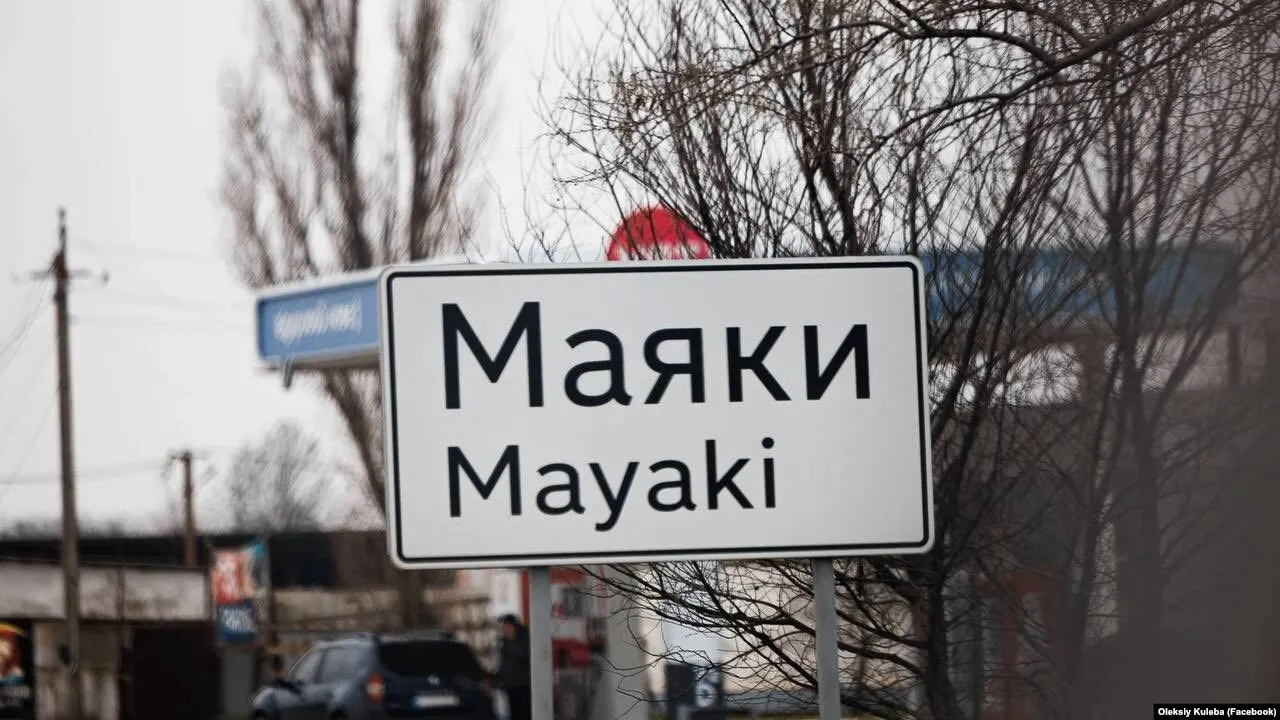
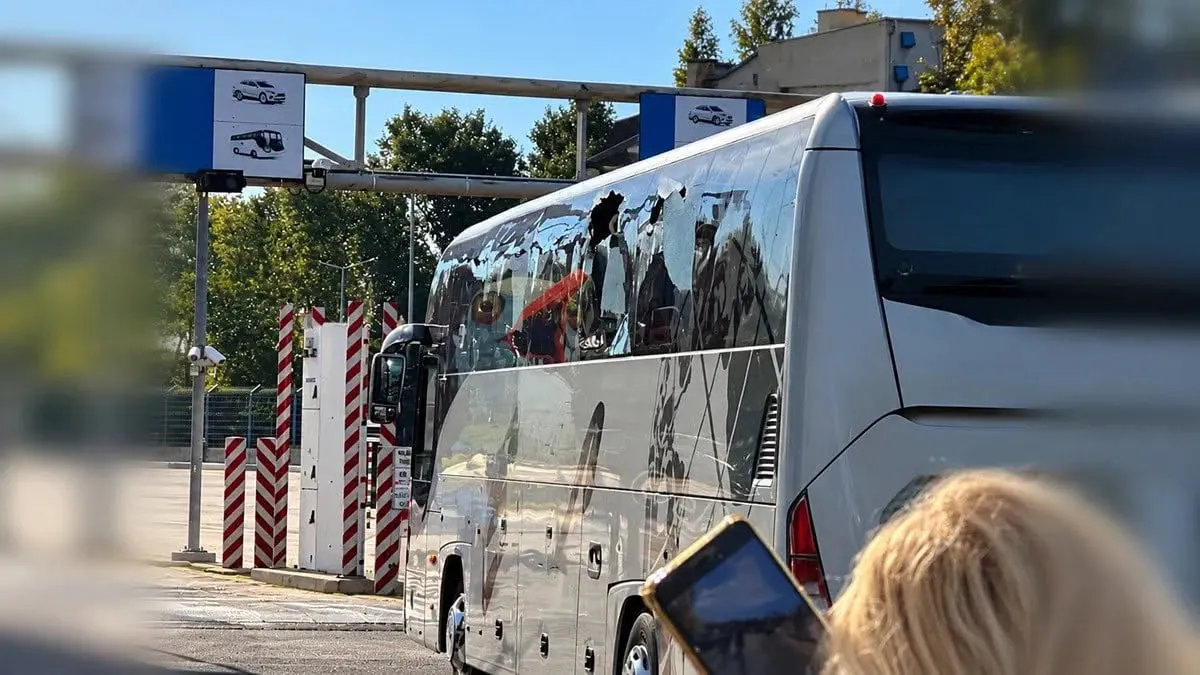
The incidents continued. On the morning of October 5, a shell landed near the “Palanka” border crossing; it ricocheted off the ground and struck a passenger bus parked near the barrier. According to the Border Police, one officer sustained minor injuries, and operations at the “Palanka–Mayaki–Zruchne” checkpoint had to be suspended for several hours.
Given the rising number of casualties and injuries, Moldovan authorities could no longer ignore the Russian strikes on the checkpoints. On October 7, the Ministry of Internal Affairs announced that it was establishing protective zones at checkpoints along the border with Ukraine. They announced that border guards and civilians could take shelter in these areas to protect themselves from potential drone strikes.
Activities of Pro-Russian Lawmakers
The pro-European course of Moldova’s current leadership is based on the conviction that accession to the European Union is the only way for the country to survive under pressure from the Kremlin’s hybrid attacks. In May 2026, President Maia Sandu announced that Chisinau was ready to negotiate with the European Union on all areas of discussion. “The opening of negotiations will allow Moldova to move on to the next stages of European integration,” Sandu assured.
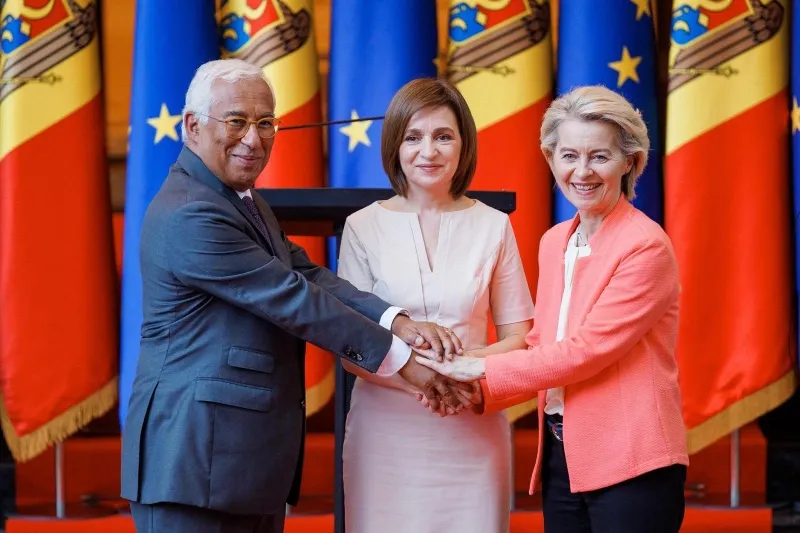
And on October 5, Moldovan Prime Minister Vasile Tofan stated that Moldova is working to complete the technical part of the EU accession negotiations by early 2028. Thus, Moldova will be ready to become an EU member as early as 2030. He announced this date in Brussels following a meeting of the Moldova–EU Association Council.
In addition to European integration, regional security was discussed at the meeting in Brussels. Moldova has become the second-largest recipient of funds from the European Peace Fund, after Ukraine. The total amount of aid is 317 million euros. In 2026, 120 million of these funds will be allocated to Moldova’s air defense, given the heightened threat of Russian strikes against the population and infrastructure.
Amid substantive negotiations on Moldova’s accession to the EU, the Kremlin continues its attempts to oust the country’s pro-European government. Pro-Russian political forces have become significantly more active in Chisinau.
On September 29, 2026, the Moldovan opposition, led by former Prime Minister Ion Chicu, officially submitted a motion to parliament to remove President Maia Sandu from office. She was accused of “usurping power and worsening the overall situation in the country—in the social, economic, and political spheres.” The motion was signed by 46 opposition lawmakers from the Communist Party, the Socialist Party, “Our Party,” the “Democracy at Home” party, and the “Alternative” bloc. They are now publicly planning their next steps against President Sandu.
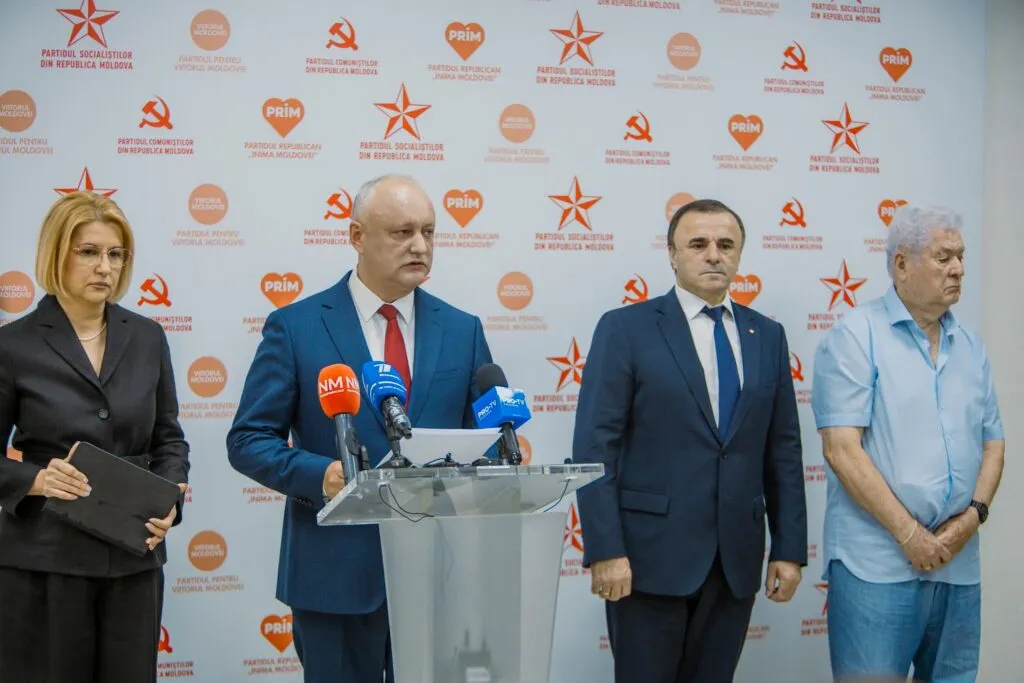
However, the impeachment process itself has a long history in Moldova. The draft resolution must still be debated in a parliamentary session, after which the head of state may present her defense. If the draft is adopted by a majority of lawmakers, it will be reviewed by the Constitutional Court. After receiving the Constitutional Court’s ruling, a new resolution—this time directly regarding the president’s removal from office—will be introduced in parliament. If 68 out of 101 members of parliament support it, the president will be removed from office. However, within a maximum of 30 days, a referendum must be organized to decide on the final removal of the head of state.
Security Challenges and Public
Sentiment
A majority of Moldova’s population consistently supports closer ties with the European Union. According to a 2026 poll, more than 70% of Moldovans see the positive aspects of relations with the EU and consider the European Union to be the main financial donor. Overall, 58% of citizens support Moldova’s accession to the EU, 22% oppose it, and 20% remain neutral. In other words, there remains a significant segment of the population that has not yet made up its mind.
However, another opinion poll, conducted from August 25 to September 9 by the CBS AXA Center among 2,009 people aged 18 and older, is no less revealing. The questions focused on security challenges facing Moldova. The survey results revealed a noticeable polarization within society.
More than 80% of respondents believe that Moldova is not prepared to defend itself against external aggression. The majority—about 45% of citizens—support neutrality. The second most popular defense option is accession to the European Union, followed by security cooperation with the Russian Federation. Only about 4% of citizens support joining NATO to strengthen Moldova’s defense.
At the same time, the study showed that six out of ten Moldovan citizens believe the country can strengthen its defense only with the help of external allies.

Oleksandr Kovalenko: Russia Is Launching a Large-Scale Hybrid Attack
Against Moldova
The situation in Moldova is indeed escalating. First, we see that the pro-Russian opposition has initiated impeachment proceedings against Maia Sandu. The vote on it has yet to take place, but the process itself has already been set in motion, notes Oleksandr Kovalenko, a military and political analyst with the “Information Resistance” group.
“In a very strange turn of events, precisely during this period—when pro-Russian forces have become active around the issue of Maia Sandu’s impeachment—the number of Russian drones flying over Moldova has increased. Moreover, we are no longer seeing just violations of Moldovan airspace—drones are crashing directly within the country’s territory. This creates additional threats. There were no such incidents before, but now they have become more frequent.
I attribute this, in particular, to attempts by pro-Russian forces to stoke certain sentiments: ‘Look,’ they say, ‘this is what Maia Sandu has led us to. Under her presidency, kamikaze drones are already flying into Moldovan territory.’ We need to be friends with Russia. Sandu’s policy toward Europe and NATO will lead us nowhere. Therefore, we must call for and support her impeachment. Otherwise, we’ll end up just like Ukraine—there will be war.”
These are precisely the kinds of narratives that pro-Russian forces may use to put pressure on Moldova’s current president. Indeed, this is internal destabilization, which is largely coordinated directly from Russia through the embassy. Ozerov, by the way, is one of the direct organizers of such actions. He is the one coordinating various anti-Moldovan actions taking place in Transnistria. Recently, these have become more frequent.
In Transnistria, a narrative is being openly promoted that Moldova is allegedly responsible for the “genocide of the Transnistrian people” and so on. Russian propaganda exploits many such themes both within Russia and Transnistria itself, while also attempting to integrate them into Moldova’s information space.
Therefore, in my opinion, a large-scale hybrid attack is now underway against Moldova, utilizing political forces, information resources, and direct physical force—in particular, instruments of terror such as “shahids.”
If pro-Russian forces come to power in Moldova, this will pose a serious threat to Ukraine, especially to its southern regions, according to Oleksandr Kovalenko.
“If we lose a democratic Moldova, it could be a disaster for our southwestern region. Moldova plays a very important role in the transportation logistics of the Odesa region and the south of Ukraine in general. This is a very important connection.
Furthermore, Moldova is important to us as a stable country we can rely on. We share a common vision for development—a European orientation and the advancement of democracy. If there is a change in power in Moldova—for example, through impeachment or for other reasons—and pro-Russian forces come to power, we will face serious problems with that country. We certainly don’t need that right now.
We already have a problem with Transnistria, which shares a border with Ukraine and has become a zone restricting the movement of our troops. We have the necessary units, forces, and resources stationed there to respond preemptively should a threat arise from Transnistria.
I cannot say that Transnistria, as it currently exists, poses an immediate threat to Ukraine. But if all of Moldova were to turn into one big Transnistria, that would be a serious threat to our southern region. Therefore, it is undoubtedly extremely important for us that the current Moldovan government remains in power, that President Maia Sandu retains her position, and that she continues her pro-European course.”




