
Pakistan creates a reserve for the Indus river dolphin — Mongabay
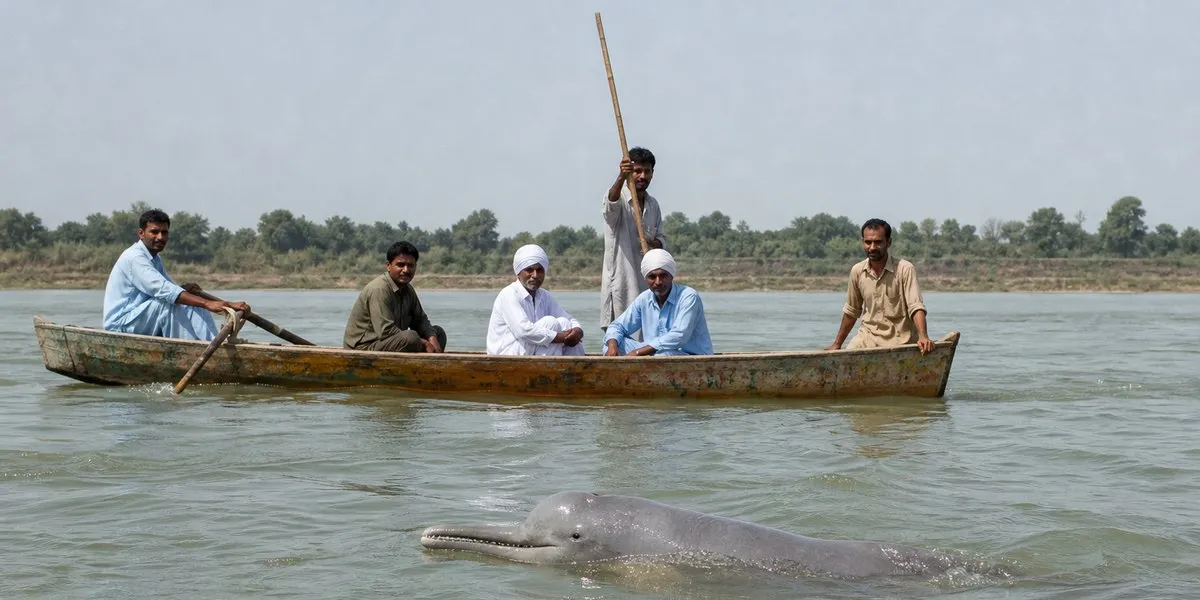
In June 2026, Pakistan established the Punjnad Indus River Dolphin Sanctuary, covering nearly 200 kilometers of the Indus River in Punjab province. The new protected area connects with an existing reserve in Sindh province, together forming a 400-kilometer uninterrupted corridor with legal protection for the Indus river dolphin, Mongabay reports.
The Indus river dolphin, or bhulan, is endemic to the Indus basin and is listed on the International Union for Conservation of Nature Red List as an endangered species. The main part of the global population lives in Pakistan, while a small group of animals has survived in the Beas River in northwestern India.
Population size
A population survey published in 2025 in the journal Endangered Species Research estimated the species’ metapopulation at 1,987 individuals and recorded growth of 19.4% between 2011 and 2017. At the end of the 19th century, the number of these dolphins was estimated at about 10,000, while by 2001 it had fallen to 617 animals.
Nearly 99% of the current population is concentrated along a 690-kilometer stretch of the Indus between the Chashma barrage in Punjab and Sukkur in Sindh. Researchers estimate that the species’ historical range has shrunk by about 80% because of dams, canals and irrigation structures.
More current news is available on the UA.News Telegram channel Telegram.
Threats to dolphins
Gill nets remain the greatest direct threat: from 2008 to 2023, entanglement in them accounted for 52% of all documented dolphin deaths in the Indus basin. WWF biologist Uzma Khan noted that commercial fishing rights in Punjab are sold at auctions, which encourages contractors to catch as much fish as possible.
Protected status provides grounds for regulating fishing, monitoring threats and coordinating conservation measures. At the same time, it does not eliminate the river’s physical fragmentation. Hydraulic structures can isolate groups of dolphins and direct animals into irrigation canals, from which they must be rescued and returned to the main channel.
Scientists also emphasize the need to maintain sufficient water flow, water depth, connected channels, deep sections and healthy fish populations. Other risks include pollution from agricultural, municipal and industrial sources, plastic, as well as changes in precipitation patterns and the melting of Himalayan glaciers.




