
Pope Leo XIV told the truth about his family for the first time
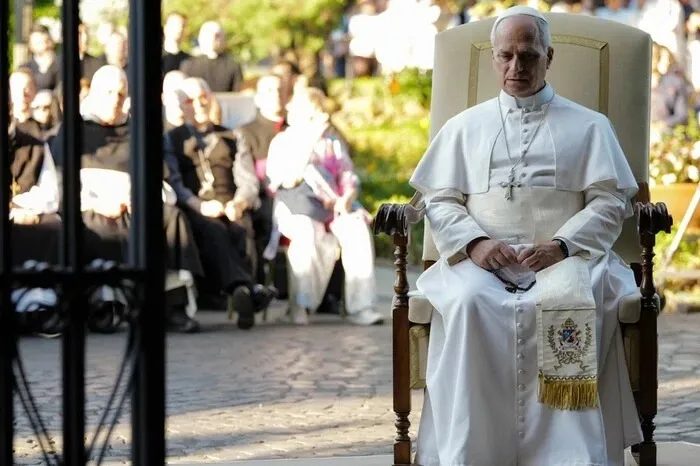
Pope Leo XIV spoke publicly for the first time about his family history. He acknowledged that his ancestors included both enslaved people and slave owners, and emphasized that while he is proud of his American heritage, he considers himself, first and foremost, the Pope for the whole world.
The pontiff also spoke about his family’s immigrant roots and commented on the results of a large-scale genealogical study that traced his family tree back 15 generations.
Pope Leo XIV shared his family’s history publicly for the first time. During an interview with the American television network NBC News, the pontiff explained that his ancestors had a difficult history: among them were both people who had been enslaved and those who owned slaves themselves.
The interview was recorded at the papal residence in Castel Gandolfo, near Rome. Part of the conversation was also published by Vatican News.
“My grandparents were immigrants”
Leo XIV, who became the first Pope in history from the United States, emphasized that his family has immigrant roots. “I come from a family where my grandfather and grandmother were immigrants,” the pontiff said.
At the same time, he spoke openly for the first time about the very complex history of his maternal lineage. “Among my ancestors were both enslaved people and slave owners,” noted Leo XIV.
How the Pope Views His American Heritage
The pontiff also said that he harbors warm feelings toward the United States. According to him, he highly values the American tradition of freedom, opportunity, and openness to people from different countries. “I like the sense of freedom, the sense of opportunity, and the fact that for many generations, America has invited people from all over the world to become part of it,” he said.
At the same time, Leo XIV emphasized that, following his election as head of the Catholic Church, his mission extends far beyond national identity. “I think of myself more as a Pope who just happens to be American. This does not diminish what it means to be American. I love America very much, but I understand my mission as serving the Universal Church and people all over the world,” the pontiff explained.
He also added that his family still lives in the U.S. “My family still lives in the United States. I have a great love for America,” noted Leo XIV.
What the research into his family tree revealed
The pontiff’s family history had previously been researched by historians and genealogists commissioned by The New York Times Magazine. The project was led by Harvard University professor Henry Louis Gates Jr., together with experts from American Ancestors and the Cuban Genealogy Club of Miami. The researchers were able to trace Pope Leo XIV’s family tree back 15 generations and identify more than a hundred of his ancestors.
They paid particular attention to the maternal line. It turned out that his grandparents lived in New Orleans’ Seventh Ward—the historic center of Louisiana Creoles. Archival documents indicate that they were considered to be of mixed African and European descent. In addition to Louisiana, the pontiff’s ancestors came from France, Spain, Canada, Cuba, and the island of Hispaniola, which is now shared by Haiti and the Dominican Republic.
According to Henry Louis Gates, at least 17 of Leo XIV’s ancestors were recorded in 18th- and 19th-century documents as “free people of color,” “mulattoes,” “Creoles of color,” or “quarterns.” At that time, these people were already able to own property, engage in trade or crafts, and constituted a distinct social group. At the same time, the research revealed another side of the family’s history. Some of the ancestors were born into slavery but later gained their freedom. Others, after their emancipation, became landowners and themselves owned enslaved people. It was precisely these historical facts that the Pope referred to during his interview with NBC News when he spoke about his origins.
The pontiff had previously addressed the issue of slavery
As a reminder, Leo XIV became the first Pope to publicly apologize on behalf of the Catholic Church for the Church’s belated condemnation of the slave trade.
In a document dedicated to the development of artificial intelligence and moral responsibility, the pontiff expressed “deep sorrow for the immense suffering and humiliation endured by so many people” and asked for forgiveness for historical injustices. An excerpt from this interview was posted on the Vatican News website.
Pope Warns of Deep Global Crisis Due to Violence and Conflicts — Reuters
The Pope inaugurated the main tower of the Sagrada Família cathedral in Barcelona — BBC


