
Support for the ANC in South Africa’s major cities falls ahead of local elections — Daily Maverick
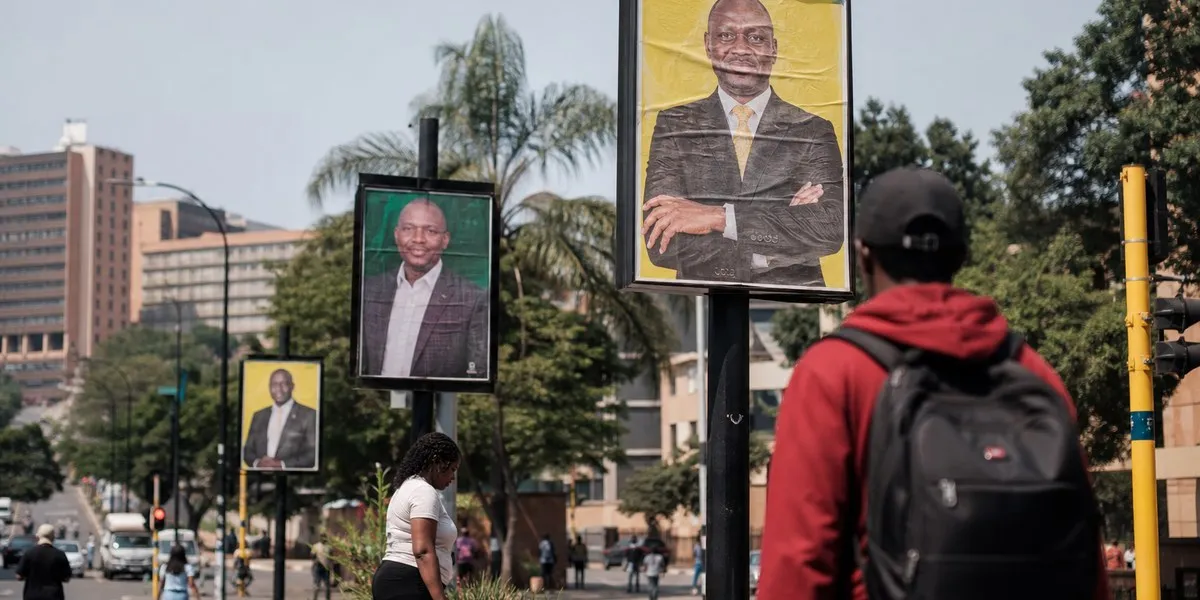
In South Africa, ahead of the November local elections, polls predict a further decline in support for the African National Congress (ANC) in major cities, but this does not indicate an unequivocal shift of voters to the Democratic Alliance (DA). As Daily Maverick reports, the trend may point to increasing fragmentation of the country’s political landscape.
In a study released on September 4, Ipsos forecasts 31% support for the ANC, compared with 45.6% in the 2021 elections. Another poll conducted by The Common Sense and the Social Research Foundation in July gave the ANC 34% among likely voters, the DA 27%, the Umkhonto weSizwe (MK) party 15%, and the Economic Freedom Fighters (EFF) 7%. The margin of error in this study was 2.1%, and its turnout model projected participation by 53% of voters.
Competitive races in major metros
According to Ipsos, the ANC may lose its outright majority in Mangaung and Buffalo City, where the DA is projected to lead. In Buffalo City, the DA may receive 33%, the ANC 29%, and the EFF 27%; in 2021, the ANC won 59.43% there. In Mangaung, the DA is projected at 36%, the ANC at 32%, the EFF at 17%, and MK at 5%, while in the previous local elections the ANC received 50.63%.
In Johannesburg, Ipsos expects the ANC to receive 31% and the DA 28%, followed by ActionSA with 14% and the EFF with 8%. At the same time, a study by The Common Sense and SRF in the second quarter of 2026 showed a different distribution: DA — 42%, ANC — 18%, MK — 13%. In Tshwane, Ipsos forecasts 31% for the DA and 22% for the ANC, while in Ekurhuleni it forecasts 24% for the ANC, 21% for the DA, and 18% for MK.
More current news is available on the UA.News Telegram channel Telegram.
In Cape Town, the DA will remain the largest force with 46%, according to the Ipsos forecast, but this would be below the 58.26% won by the party in 2021. The ANC may receive 26% there, the EFF 11%, and the Patriotic Alliance 8%. In Nelson Mandela Bay, Ipsos forecasts a tie between the ANC and the DA, at 37% each.
MK’s strong position and the role of turnout
The only major city where Ipsos forecasts an outright majority is eThekwini. There, MK may win 55% of the vote, the DA 17%, the ANC 10%, and the Inkatha Freedom Party 6%. At the same time, the SRF poll projects 33% for MK without an outright majority, 23% for the DA, 18% for the ANC, and 16% for the IFP.
Nelson Mandela University lecturer Ongama Mtimka called the trend “dynamic fragmentation”: ANC dominance is weakening without a corresponding rapid strengthening of one main competitor. He noted that the DA is growing but has not yet demonstrated a decisive shift in voter preferences in its favor.
The results will depend largely on turnout. In the Ipsos poll, only one-third of respondents said they were very interested in elections and politics, while 34% said they were not very interested in them. The authors of the SRF study also cautioned that respondents’ initial answers may differ from the result projected by the turnout model.




