
After floods in Nepal, Nation Kenya author urged Africa to adapt cities
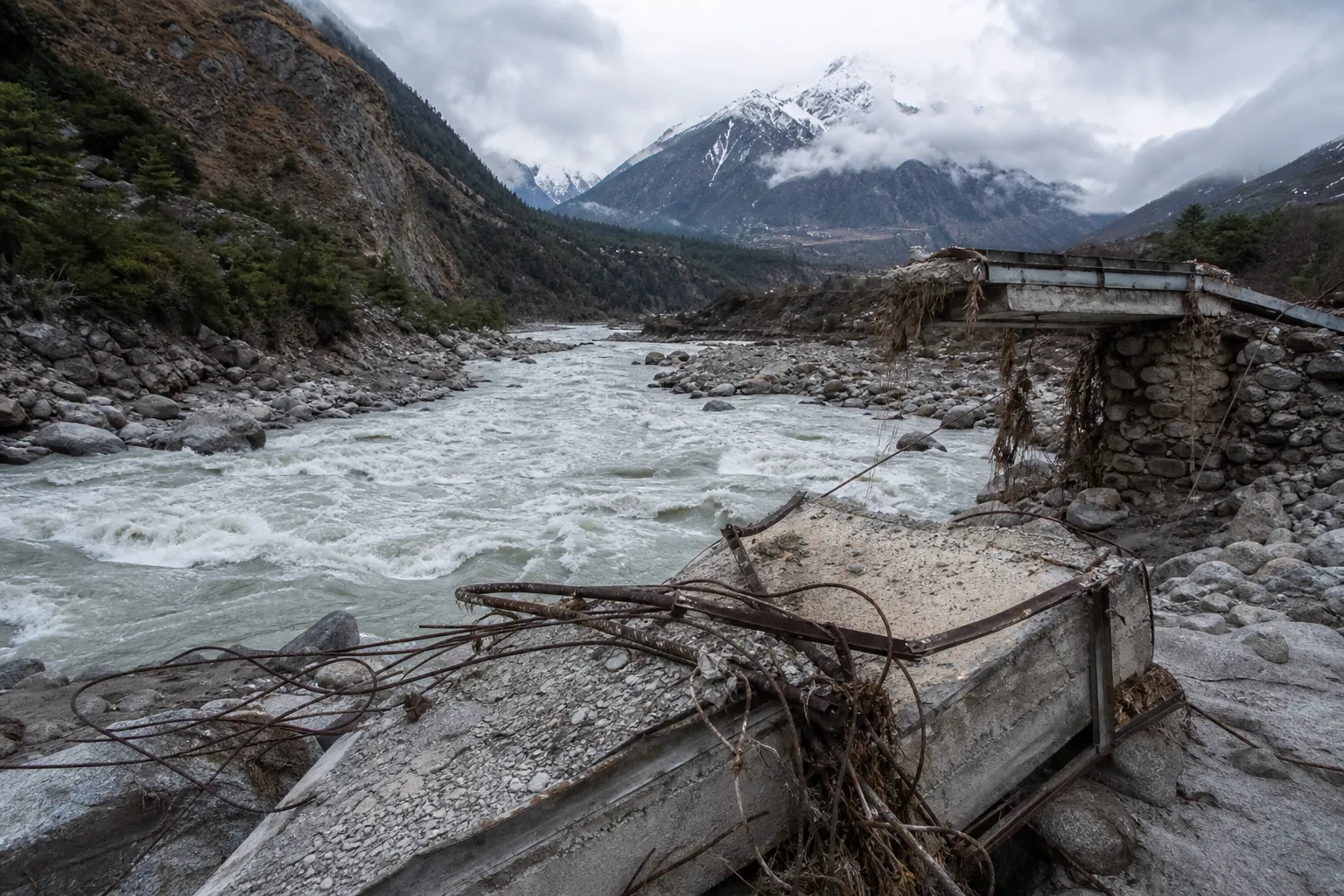
Following devastating floods on the Nepal-Tibet border, a columnist for Nation Kenya urged African countries to accelerate the adaptation of cities to climate risks. According to data cited in the publication, at the time the column was written, more than 1,200 people had died and nearly 5,000 were considered missing.
Floods on the Nepal-Tibet border
As the outlet writes, a glacial collapse in the Langtang Himal area caused a mass of ice, water and rocks to descend into valleys in Nepal and Tibet. The floods affected the Gyirong border crossing and the Trishuli River valley in Nepal. According to the author’s description, villages disappeared within seconds, bridges were destroyed, and families were separated by the disaster.
The column notes that Nepal produces about 80% of its energy from renewable sources and accounts for 0.05% of global emissions. The author believes that a country meeting its climate commitments has limited ability at the same time to obtain resources for protection and recovery after disasters of this scale.
More current news is available on the UA.News Telegram channel Telegram.
Climate finance and urban resilience
The author criticizes the international climate-finance system, calling it slow, indirect and difficult for the most vulnerable states to access. In particular, he draws attention to the Loss and Damage Fund created at COP27: in his assessment, pledged contributions are measured in hundreds of millions, while needs after major disasters may reach billions.
The article also discusses Africa’s urbanization. According to estimates cited by the author, the continent’s cities grew by 3.5% annually over two decades, and by 2050 the number of urban residents may reach 1.2 billion. As examples of adaptation, he cites the restoration of wetlands in Kigali and projects by architect Francis Kéré that take local conditions into account.
In the author’s view, demands for climate justice from countries with the highest emissions should not be a reason to postpone local solutions. He urged African cities to develop infrastructure, including roads, protective structures and wetlands, with the consequences of climate change in mind.




